

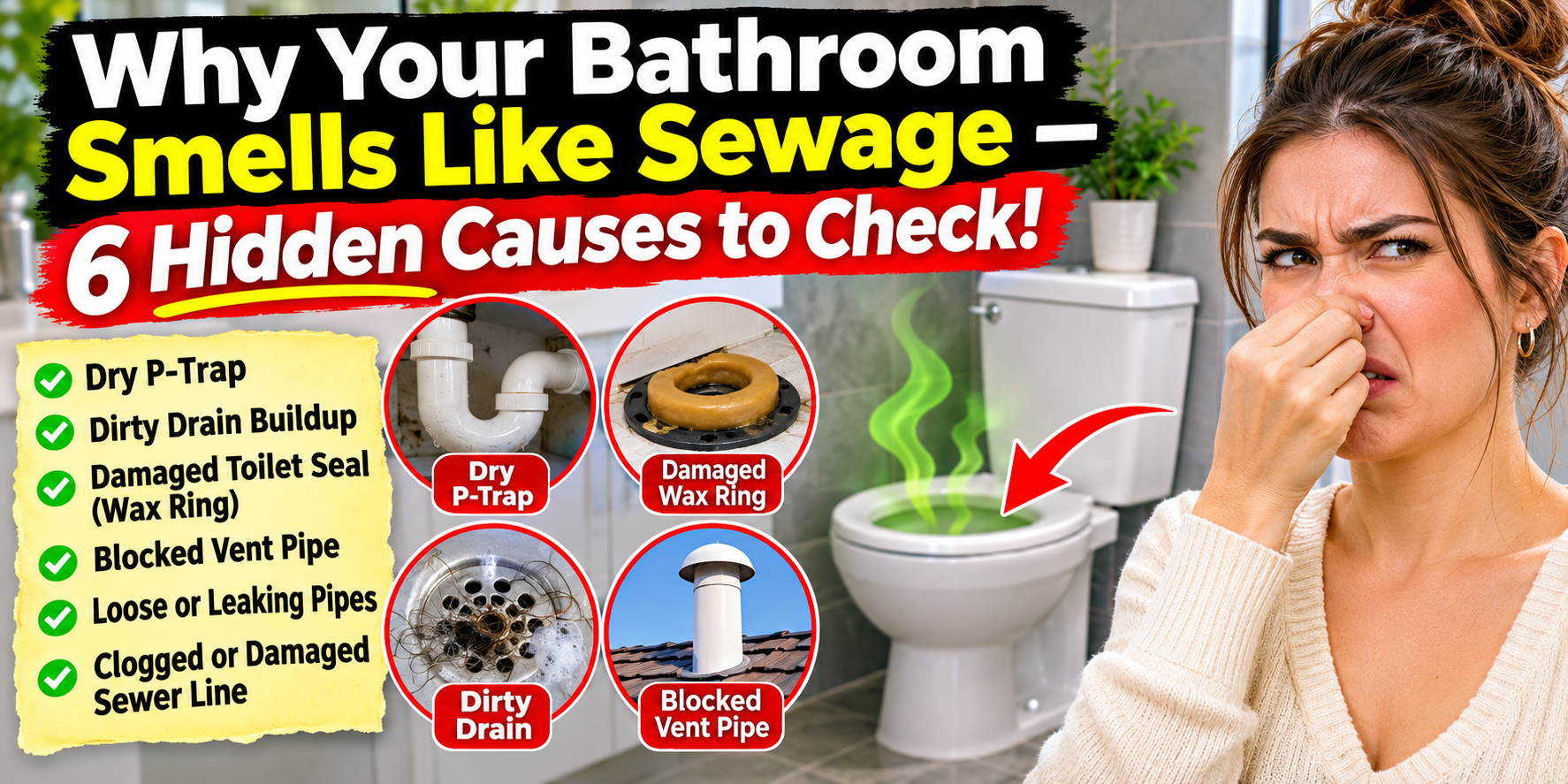
Inspect the area around the toilet for visible moisture or movement.
If the toilet is loose or the smell appears concentrated around its base, contact a licensed plumber.
The toilet may need to be removed and its seal replaced.
Professional plumbing tip: Simply covering the gap around the toilet with caulk does not repair a damaged wax ring. The underlying seal must be addressed.
Fixing a failed toilet seal early may help prevent additional moisture damage and costly bathroom flooring repairs.
4. Your Plumbing Vent Pipe Is Blocked
Your home’s plumbing system includes vent pipes that help maintain proper drainage and direct sewer gases outside.
These vents often extend through the roof.
However, debris, leaves, and other obstructions can occasionally interfere with the plumbing vent system.
When ventilation is disrupted, drain performance can suffer, and water may be siphoned from drain traps.
That can allow sewer odors to enter the bathroom.
Signs of a Possible Plumbing Vent Problem
- Gurgling sounds from the toilet or sink
- Unpleasant smells from several drains
- Slow drainage in multiple fixtures
- Water levels fluctuating in the toilet bowl
Recommended Solution
If multiple fixtures are affected, schedule a professional plumbing inspection.
A plumber can determine whether the problem involves a blocked vent, a drain obstruction, or another plumbing defect.
Safety note: Do not climb onto your roof to inspect or clear a vent pipe without appropriate professional training and safety equipment.
A licensed plumbing service can inspect inaccessible vents more safely.
5. A Loose or Damaged Drain Pipe Is Allowing Sewer Gas to Escape
Sometimes the smell isn’t coming directly from the drain opening.
It may be escaping through a loose, cracked, disconnected, or improperly installed plumbing connection.
Bathroom sinks typically have several connections underneath the cabinet.
Over time, these components may become damaged or develop leaks.
An incorrectly installed or missing trap can also compromise the sewer gas barrier.
Warning Signs
- Odors inside the bathroom vanity cabinet
- Dampness beneath the sink
- Water stains on nearby surfaces
- Visible loose or damaged drain fittings
- Smells that persist despite regular drain cleaning
What to Check
Open the cabinet beneath your bathroom sink.
Look for visible water leaks, stains, cracked components, or disconnected fittings.
Avoid disassembling plumbing components if you are unfamiliar with the system.
A qualified plumber can identify damaged connections, repair leaks, and confirm that the drain has a properly functioning trap.
Home maintenance tip: Small plumbing leaks can lead to hidden cabinet damage, moisture problems, and expensive repairs if ignored.
6. Your Main Sewer Line Is Clogged or Damaged
This is one of the more serious potential causes of persistent sewage odors.
The main sewer line carries wastewater away from your home.
Over time, sewer pipes may develop significant blockages or structural damage.
Possible causes include:
- Tree root intrusion
- Accumulated debris
- Cracked or separated pipes
- Pipe corrosion
- Shifting soil
- Damaged or collapsed sewer lines
A serious sewer line problem may cause unpleasant odors, repeated drain backups, and wastewater leakage.
Major Warning Signs
- Multiple drains become slow simultaneously
- Water backs up into a shower or bathtub
- Toilets repeatedly overflow
- Persistent sewage odors throughout the home
- Unexplained wet patches or sewage odors outdoors
When to Call a Professional
If several plumbing fixtures show problems at the same time, a licensed plumber may recommend a sewer camera inspection to evaluate the condition of the drainage system.
Depending on the findings, possible solutions include professional drain cleaning, hydro jetting where appropriate, targeted pipe repair, or sewer line replacement.
Not every sewer smell indicates a damaged sewer line, so a proper diagnosis is essential before agreeing to major repair work.
🚨 How to Tell Whether a Sewer Smell Is a Plumbing Emergency
Although some bathroom odors are caused by ordinary grime, genuine sewer gas exposure can pose health and safety concerns.
Seek professional assistance promptly if you notice a strong, persistent sewage smell, widespread odor, visible sewage, or repeated wastewater backups.
If anyone experiences dizziness, nausea, breathing difficulties, or severe irritation, leave the affected area and seek appropriate emergency assistance.
A rotten-egg odor can also be associated with a natural gas leak. If you cannot confidently identify the source, leave the building and contact your gas utility or emergency services from outside. Do not operate electrical switches or use flames.
Never attempt to enter a sewer pipe, septic tank, or enclosed wastewater space.
How to Prevent Bathroom Sewer Smells From Returning
Once you’ve identified and addressed the source of the smell, a few simple habits can help keep your bathroom fresh.
Weekly Bathroom Maintenance Checklist
- Clean visible drain buildup: Remove hair and soap residue around drain openings.
- Run water in unused fixtures: Help keep P-traps filled.
- Inspect beneath sinks: Look for leaks or damaged plumbing connections.
- Check the toilet base: Watch for rocking, staining, or unexplained moisture.
- Improve ventilation: Use the bathroom exhaust fan to control moisture.
- Pay attention to slow drains: Address recurring drainage problems before they become more serious.
Good bathroom maintenance may help prevent minor drainage problems, but it cannot replace professional repairs when plumbing components are damaged.
Frequently Asked Questions
Why does my bathroom smell like sewage even after cleaning?
The odor may be coming from a dry P-trap, damaged toilet seal, plumbing vent issue, or concealed drain leak rather than dirty bathroom surfaces.
Cleaning the toilet and floors won’t repair a broken plumbing seal.
Can baking soda and vinegar remove sewer smells?
Baking soda and vinegar may help with some surface residue, but they do not fix dry traps, broken seals, damaged sewer pipes, or major clogs.
Avoid mixing household cleaning chemicals, especially bleach with acids or other products.
Why does my bathroom smell like sewer gas after a shower?
Hot water can make existing drain odors more noticeable. Hair and soap buildup may also contribute to unpleasant smells.
If the odor persists, check the trap and have the plumbing inspected.
Why does my bathroom smell like sewage at night?
A bathroom odor may be more noticeable when fixtures haven’t been used for several hours.
Air-pressure changes, ventilation conditions, and plumbing defects may also contribute.
If the problem repeats, investigate the plumbing rather than relying on air fresheners.
How much does it cost to fix a sewer smell in a bathroom?
The price depends on the underlying problem.
Refilling a dry trap or removing accessible drain debris may cost almost nothing.
Replacing a toilet seal, repairing plumbing vents, conducting sewer camera inspections, or replacing damaged sewer lines can involve professional service charges.
For significant work, request a written estimate and diagnosis before approving repairs.
Should I call an emergency plumber for a sewage smell?
A mild odor from an unused drain may have a simple explanation.
However, persistent strong odors, sewage backups, visible wastewater leaks, or multiple affected plumbing fixtures require prompt professional attention.
Final Thoughts: Don’t Ignore That Bathroom Sewer Smell!
A bathroom that smells like sewage can be frustrating, especially when you’ve already spent time deep cleaning every visible surface.
But the real secret to eliminating the smell is finding its source.
Sometimes the solution is as simple as removing hair from a shower drain or refilling a dry P-trap.
Other times, the problem may involve a damaged toilet wax ring, blocked plumbing vent, leaking drain connection, or main sewer line issue.
Before paying for expensive plumbing repairs, check the simple causes first — but never ignore warning signs of a serious drainage problem.
With regular bathroom maintenance, safe DIY cleaning techniques, and professional plumbing assistance when needed, you can help keep your bathroom clean, fresh, and free from recurring sewage odors.
Have you ever noticed a mysterious sewer smell in your bathroom? Which of these hidden causes surprised you most? Share your experience in the comments!
