

- 2 cups of warm water
- 1 teaspoon of liquid dish soap
- 1 small soft cleaning brush or old toothbrush
- 1 microfiber cleaning cloth
- 1 pair of rubber cleaning gloves
- 1 drain hair-removal tool (optional)
Step-by-Step Cleaning Instructions
Step 1: Prepare your cleaning solution
Add the liquid dish soap to the warm water and gently stir until mixed.
This simple cleaning solution helps loosen soap scum and surface grime without requiring harsh chemical drain cleaners.
Step 2: Remove visible debris
Put on your gloves and carefully lift the removable shower or sink drain cover.
Remove any visible hair, dirt, and soap residue using a suitable drain-cleaning tool.
Step 3: Scrub the drain opening
Dip your cleaning brush into the soapy water and gently scrub the drain cover, rim, and reachable surfaces.
Pay special attention to dark buildup or slimy deposits where unpleasant odors may develop.
Step 4: Rinse thoroughly
Rinse the cleaned surfaces with warm water and wipe away any remaining residue.
Reinstall the drain cover securely.
Step 5: Check for remaining odors
Allow fresh air to circulate through the bathroom and determine whether the smell improves.
If the sewage odor persists, it may indicate a plumbing problem rather than ordinary drain buildup.
Important: This recipe is intended for accessible drain surfaces, not for clearing a deep blockage or repairing sewer gas leaks. Never combine cleaning products or use this recipe in a drain containing chemical drain cleaner.
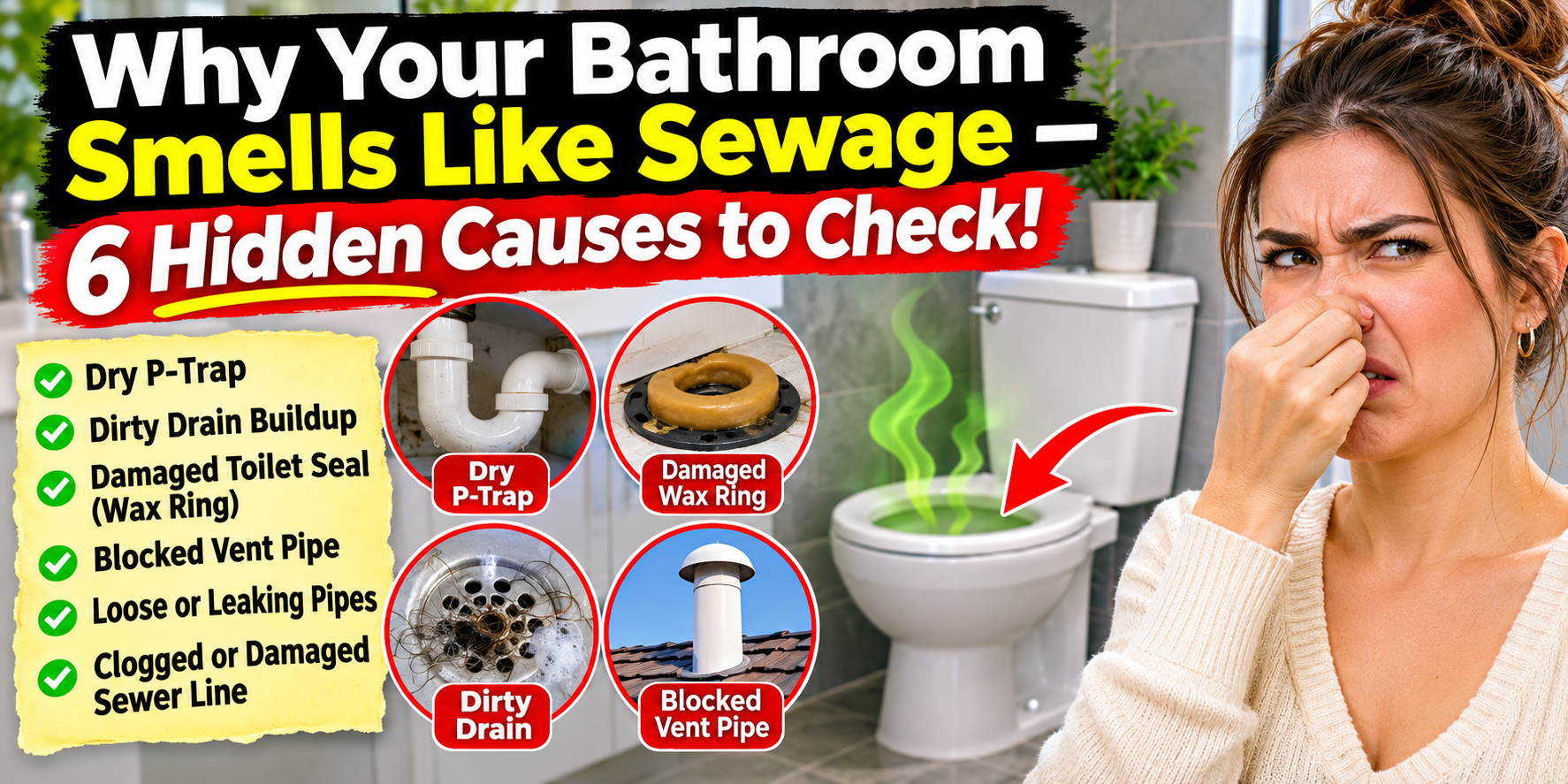
1. Your Bathroom P-Trap Has Dried Out
One of the most overlooked causes of sewage smells is a dry P-trap.
A P-trap is the curved section of plumbing located beneath bathroom sinks, showers, bathtubs, and floor drains.
Its purpose is surprisingly important: It holds a small amount of water that acts as a barrier between your bathroom and the sewer system.
When a bathroom fixture isn’t used regularly, the water inside the trap can gradually evaporate.
Without that water barrier, unpleasant sewer gases may enter your home.
Signs of a Dry P-Trap
- A sewage smell coming from a rarely used bathroom
- Odors near an unused bathtub or shower
- An unpleasant smell coming from a basement floor drain
- The odor improves after running water
Easy DIY Solution
- Locate the drain where the smell appears to originate.
- Run water through the fixture for approximately one minute.
- For a floor drain, carefully add enough water to refill the trap.
- Ventilate the bathroom and monitor the smell.
Money-saving tip: Before scheduling an expensive plumbing inspection, check all rarely used drains. Refilling a dry trap may solve the problem without a repair bill.
If the trap repeatedly loses water despite regular use, contact a licensed plumber to investigate.
2. Hidden Hair, Soap Scum & Bacteria Inside Your Shower Drain
Your shower might look perfectly clean, but the drain underneath can tell a different story.
Over time, hair, soap residue, skin oils, and other organic material accumulate around drain openings.
This buildup can support bacterial growth and produce unpleasant odors that resemble sewer gas.
The smell may become more noticeable after taking a hot shower.
Signs of a Dirty Shower Drain
- A musty or sewage-like odor near the shower
- Slow-draining water
- Visible hair accumulation
- Slimy buildup around the drain opening
Easy Cleaning Solution
Use the DIY dish-soap cleaning recipe above.
Remove accessible hair, scrub the drain cover, and rinse with warm water.
A simple drain hair catcher can also help reduce future buildup.
When professional cleaning makes sense: If water drains slowly even after removing accessible debris, a deeper blockage may require professional drain cleaning or mechanical drain snaking.
Avoid repeatedly pouring chemical drain cleaners into clogged pipes, especially if another cleaner has already been used.
3. The Wax Ring Beneath Your Toilet Is Damaged
Here’s a hidden bathroom problem many homeowners never think about.
Underneath your toilet is a sealing component commonly called a wax ring.
Its job is to create a secure seal between the toilet outlet and the drain connection.
If this seal becomes damaged, improperly installed, or displaced, sewer gases can escape around the toilet’s base.
In some cases, water can also leak into the surrounding flooring.
Warning Signs
- A sewage smell strongest near the toilet base
- A toilet that rocks or moves slightly
- Unexplained moisture around the toilet
- Staining or damage near the bathroom floor
