

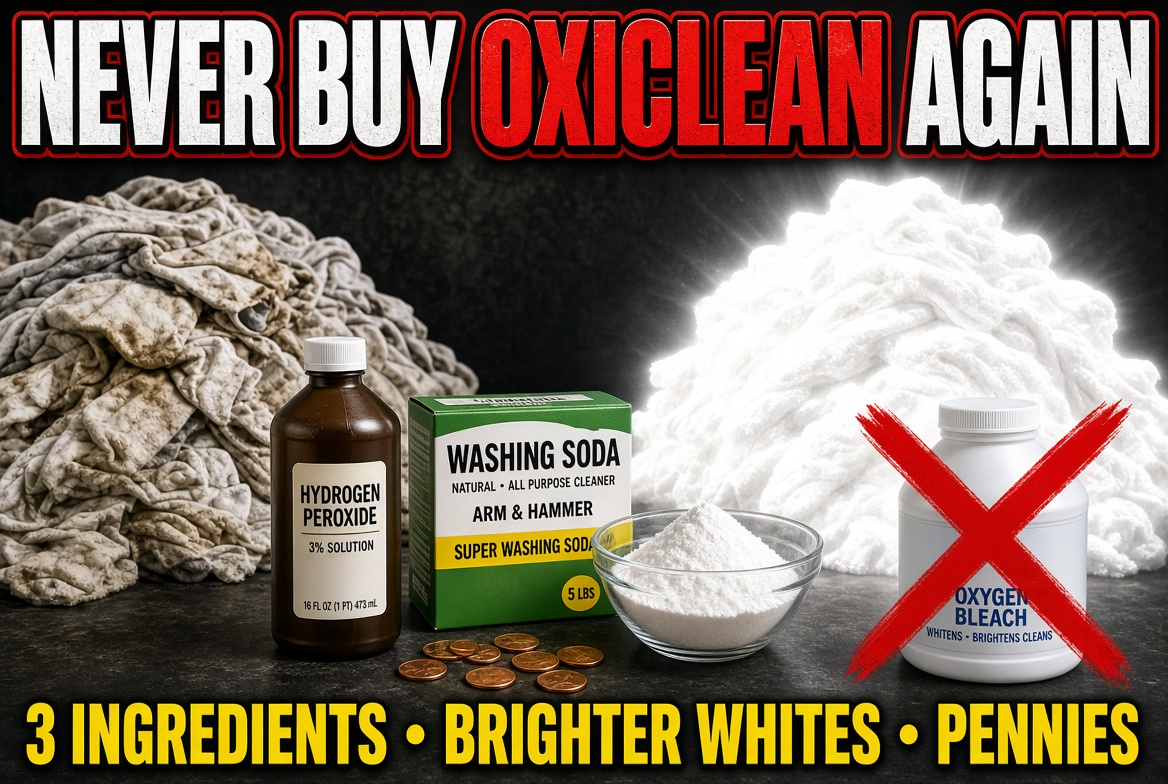
Liquid pretreat spray (small batch, use soon)
- 2 tablespoons very hot water
- 1 tablespoon washing soda
- 1 tablespoon 3% hydrogen peroxide
Dissolve washing soda in hot water first, then add peroxide. Spray or dab on stains. Sit 10–30 minutes. Wash.
Do not store this liquid long in a sealed spray bottle. Peroxide + alkaline powder off-gasses. Use it the same day. If you must keep a spray, use a loosely capped dark bottle for a day or two only, and never a tightly sealed container that can pressurize.
A weaker all-purpose liquid some people use: ½ cup 3% peroxide + ½ cup baking soda + 1 quart cool water. It is milder than the washing-soda version. Baking soda is not a substitute for washing soda when you need maximum grease-cutting and stain lift.
How to brighten whites without chlorine bleach
Dingy whites are usually body oil, detergent residue, and mineral film — not “not enough bleach.”
- Separate true whites from “almost white.”
- Use warm/hot water if the care label allows.
- Add 2–3 tablespoons of the homemade powder or ½ cup washing soda + ½ cup peroxide.
- Do not overload. Oxygen needs water and space.
- For gray towels and sheets, soak first (3 Tbsp powder per gallon warm water, 2 hours to overnight), then wash.
- Skip fabric softener on towels. Softener coats fibers and makes them look dingy faster.
- Sun-dry whites when you can. UV plus oxygen bleach is a classic brightening combo.
Chlorine bleach on protein stains (sweat, blood, milk) can set them yellow. Oxygen bleach is usually the better first move on those.
Tough stain playbook
Always blot fresh spills. Check an inside seam on colored clothes. Air-dry until you know the stain is gone — heat in the dryer can set what’s left.
| Stain | What to do |
|---|---|
| Coffee / tea | Pretreat paste or spray, 15–30 min, warm wash with booster |
| Sweat / yellow pits | Soak in warm oxygen solution 1–2 hours; repeat before you even think about chlorine |
| Grass | Pretreat, then hot wash if fabric allows |
| Red wine | Blot, pretreat, soak; act fast |
| Grease / oil | Degrease first (dish soap on the spot), then oxygen soak. Oxygen is weaker on pure oil alone |
| Blood | Cold water first, then oxygen soak. Never hot water first |
| Makeup / foundation | Dish soap to break oils, then booster wash |
| Mildew smell on towels | Hot wash + 3 Tbsp powder; dry fully in sun if possible |
For carpets and upholstery: dissolve a small amount in warm water, blot, do not over-wet, and extract. Test a hidden spot. Keep it off unsealed wood and natural stone unless you know the surface can take alkaline cleaners.
Around-the-house uses
Same chemistry, different jobs:
- Grout and tile: warm solution, scrub, rinse. Good on soap scum and mildew stains.
- Plastic laundry baskets, trash cans, cutting boards: soak or wipe, then rinse.
- Toilet bowl stains: ½–1 cup powder or strong solution, sit 10–15 minutes, scrub, flush. Not for every bowl finish — test if unsure.
- Gym bags, sneaker insoles, washable pet beds: soak, rinse well, dry completely.
- Sponges: 2 Tbsp powder in 2 cups hot water, soak, rinse, air-dry.
Do not use oxygen bleach as a metal-soak for aluminum, and be careful on marble, granite, and unsealed grout. Alkaline oxidizers can etch or dull some surfaces.
What this recipe is not
- It is not chlorine bleach. Do not expect the same instant “kill everything white” effect on moldy grout or severely yellowed vintage linens in one pass.
- It is not a standalone detergent.
- It will not rescue every set-in stain from 2019. Some dyes and iron/rust stains need different chemistry (rust is a separate problem).
- Mixing washing soda with hydrogen peroxide in a bowl does not instantly create a jar of pure dry sodium percarbonate. That is why the stored powder recipe uses actual sodium percarbonate if you want a true OxiClean-style product.
Safety rules (read these)
- Never mix oxygen bleach or peroxide with chlorine bleach, ammonia, or toilet bowl cleaners. Dangerous gases and ruined chemistry.
- Never mix the powder or liquid with vinegar or other acids in the same bottle. You cancel the alkalinity and can get foaming/gas.
- Keep powder dry and away from kids and pets. Sodium percarbonate is an oxidizer.
- Washing soda is more alkaline than baking soda. It can irritate skin and eyes. Gloves if you have cuts or sensitive skin.
- Not for silk, wool, leather, or most “dry clean only” items.
- Test colored fabrics. “Color-safe” still means test.
- Do not store homemade liquid oxygen mixes in sealed bottles long-term.
- Use in a ventilated space. It is not chlorine, but warm solutions still off-gas oxygen.
Cost: why this is an AdSense-level “stop buying the tub” post
A big tub of name-brand OxiClean is often $10–15 for a lot of filler and fragrance. Washing soda is cheap. Bulk sodium percarbonate is a pantry staple for people who already make laundry soap. Drugstore 3% peroxide is a few dollars.
A 2-cup jar of the powder covers roughly 16 loads at 2 tablespoons. Heavy users still come out far below buying a branded oxygen bleach every month — especially if you also use it as a household cleaner instead of a separate “Oxi” spray, carpet bottle, and laundry additive.
That is the commercial hook: laundry stain remover, oxygen bleach, OxiClean alternative, HE laundry booster, and non-toxic bleach alternative are all high-intent searches from people who already spend money on cleaning products.
