

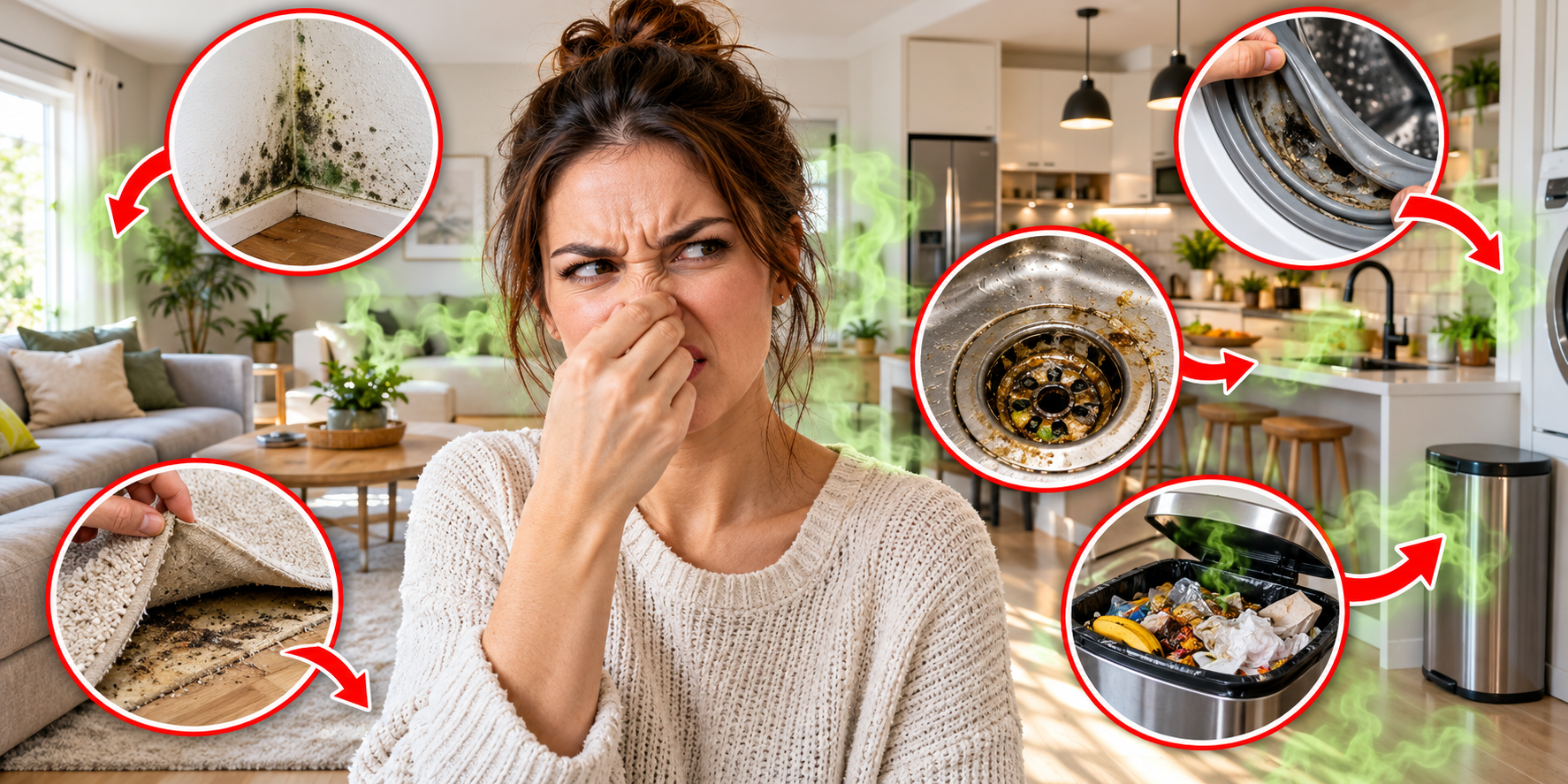
Soft furnishings are excellent at trapping odors.
Fabric sofas, carpets, rugs, pillows, and curtains can absorb cooking fumes, pet smells, body oils, smoke, and humidity.
This explains why your home may smell pleasant immediately after mopping, only for the bad smell to return once the fragrance fades.
Fabric and carpet freshness recipe
You’ll need:
- Vacuum cleaner with upholstery attachment
- Mild fabric-safe cleaner
- Microfiber cloth
- Baking soda, only if appropriate for the fabric and vacuum manufacturer
Instructions:
- Vacuum carpets, rugs, and furniture thoroughly.
- Remove sofa cushions and vacuum underneath them.
- Check furniture care labels before using any liquid cleaning solution.
- Spot-test a suitable upholstery cleaner on an inconspicuous area.
- Clean any identified stain or odor source following the product directions.
- Dry the material fully with good airflow.
- Wash removable pillow covers and throws according to their care instructions.
A carpet extraction service or professional upholstery cleaning may help when odors are deeply embedded in the fabric or padding.
Important: Never soak upholstery or carpets in homemade mixtures. Excess moisture can make the odor worse and damage the material underneath.
6. Your Refrigerator Drip Pan Is Full of Hidden Grime
Most people clean refrigerator shelves, doors, and drawers but forget about the components underneath or behind the appliance.
Some refrigerators have accessible drip pans that collect defrost water. Organic debris in an accessible pan can sometimes create unpleasant odors.
Refrigerator odor removal method
You’ll need:
- Warm soapy water
- Soft cleaning brush
- Clean microfiber cloth
Instructions:
- Check the refrigerator manual to find out whether the drip pan is user-accessible.
- Disconnect power if instructed by the manufacturer.
- Carefully remove the pan only if it is designed to be removed.
- Wash it with warm soapy water.
- Rinse, dry, and reinstall it correctly.
- Check beneath and behind the refrigerator for spilled food or moisture.
Don’t force a fixed or inaccessible drip pan out of the appliance. Some models are designed to require professional servicing.
7. Your Bathroom Exhaust Fan Isn’t Removing Enough Moisture
A beautiful bathroom can develop a musty smell if moisture remains trapped after showers.
Poor ventilation may allow condensation to linger on walls, grout, ceilings, and other surfaces.
Bathroom ventilation cleaning routine
- Inspect the exhaust fan grille for dust accumulation.
- Switch the fan off before cleaning.
- Vacuum or wipe the accessible grille according to the manufacturer’s instructions.
- Check whether the fan moves air effectively.
- Use the exhaust fan during showers and for approximately 20 minutes afterward, or as recommended for your bathroom.
- Squeegee wet shower surfaces and dry recurring condensation.
If the bathroom stays damp despite regular ventilation, ask a qualified professional to inspect the fan and ducting.
A suitable exhaust fan upgrade or targeted moisture repair may be more effective than constantly buying bathroom deodorizers.
8. Your Trash Can Smells Even After You Empty It
Emptying the garbage does not automatically remove the bacteria-rich residue, spilled liquids, or food particles left behind inside the bin.
Trash cans may continue smelling even with a fresh bag.
Simple trash can cleaning recipe
You’ll need:
- Warm water
- Dish soap
- Scrubbing sponge
- Clean towel
Instructions:
- Remove the trash bag and any loose debris.
- Wash the inside and outside with warm soapy water.
- Pay special attention to lid hinges, corners, and the bottom of the bin.
- Rinse thoroughly.
- Dry completely before inserting a new trash bag.
- Check the surrounding floor for unnoticed spills.
Extra tip: Use a bin liner that fits properly and remove food waste frequently, particularly during hot weather.
9. Your Home Has Poor Airflow and Trapped Humidity
Sometimes the biggest cause of unpleasant household odors isn’t dirt at all.
It’s stagnant air.
When a house remains closed for long periods, moisture and odors from cooking, cleaning products, laundry, pets, and everyday living may accumulate indoors.
This can make even a recently cleaned home smell stale.
Fresh-air reset routine
You’ll need:
- A hygrometer
- A working bathroom or kitchen exhaust fan
- A dehumidifier if indoor humidity remains high
Instructions:
- Measure humidity in the rooms with the strongest odors.
- Open windows when outdoor air quality, weather, and safety conditions allow.
- Use kitchen ventilation while cooking.
- Run bathroom exhaust fans during moisture-producing activities.
- Avoid drying wet laundry indoors without adequate ventilation.
- Use a properly sized dehumidifier if the home remains excessively humid.
Remember: An air purifier equipped with activated carbon may help reduce certain airborne odors, but it cannot fix a leak, dirty drain, or mold-contaminated material.
The 15-Minute Home Odor Removal Routine You Can Try Today
If you cannot identify where the bad smell is coming from, use this simple routine to narrow down the possible causes before spending money on professional cleaning products.
15-Minute Cleaning Checklist
0/5 complete
Minutes 0–3
Empty the kitchen and bathroom trash cans, and inspect them for spills.
Minutes 3–6
Check the kitchen sink, garbage disposal, and refrigerator for unpleasant odors.
Minutes 6–9
Inspect the washing machine gasket, damp towels, and laundry area.
Minutes 9–12
Check for water stains, damp corners, or musty smells near walls and windows.
Minutes 12–15
Ventilate safely, inspect the HVAC filter, and measure indoor humidity if possible.
When Should You Hire a Professional Odor Removal or Cleaning Service?
Most everyday household odors can be improved with regular maintenance and targeted cleaning. However, certain problems require more than a homemade cleaning solution.
| Problem | Professional service to consider |
|---|---|
| Persistent musty smell and visible moisture | Water damage inspection or restoration |
| Recurring mold growth | Mold remediation |
| Odors coming from HVAC equipment | HVAC maintenance |
| Deeply embedded carpet or furniture odors | Professional carpet or upholstery cleaning |
| Sewage-like smells from drains | Licensed plumbing service |
| Persistent smoke or severe pet odors | Specialized odor removal |
A reputable company should inspect the problem, explain the likely source, and provide a written estimate before recommending expensive treatment.
If you ever smell gas or suspect carbon monoxide, leave the area immediately and contact the appropriate emergency service. Carbon monoxide itself is odorless, so working CO alarms are essential.
Frequently Asked Questions
Why does my house smell bad even though I clean every day?
Daily surface cleaning cannot always remove odors trapped in upholstery, washing machine seals, plumbing, HVAC components, or damp building materials. The key is identifying the source rather than covering it with fragrance.
What absorbs bad smells in a house?
Activated carbon products can help capture certain airborne odor compounds. Baking soda may help with some localized odors, but neither replaces proper cleaning, ventilation, or moisture control.
Can a house smell musty without visible mold?
Yes. Damp carpets, wet insulation, poor ventilation, and hidden water damage may produce musty odors even when mold is not visible. Persistent mustiness deserves further investigation.
Is professional odor removal worth the money?
It can be worthwhile when ordinary cleaning has failed and the cause has been identified. Professional services are most effective when they address the actual odor source instead of simply masking the smell.
How do I make my house smell fresh naturally?
Start by removing waste, cleaning hidden residue, drying damp surfaces, ventilating appropriately, washing washable fabrics, and keeping humidity under control. A genuinely clean and dry home usually needs fewer fragrance products.
Final Thoughts: A Fresh-Smelling House Starts With Finding the Hidden Problem
A spotless home should feel comfortable, but persistent odors can make even the cleanest rooms unpleasant.
The secret isn’t using stronger fragrances, buying more expensive cleaners, or scrubbing the same surfaces over and over again.
It’s discovering where the odor is actually coming from.
Whether it’s a dirty washing machine, a forgotten refrigerator drip pan, trapped carpet odors, or hidden moisture damage, finding the source can save time, money, and unnecessary frustration.
Start with the simple cleaning recipes in this guide. If the odor keeps returning, particularly when accompanied by moisture damage or plumbing problems, consider a qualified professional inspection.
And remember: A house that smells clean isn’t necessarily one that has been sprayed with perfume. It’s one where the real sources of unpleasant odors have been removed.
