

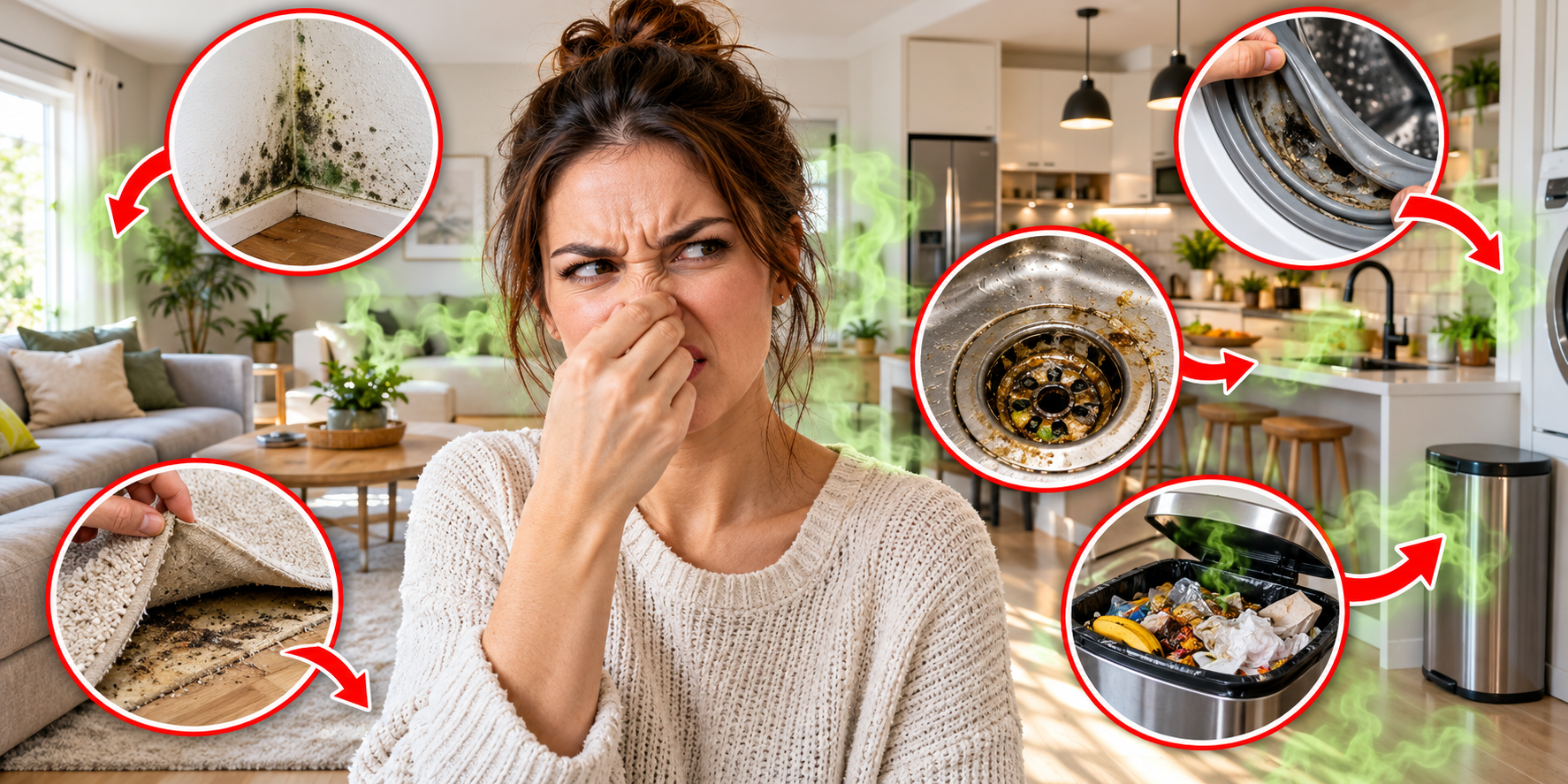
Your washing machine is supposed to make things smell fresh, but it could actually be responsible for the unpleasant odor spreading through your home.
Front-loading washers are particularly vulnerable because moisture, detergent residue, lint, and dirt can become trapped inside the rubber door gasket.
Over time, this buildup can produce a sour, musty smell that transfers to freshly washed clothing and towels.
Signs this is your problem: Clothes smell unpleasant after washing, the machine has a musty odor when opened, or you notice slimy buildup around the door seal.
Quick washing machine cleaning recipe
You’ll need:
- Warm water
- Mild dish soap
- Microfiber cloth
- Old soft toothbrush
Instructions:
- Mix a few drops of dish soap into a bowl of warm water.
- Gently pull back the washing machine’s rubber gasket and inspect the folds.
- Wipe away trapped lint, hair, and detergent residue.
- Use the toothbrush to clean hard-to-reach creases.
- Wipe again with a clean, damp cloth.
- Run the manufacturer’s recommended tub-cleaning cycle.
- Leave the door and detergent drawer open afterward so everything can dry.
Pro tip: Clean the gasket regularly and avoid using more detergent than recommended. Excess detergent can leave residue that traps odors.
2. Hidden Mold or Water Damage Behind Your Walls
A persistent musty smell that never disappears may be more than a cleaning problem.
Hidden water leaks and damp building materials can create conditions where mold grows behind drywall, underneath flooring, or inside poorly ventilated spaces.
Even if you cannot see visible mold, damp materials can produce a distinctive earthy or musty odor.
Potential warning signs include bubbling paint, recurring wall stains, warped baseboards, unusually damp rooms, and odors that become stronger after rainfall.
How to investigate safely
- Check underneath sinks, around windows, and near plumbing fixtures for visible moisture.
- Look for discoloration, peeling paint, or damaged drywall.
- Use a hygrometer to check indoor humidity.
- Aim to keep indoor humidity below 60%, ideally between 30% and 50%.
- Fix identifiable water leaks promptly.
- Arrange a professional moisture inspection if the odor persists without an obvious source.
Important: Do not paint over mold or spray fragrance into damp wall cavities. If mold covers a large area, keeps returning, or involves contaminated water, professional mold remediation may be appropriate.
Money-saving tip: Identifying a small leak early may help prevent expensive drywall replacement, structural water damage restoration, and extensive mold cleanup.
3. Your Kitchen Sink Drain Is Hiding Years of Smelly Buildup
Even when the kitchen countertops sparkle, the drain can harbor food debris, grease, soap residue, and organic buildup.
This material can produce strong unpleasant odors, particularly in kitchens with garbage disposals.
Easy kitchen drain deodorizing method
You’ll need:
- Warm water
- Dish soap
- Small drain brush
- Clean cloth
Instructions:
- Remove visible food debris around the drain opening.
- Apply a little dish soap to the drain brush.
- Scrub the accessible drain opening and removable strainer.
- Rinse with warm water.
- If you have a garbage disposal, turn off its power before cleaning the accessible splash guard according to manufacturer instructions.
- Rinse thoroughly and check whether the odor improves.
Warning: Do not mix bleach with vinegar, ammonia, drain cleaners, or other chemicals. If you notice a sewage-like or rotten-egg smell, stop treating it as a routine cleaning issue and have the plumbing assessed. A dry P-trap or sewer gas problem may require a plumber.
4. Your HVAC System Is Circulating Unpleasant Odors
Your air conditioning and heating system might be spreading odors throughout the house rather than removing them.
Dirty filters, damp components, clogged condensate drains, and contaminated areas inside HVAC equipment can all contribute to indoor odor problems.
This is especially noticeable when the smell becomes stronger shortly after the air conditioner starts.
HVAC freshness checklist
- Inspect your HVAC air filter.
- Replace it according to the manufacturer’s recommended schedule.
- Check that air vents are not blocked by furniture.
- Look for signs of leaks or standing water around accessible HVAC equipment.
- Have a qualified technician inspect persistent musty smells from the system.
An HVAC maintenance service may help identify a clogged drain, wet insulation, or another moisture problem.
Professional cleaning note: Whole-house air duct cleaning is not automatically necessary for every odor problem. A targeted inspection should identify the source before you pay for duct cleaning or odor treatment.
