

- Safe for you: grease on the stovetop, sink basin, counters, exterior of appliances, floor in front of the sink.
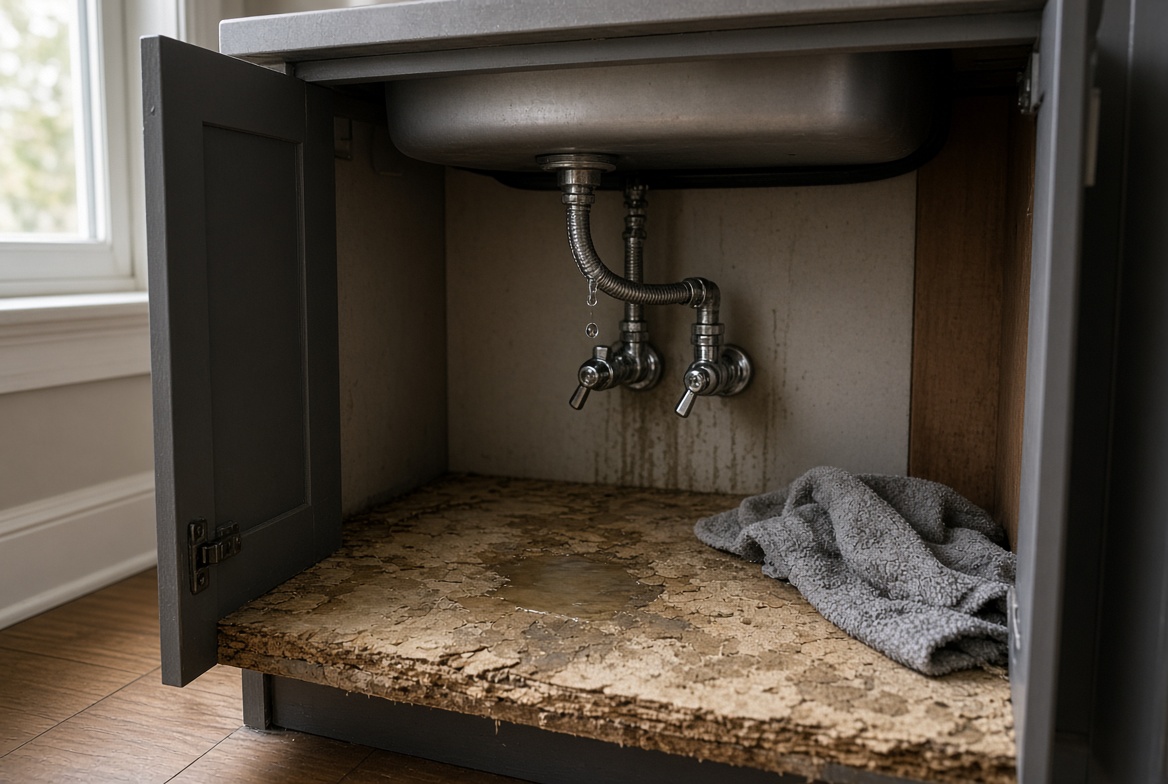
- Stop and get a plumber: active drip, bulging supply line, water under the dishwasher, ice maker leaking.
- Stop and get restoration: wet subfloor, swollen baseboard, drywall soft at the bottom, visible mold behind the toe-kick.
The kitchen clean that actually prevents a claim
Do this in order. Dry work first, wet work second, moisture check last.
- Clear the counters and the sink. Move bottles, the dish rack, and anything stored under the sink.
- Degrease the range and backsplash with a grease cutter, not more water. Grease is not an insurance problem. It is how people stop looking at the rest of the kitchen.
- Wash the sink, the faucet base, and the caulk line. Failed caulk is a slow leak into the counter edge.
- Open the under-sink cabinet. This is the step that matters. Look for staining, swelling, a white crust on the shutoff valves, and a damp smell. Run the faucet and watch the trap and both supply lines. Dry any drip before you close the door.
- Pull the dishwasher toe-kick if you can do it without tools. A damp pad under the machine is a failing hose or a door seal, not a mopping issue.
- Pull the fridge out far enough to see the water line if you have an ice maker. Dust on the coil is a separate chore. A wet floor behind the fridge is not.
- Mop the floor last, with a wrung-out mop. A soaking mop pushed under the cabinets is how people create the moisture they were trying to remove.
- Leave cabinet doors open for an hour if anything was damp. Particle board does not forgive a closed, wet box.
Monthly, not daily: the dishwasher filter, the fridge drip pan, the sink aerator, and the caulk. Those four items cause more “sudden” kitchen leaks than a dirty stovetop ever will.
What a restoration bill and a mold bill actually include
Prices move with city, water category, and how long the material stayed wet. Use these as ranges, not quotes.
Water extraction and dry-out for a kitchen cabinet run and a small section of floor often lands in the low thousands before rebuild. A job that opens the wall, replaces drywall, and resets cabinetry costs more. Mold remediation after a leak is a separate scope: containment, removal of colonized material, HEPA cleaning, and clearance. If the carrier accepts the claim, they may pay mitigation and a capped mold sub-limit, then depreciate the cabinet rebuild until repairs are done.
Document for the adjuster the same way a restoration company would.
- Photos of the source before anyone “fixes” it.
- Photos of standing water and of the wet cabinet floor.
- The date you first noticed it.
- A moisture reading if a technician took one.
- Invoices that separate dry-out from rebuild.
Cleaning products do not replace that file. A bottle of mold spray on a wet cabinet base is how a small loss becomes a denied claim and a larger mold remediation job.
A simple rule for the only cleaning subject that pays for itself
Clean the kitchen because it is the room that fails expensively, not because the counters look dull. The high-intent searches around this topic — homeowners insurance water damage, water damage restoration, mold remediation cost, burst supply line cleanup — exist because people meet the problem after the cabinet is already soft. The click advertisers pay for is the emergency. The page that deserves the visit is the one that shows the shutoff valves, the trap, and the toe-kick before that emergency exists.
If the cabinet floor is dry, keep it dry. If it is wet, stop cleaning and start the claim file.
