

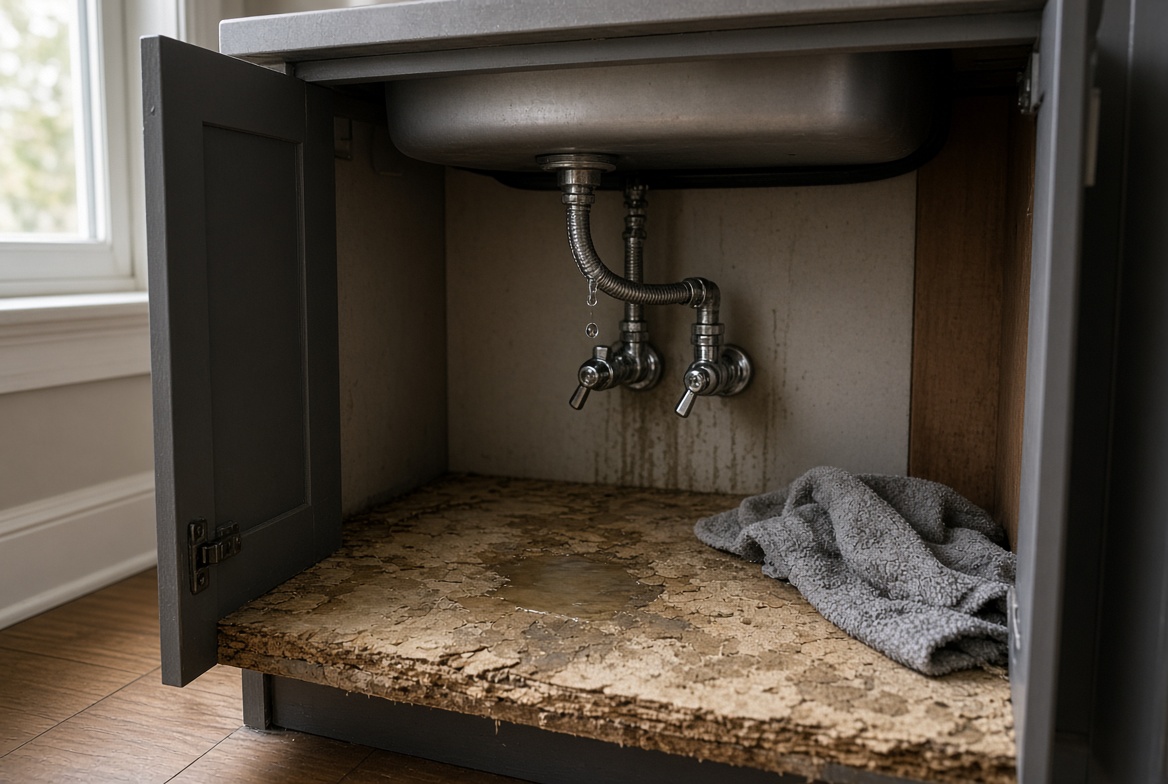
- A supply line on the dishwasher weeps for weeks before anyone notices a soft cabinet floor.
- The garbage disposal flange loosens and drips into the base cabinet.
- The fridge ice-maker line, often hidden behind the unit, sweats or splits.
- The sink P-trap is hand-tight and seeps every time the basin drains.
- A clogged air gap or a backed-up dishwasher floods the toe-kick, then the subfloor.
Mold can start on wet drywall and cabinet particle board within 24 to 48 hours. By the time you smell it, a mold remediation visit is often the next call after the plumber. That is also the moment people search whether homeowners insurance covers water damage, and the answer is usually “it depends on the cause.”
What homeowners insurance usually covers, and what it does not
This is general information, not a policy reading. Coverage lives in your declarations page and endorsements.
Sudden and accidental discharge is the phrase adjusters use for a burst supply line or a failed dishwasher hose. Many HO-3 style policies cover that kind of sudden leak, including dry-out, and sometimes mold, up to a sub-limit. Gradual leaks are the common denial. If water has been seeping for months and the cabinet floor is swollen, the carrier may call it maintenance, not a covered peril. Flood from outside, sewer backup, and sump failure are often excluded unless you bought a separate endorsement.
A practical split:
- Covered more often: a supply line that ruptures overnight, a dishwasher hose that splits, an ice-maker line that bursts.
- Denied more often: a slow trap leak you could have seen, rot from years of splash, mold from condensation you never dried.
- Often needs an extra endorsement: sewer or drain backup, sump overflow, hidden water seepage.
Filing a water damage insurance claim is worth it when the dry-out and repairs clearly exceed your deductible and the cause looks sudden. It is a weaker bet when the damage is a soft cabinet bottom you have been ignoring. Repeated claims can also raise your premium or make renewal harder. Photograph everything before you throw wet material away, and ask the carrier whether they want their own vendor or will accept your water damage restoration company.
When cleaning stops and restoration starts
Wipe what you can see. Call for water damage restoration when water has reached the subfloor, the wall cavity, or the insulation.
A proper mitigation visit is not a mop. Crews extract standing water, set air movers and dehumidifiers, monitor moisture in wood and drywall, and remove material that will not dry. In competitive U.S. markets, emergency water damage restoration clicks are among the most expensive in home services because the job value is high and the customer is ready to book the same day. Mold remediation is the follow-on search, often one to four weeks later, once owners realize the cabinet still smells.
You can handle the surface. You should not handle the cavity.
