

Directions: Stir the baking soda into the water until dissolved. Dampen your cloth with the solution, wipe accessible interior surfaces, then wipe again with a clean, damp cloth and dry thoroughly. Follow your refrigerator manufacturer’s cleaning instructions.
Remove food before cleaning and keep perishables chilled in a cooler. Let cold glass shelves reach room temperature before washing them with warm water.
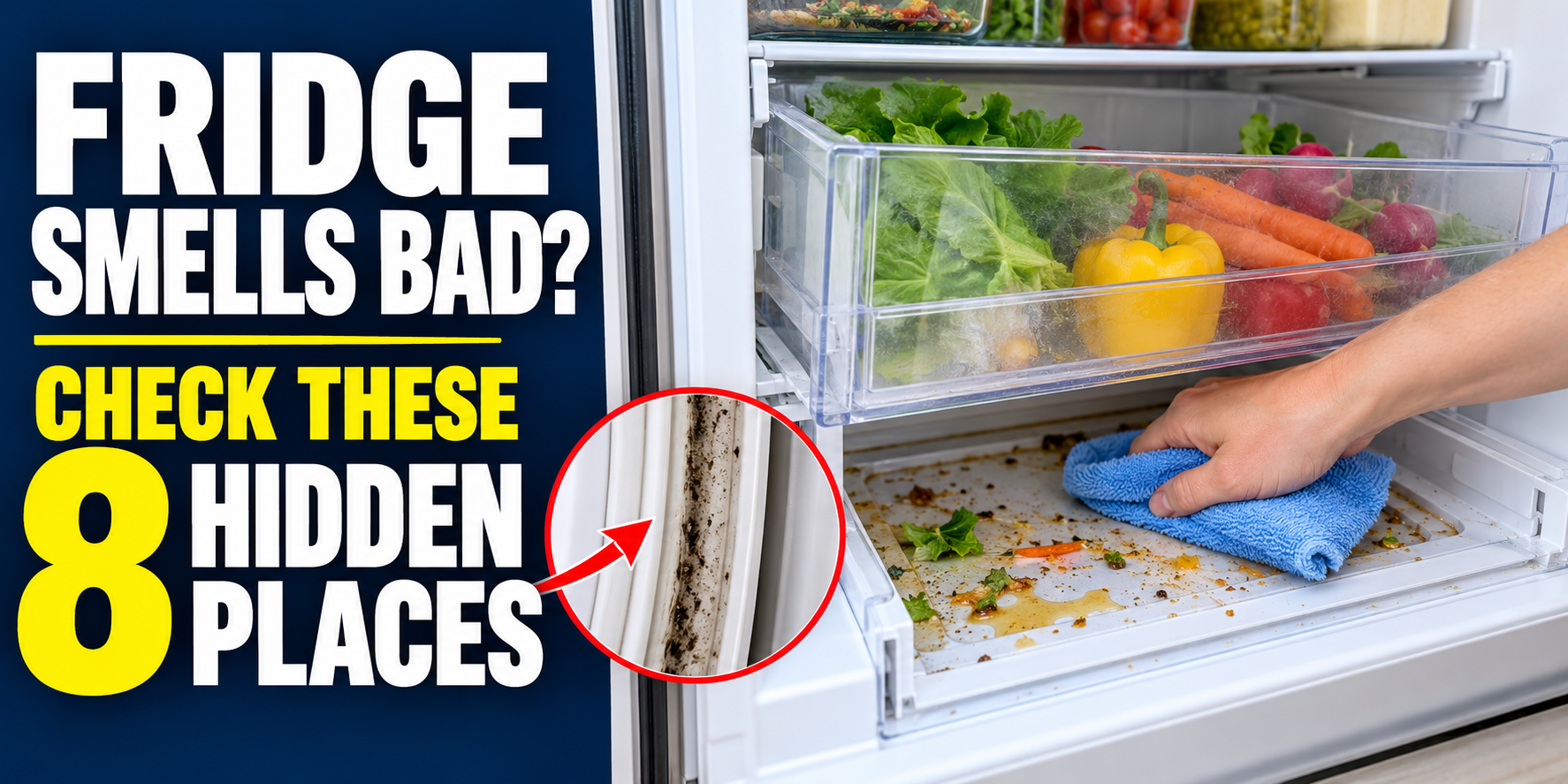
1. Underneath the Crisper Drawers
A forgotten leaf or leaking piece of fruit can leave a surprisingly strong smell beneath the vegetable drawers.
What to do: Remove the drawers, clear away debris, and wipe the entire area underneath. Wash the drawers and dry them before putting them back.
2. Inside the Rubber Door Seals
The folds of the door gasket can trap crumbs, sticky drinks, and moisture.
What to do: Gently open each fold and clean it with your damp cloth. Use a soft toothbrush for tight corners. Dry carefully and check for tears or gaps that prevent the door from sealing.
3. Around Shelf Edges and Support Tracks
Spilled milk or sauce can run beneath shelf trim and into the tracks that hold shelves in place.
What to do: Remove shelves according to the manual and clean accessible edges and supports. Avoid forcing apart trim that isn’t designed to be removed.
4. Beneath Door Bins and Bottle Bases
Condiment bottles can look clean on top while sticky residue collects underneath them.
What to do: Remove the door bins if your model allows it. Clean their corners, wipe bottle bases, and check for leaking lids before returning everything.
5. Inside Food Containers and Their Lids
An overlooked leftover or residue beneath a container’s lid seal may be the real source of the odor.
What to do: Check every container, including those at the back. Discard spoiled food without tasting it, wash reusable containers, and clean removable lid seals according to their care instructions.
6. Around the Defrost Drain
On some refrigerators, debris near the defrost drain can contribute to standing water and unpleasant odors.
What to do: Check your owner’s manual for the drain’s location and cleaning procedure. Wipe away accessible debris. If water keeps pooling or the drain is inaccessible, arrange appliance service.
7. In the Drip Pan
Some models collect defrost water in a pan beneath the refrigerator. Accumulated dirt or residue can become an odor source.
What to do: Unplug the appliance before accessing the pan, and follow the manual. Clean it only if it is designed to be user-accessible; leave fixed or hard-to-reach pans to a technician.
8. Inside the Ice Bin
Old ice can pick up food odors, while spills or poorly sealed freezer items may affect the smell of the freezer compartment.
What to do: Discard old ice, wash the removable bin as directed, and dry it completely. Check nearby food packaging and replace filters when required by the manufacturer.
Keep the Smell From Coming Back
Wipe spills promptly, store leftovers in sealed containers, and check produce regularly. An open container of baking soda may help with lingering odors, but removing the source comes first.
If the smell persists, water keeps collecting, or cooling seems weak, book a refrigerator repair service to diagnose the problem.
