

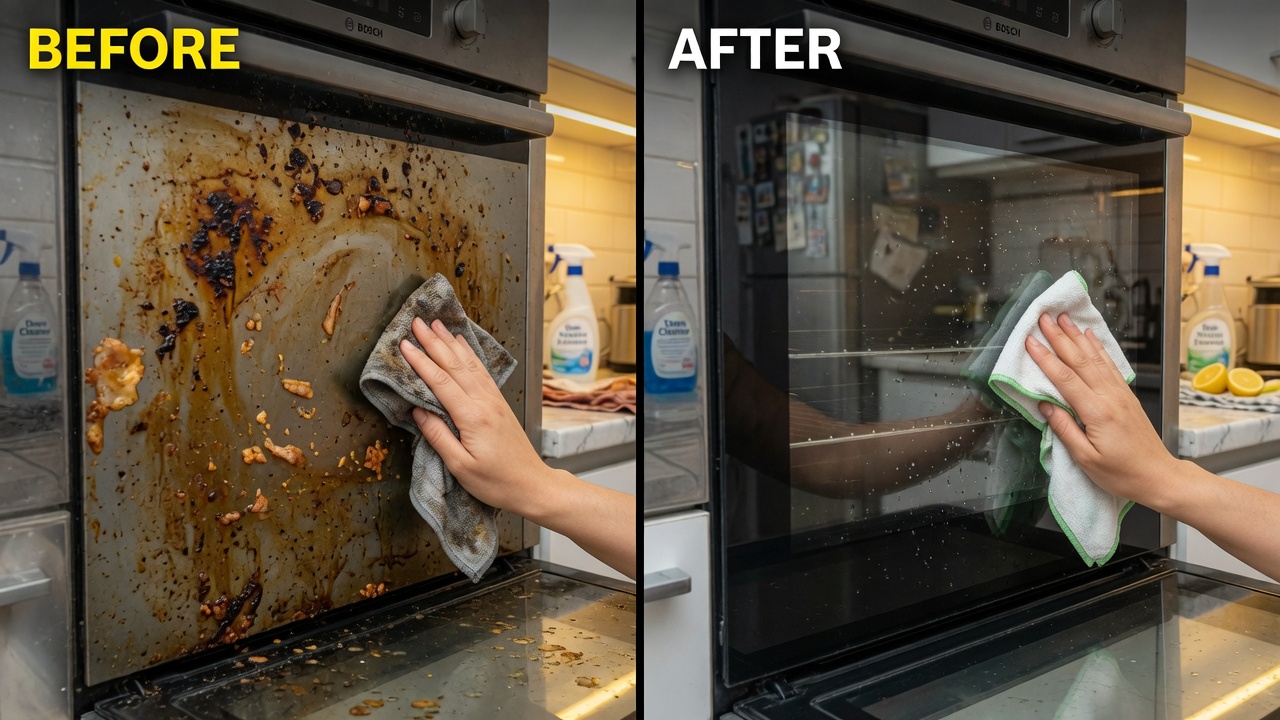
Greasy oven glass? Burnt-on brown stains that laugh at every scrubbing session? That cloudy, streaked window that makes you peer sideways just to check if the lasagna is browning? You’re not alone — and you don’t need expensive sprays, harsh fumes, or an hour of elbow grease.
This simple cleaning method uses products you almost certainly already have in your kitchen. In roughly two minutes of active work (plus a short wait while the paste does the heavy lifting), the glass can look clear, shiny, and nearly new again. No special tools. No toxic cloud. Just baking soda, a little water, optional vinegar or dish soap, and a soft cloth.
Why Oven Glass Gets So Stubborn
Every time you roast, bake, or broil, tiny droplets of fat, sugar, and food particles hit the glass. Heat polymerizes them into a tough, browned film. Over months the film builds layer after layer until the glass looks permanently stained. Regular dish soap and a sponge barely touch it because the grime has bonded to the surface.
Baking soda (sodium bicarbonate) is mildly alkaline and gently abrasive. It softens and lifts the greasy film without scratching the glass the way steel wool or harsh scouring pads would. A quick vinegar spray afterward creates a fizzing reaction that helps loosen the last residue and leaves a streak-free finish.
The “Recipe” (What You’ll Need)
Treat this like a simple kitchen recipe:
Ingredients
- ½ cup baking soda (bicarbonate of soda)
- 3–4 tablespoons water (or enough to make a thick, spreadable paste)
- Optional boost: 1 teaspoon dish soap (Dawn or any grease-cutting liquid) or a few drops of lemon juice
- White vinegar in a spray bottle (equal parts vinegar and water works fine)
- Soft sponge, microfiber cloths, or non-scratch scrubber
- Plastic scraper or old loyalty card (for stubborn spots)
- Paper towels or clean dry cloth for final buffing
- Optional: crumpled aluminum foil ball for extra scrubbing power on heavy buildup
Time
- Active work: about 2 minutes
- Wait time: 15–30 minutes (or longer for years of neglect)
- Total: under 35 minutes for most ovens
Step-by-Step Method
- Cool completely
Never clean hot glass. Thermal shock can crack it. Open the door fully so the glass lies as flat as possible. Wipe away loose crumbs with a dry cloth or paper towel. - Mix the paste (30 seconds)
In a small bowl combine the baking soda with just enough water to form a thick paste the consistency of frosting or peanut butter. It should cling to the glass, not drip. Stir in the optional dish soap if you want extra grease-cutting power. - Apply generously (30–45 seconds)
Using your fingers (wear gloves if you like), a soft sponge, or a pastry brush, spread a thick, even layer over the entire inner glass surface. Focus extra paste on the darkest, most burnt areas. Don’t worry about perfection — just cover everything. - Let it work
Walk away for 15–30 minutes. For truly ancient stains, leave it an hour or even overnight. You’ll often see the paste darken as it absorbs grease — that’s a good sign. - The 2-minute active clean
Spray the paste liberally with the vinegar solution. It will fizz and foam — this is the fun part and helps lift the loosened grime.
Wipe with a damp microfiber cloth or soft sponge using circular motions. Most of the paste and brown film should come away easily.
For any remaining spots, gently scrape with a plastic card held flat against the glass or use a crumpled ball of aluminum foil for light abrasion (the foil is surprisingly effective and won’t scratch if you don’t press too hard).
Rinse the cloth often and wipe until the glass is clear. - Final polish
Spray a light mist of vinegar-water or plain water, then buff dry with a clean microfiber cloth or paper towel. The glass should now be crystal clear and streak-free.
Pro Tips for Maximum Shine
- Work in good light so you can see every remaining streak.
- If residue sneaks between the double-pane glass (common on many ovens), you may need to remove the inner panel following your oven’s manual. Some models have screws or clips accessible once the door is removed.
- For extremely heavy buildup, repeat the paste application on the worst spots.
- Avoid abrasive scouring pads, metal scrapers, or razor blades unless the manufacturer specifically allows them — scratches are permanent.
- The aluminum-foil scrub method is a popular variation for speed: pour hot (not boiling) water over the glass, sprinkle baking soda thickly, wait 30 seconds, then scrub with a foil ball for 1–2 minutes. Many people report dramatic results in under three minutes of scrubbing.
Prevention Is Even Faster
Once the glass is clean, keep it that way:
- Wipe the glass with a damp cloth after the oven cools from each use — it takes 30 seconds and prevents most buildup.
- Place a baking sheet or sheet of foil on the rack below messy dishes to catch drips.
- A quick vinegar-water spray once a week keeps light films from becoming permanent.
Why This Beats Store-Bought Cleaners for Most People
Commercial oven sprays work, but many contain strong chemicals that require ventilation, gloves, and careful rinsing. Baking soda is cheap, non-toxic, safe around food surfaces, and already in almost every pantry. The results on glass are often just as good for everyday and moderate grime, and you avoid the lingering chemical smell.
Stubborn years of neglect may still need a second round or a commercial gel for the absolute worst spots, but the majority of home ovens respond beautifully to this simple paste.
That’s it. Two minutes of hands-on time, pantry staples, and a door that finally looks like it belongs in a showroom. Open the oven next time you cook and enjoy actually being able to see what’s happening inside. Your future self (and anyone who walks into the kitchen) will thank you.
Go mix that paste — your oven glass is waiting.
