

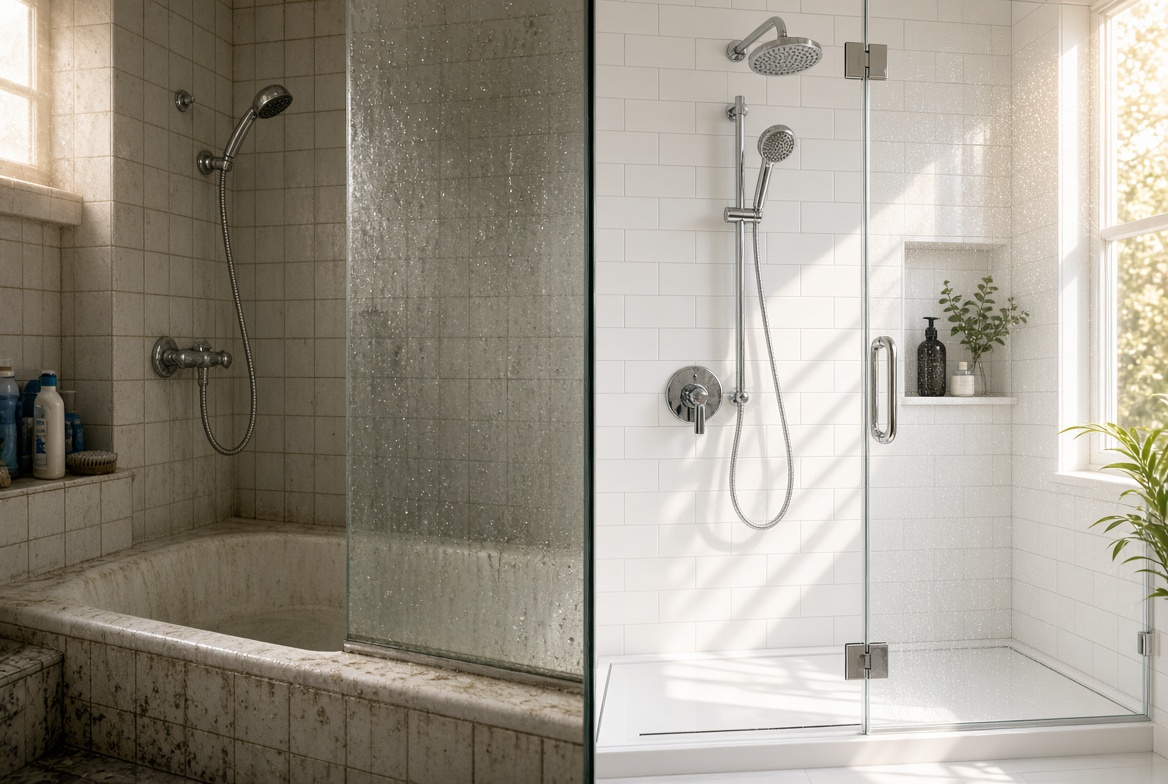
Skip mixing bleach with vinegar or ammonia. Never use abrasive powders on acrylic or fiberglass.
Step 1: Empty and pre-rinse
Remove bottles, mats, and the drain cover. Pull hair from the drain. Rinse the entire tub and shower with hot water so products can cling to film instead of sitting on dry scale.
Step 2: Let chemistry work before you scrub
Spray walls, tub, door tracks, and fixtures with a 1:1 white vinegar and warm water mix (use more water on acrylic/fiberglass). For heavy soap scum, add a squirt of dish soap.
Let it sit 10–20 minutes. Dwell time does more than extra elbow grease.
For grout and stubborn mildew lines, make a paste of baking soda + a little water (or hydrogen peroxide if you prefer). Press it into grout and caulk. Leave it while you work elsewhere.
Step 3: Work top to bottom
- Showerhead: Fill a bag with vinegar, wrap it around the head, hold with a rubber band, soak 20–30 minutes, then rinse and poke clogged holes with a toothpick.
- Walls and corners: Scrub in circles with a soft brush. Hit seams, caddy shelves, and the shower-door track—those are mold’s favorite hiding spots.
- Grout: Use the small brush. Repeat paste + dwell if grout is still gray. Oxygen bleach in hot water is a strong follow-up for ceramic tile grout (not natural stone unless the product says so).
- Tub: Pay extra attention to the waterline, drain ring, and the outside apron people forget. Rinse thoroughly.
- Glass: After the vinegar dwell, wipe with a microfiber. A light glass cleaner pass at the end cuts streaks. Squeegee after future showers so you rarely need this step again.
Rinse from the top down so dirty water doesn’t resettle.
Step 4: Dry and inspect caulk
Wipe surfaces dry. Standing water is how mildew returns in 48 hours. Check caulk: if it is cracked, pulling away, or stained through, cleaning will not fix it—recaulk or you will keep feeding mold.
Match the method to the material
- Porcelain / enamel: Vinegar + baking soda is usually fine; you can be a bit more aggressive.
- Acrylic / fiberglass: Milder mix, no powders, no steel wool. Scratches haze forever.
- Natural stone: Skip vinegar (acid etches). Use a stone-safe cleaner.
- Jetted tub: Surface clean is not enough—you also need to flush the jets per the manufacturer so biofilm does not sit in the lines.
Keep it from coming back
Squeegee glass and walls after each shower. Run the fan 20 minutes after you finish. Keep bottles off the floor so the tub can dry. A weekly 5-minute vinegar spray beats a quarterly battle—and beats paying for recurring bathroom cleaning service or another remodel consult.
When a deep clean is not enough
Call a professional if you see mold spreading behind caulk or under vinyl, a musty smell that returns immediately, soft or crumbling drywall, or a leak. That is the line between DIY and mold remediation, water damage restoration, or a genuine shower/tub replacement. A smart clean saves money; ignoring a leak does the opposite.
Do the dwell-time clean once, then maintain. Most “I need a new bathroom” showers just needed chemistry, a grout brush, and a dry surface.
