

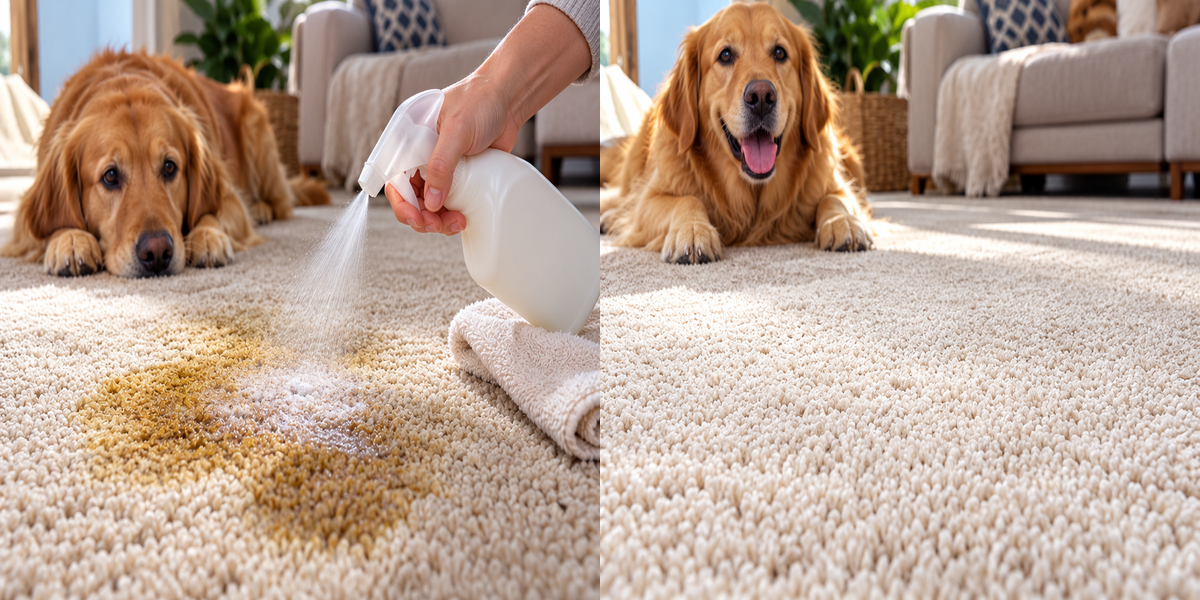
Pet urine can penetrate deep into carpet fibers, backing, and padding.
As urine dries, residue remains embedded in the material. Odor-causing compounds and bacteria can contribute to an unpleasant smell that becomes noticeable again when the carpet is exposed to moisture.
Common reasons pet odors keep returning include:
- Urine has soaked into the carpet padding.
- Regular cleaning products have failed to remove odor-causing residue.
- The stain wasn’t cleaned immediately.
- Excess moisture remains trapped beneath the carpet.
- The pet repeatedly urinates in the same area.
Important: A carpet that looks clean isn’t necessarily free of pet urine residue.
The Best DIY Method to Remove Pet Urine Smell From Carpet
What You’ll Need
For this simple DIY deep-cleaning method, gather:
- Clean microfiber cloths or paper towels
- Cool water
- A pet-safe enzymatic urine cleaner suitable for your carpet
- A wet-dry vacuum or carpet extractor, if available
- Protective cleaning gloves
- A fan or dehumidifier for faster drying
Unlike ordinary scented cleaners, enzymatic products are designed to break down organic residues responsible for stubborn pet odors.
Step 1: Absorb as Much Urine as Possible
If the pet accident is fresh, act immediately.
Place several layers of paper towels over the wet area and press firmly to absorb the liquid.
Repeat with clean towels until very little moisture transfers.
Avoid rubbing or scrubbing aggressively because this can spread the urine and damage carpet fibers.
Step 2: Rinse the Stained Area With Cool Water
Apply a small amount of cool water to the affected area, provided the carpet manufacturer permits wet cleaning.
Blot the moisture using clean towels or extract it with a suitable wet vacuum.
Avoid over-saturating the carpet, especially if the stain is near wood flooring or delicate carpet backing.
This step helps remove some of the remaining urine before odor treatment.
Step 3: Apply an Enzymatic Pet Urine Cleaner
This is one of the most important steps.
Choose an enzymatic pet stain and odor remover specifically labeled for carpets.
- Test the cleaner on a hidden section of the carpet.
- Apply it to the affected area following the product instructions.
- Allow the recommended contact time.
- Keep children and pets away until the treated area is safe for use.
- Blot, extract, or air-dry as directed by the manufacturer.
Some products require extended contact time to break down odor-causing material effectively.
Do not mix enzymatic cleaners with bleach, ammonia, vinegar, or other household cleaning chemicals.
Step 4: Remove Remaining Carpet Stains
Once the odor treatment is complete and the carpet has dried, inspect the area.
If discoloration remains, use a carpet stain remover compatible with your carpet fibers.
Always test the product in an inconspicuous area before treating a visible stain.
Avoid aggressive brushing, which may permanently damage delicate fibers.
Step 5: Dry the Carpet Completely
Proper drying is essential.
Open windows when weather conditions allow and use fans or a dehumidifier to increase airflow.
Try to dry carpets and underlying materials within 24–48 hours to reduce the risk of mold growth.
Do not place furniture back on damp carpet.
How to Remove Old, Dried Dog Urine Stains From Carpet
Old urine stains can be more challenging because the residue may have penetrated deeper into the carpet.
Start by identifying the affected area. A pet urine detection UV flashlight can sometimes help locate older stains, although not every stain fluoresces and other substances may also glow.
For older stains:
- Lightly rehydrate the affected area with cool water if appropriate for the carpet.
- Extract as much moisture and residue as possible.
- Apply a suitable enzymatic pet urine cleaner.
- Follow the product’s required contact time.
- Allow the carpet to dry fully before evaluating the result.
Severe contamination may require multiple treatments or professional assessment.
If the urine reached the padding or subfloor, surface cleaning alone may not solve the problem.
5 Carpet Cleaning Mistakes That Make Pet Urine Odors Worse
1. Using a Steam Cleaner Too Soon
Heat can set urine stains and odors into certain carpet fibers.
Avoid hot steam treatments on untreated urine contamination.
2. Using Ammonia-Based Cleaning Products
Ammonia-based cleaners are not recommended for pet urine accidents because their odor may encourage pets to mark the same area again.
3. Spraying Too Much Perfume or Air Freshener
Air fresheners temporarily mask odors without removing the underlying urine residue.
4. Over-Wetting the Carpet
Using excessive water can push contamination deeper into the backing and padding.
It can also prolong drying time.
5. Ignoring the Carpet Padding
Sometimes the visible carpet is cleaned successfully while urine remains trapped beneath the surface.
This is a common reason odors return after cleaning.
Professional Pet Odor Removal vs. DIY Carpet Cleaning: Which Is Better?
Before hiring a professional carpet cleaning company, consider the severity of the contamination.
| Cleaning option | Best suited for |
|---|---|
| DIY enzymatic spot treatment | Small, fresh pet accidents |
| Portable carpet extractor | Localized stains and removable moisture |
| Professional carpet cleaning | Multiple stains or large affected areas |
| Specialized pet odor treatment | Persistent odors requiring deeper assessment |
| Carpet padding replacement | Heavy contamination beneath the carpet |
A professional carpet cleaning service may use specialized extraction equipment and treatments to address contamination that ordinary household products cannot reach.
However, no reputable cleaning company should guarantee complete odor removal without evaluating the carpet, padding, and subfloor.
How Much Does Professional Pet Urine Carpet Cleaning Cost?
The total professional carpet cleaning cost depends on several factors:
- Size of the affected area
- Number and age of urine stains
- Type of carpet material
- Whether the carpet padding is contaminated
- Cleaning and deodorizing methods required
- Labor rates in your city
- Whether replacement or subfloor treatment is necessary
Standard carpet shampooing and specialized pet urine odor removal may be priced differently.
Before booking a service, request a written estimate that explains whether stain treatment, odor removal, extraction, and padding inspection are included.
Comparing quotes from reputable local carpet cleaning companies can help you avoid paying for services you don’t need.
When Should You Hire a Professional Carpet Cleaning Service?
Consider hiring a professional if:
- The pet urine smell returns after repeated cleaning.
- Multiple rooms contain urine stains.
- The carpet smells worse during humid weather.
- Urine has penetrated the carpet padding.
- You notice persistent dampness or suspected mold.
- Expensive wool or delicate carpeting requires specialized care.
- DIY carpet cleaning products have failed to remove the odor.
For heavily contaminated carpets, a professional may recommend lifting sections of carpet, replacing affected padding, or evaluating the underlying floor.
How to Prevent Pet Urine Stains and Odors in the Future
Preventing repeat accidents helps protect your carpet and avoid unnecessary cleaning expenses.
Try these simple habits:
- Clean pet accidents immediately.
- Use enzyme-based cleaners formulated for pet urine.
- Keep carpets dry and properly ventilated.
- Vacuum regularly to remove loose dirt and pet hair.
- Consider washable rugs in areas where accidents frequently happen.
- Maintain consistent litter-box and outdoor bathroom routines.
- Consult your veterinarian if a previously house-trained pet suddenly begins having frequent accidents.
Recurring urination can sometimes indicate a medical or behavioral issue rather than a cleaning problem.
Frequently Asked Questions
What permanently removes dog urine smell from carpet?
An appropriate enzymatic cleaner can break down odor-causing urine residue. However, if urine has soaked into the carpet padding or subfloor, additional cleaning or replacement may be necessary.
Can baking soda remove pet urine odors?
Baking soda may absorb some surface odors, but it is not a reliable replacement for an enzymatic cleaner when urine residue remains inside the carpet.
Why does my carpet still smell like dog pee after shampooing?
The urine may have penetrated below the carpet surface, or cleaning may have left behind residue that becomes noticeable again when damp.
Is professional pet urine removal worth the money?
Professional treatment can be worthwhile for widespread contamination, persistent odors, or expensive carpeting that requires specialized cleaning.
Can old cat urine stains be removed completely?
Some old stains respond well to enzymatic treatment and extraction. Other stains can cause permanent discoloration or penetrate materials that require replacement.
Should I replace my carpet if it smells like pet urine?
Not necessarily. Start with an appropriate cleaning treatment, but consider replacement when contamination has permanently damaged the carpet or penetrated the padding extensively.
Final Thoughts
Pet urine odors and stubborn carpet stains don’t always require expensive professional cleaning.
By acting quickly, extracting moisture, choosing the right enzymatic pet urine cleaner, and thoroughly drying the carpet, many common pet accidents can be treated at home.
However, persistent smells, extensive contamination, and deeply soaked carpet padding may require professional pet odor removal or carpet replacement.
Before paying for an expensive carpet cleaning service, try a suitable DIY treatment and evaluate whether the odor has truly been eliminated.
A cleaner, fresher-smelling home starts with removing the source of the odor—not simply covering it up.
