

Ingredients (the cleaning “recipe”)
These are the pantry staples most U.S. homeowners already have.
For the oven
- ¾ cup baking soda (use 1 cup for a large or filthy oven)
- ¼ cup warm water (add a spoon at a time until you get a spreadable paste)
- 1 cup white distilled vinegar
- Warm water for rinsing
- Optional: a few drops of dish soap for racks
- Optional: lemon peel for a fresh finish (not required)
For the rest of the kitchen deep clean
- Dish soap
- All-purpose kitchen cleaner or degreaser
- White vinegar
- Hot water
- Baking soda (extra, for sink and stovetop)
- Microfiber cloths (6–8)
- Paper towels or an old towel for the floor
Tools
- Rubber gloves
- Spray bottle
- Plastic scraper or old plastic spatula (no metal on enamel)
- Non-scratch sponge
- Old toothbrush
- Garbage bags
- Basin, bathtub, or heavy-duty bag for racks
- Flashlight (to see the back corners)
Do not use
- Steel wool on enamel or glass
- Oven cleaner spray on a self-clean cycle, heating elements, or rubber door gasket unless the label says it is safe
- Baking soda paste on aluminum racks (it can discolor them)
Before you start (mise en place)
Turn the oven off and make sure it is completely cool.
Pull everything out:
- Oven racks
- Broiler pan
- Pizza stone
- Thermometer
- Foil liners
Lay towels on the floor in front of the oven. Grease water will drip.
If you have a gas oven, take 10 extra seconds to note where the burner ports and igniter sit. Keep paste off those spots.
If you were about to hit self-clean, pause. Self-clean can hit 800°F+, smoke out the house, stress the door lock, and warp racks. Many professional oven cleaning services in your city skip that cycle on purpose and degrease by hand instead.
Part 1 — Oven cleaning recipe (overnight method)
This is the method that actually works on baked-on grease without filling the kitchen with chemical fog.
Step 1. Knock out the loose dirt
Wipe crumbs and carbon flakes with a dry paper towel or a dry cloth. Do not wet anything yet. Dry debris turns to mud and smears.
Step 2. Mix the paste
In a bowl, stir:
- ¾ cup baking soda
- ¼ cup warm water
You want frosting texture, not soup. If it slides off the spoon in a sheet, add more baking soda. If it is crumbly, add water a teaspoon at a time.
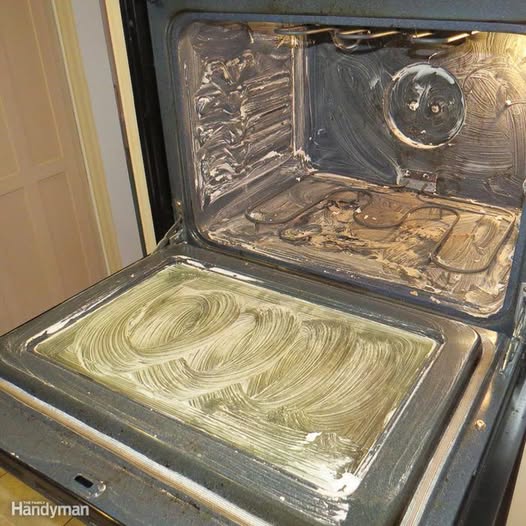
Step 3. Coat the oven
Put on gloves. Spread paste on:
- Floor of the oven
- Side walls
- Back wall
- Ceiling (carefully)
- Inside of the door, except the rubber gasket
Avoid:
- Heating elements
- Fan openings on a convection oven
- Lights
- Door gasket
Thick paste on the dark, burnt patches. Thin layer everywhere else.
Close the door. Walk away for 12 hours or overnight. This is the “bake time.” The paste needs hours, not 10 minutes.
Step 4. Clean the racks while you wait
This is the side recipe.
