

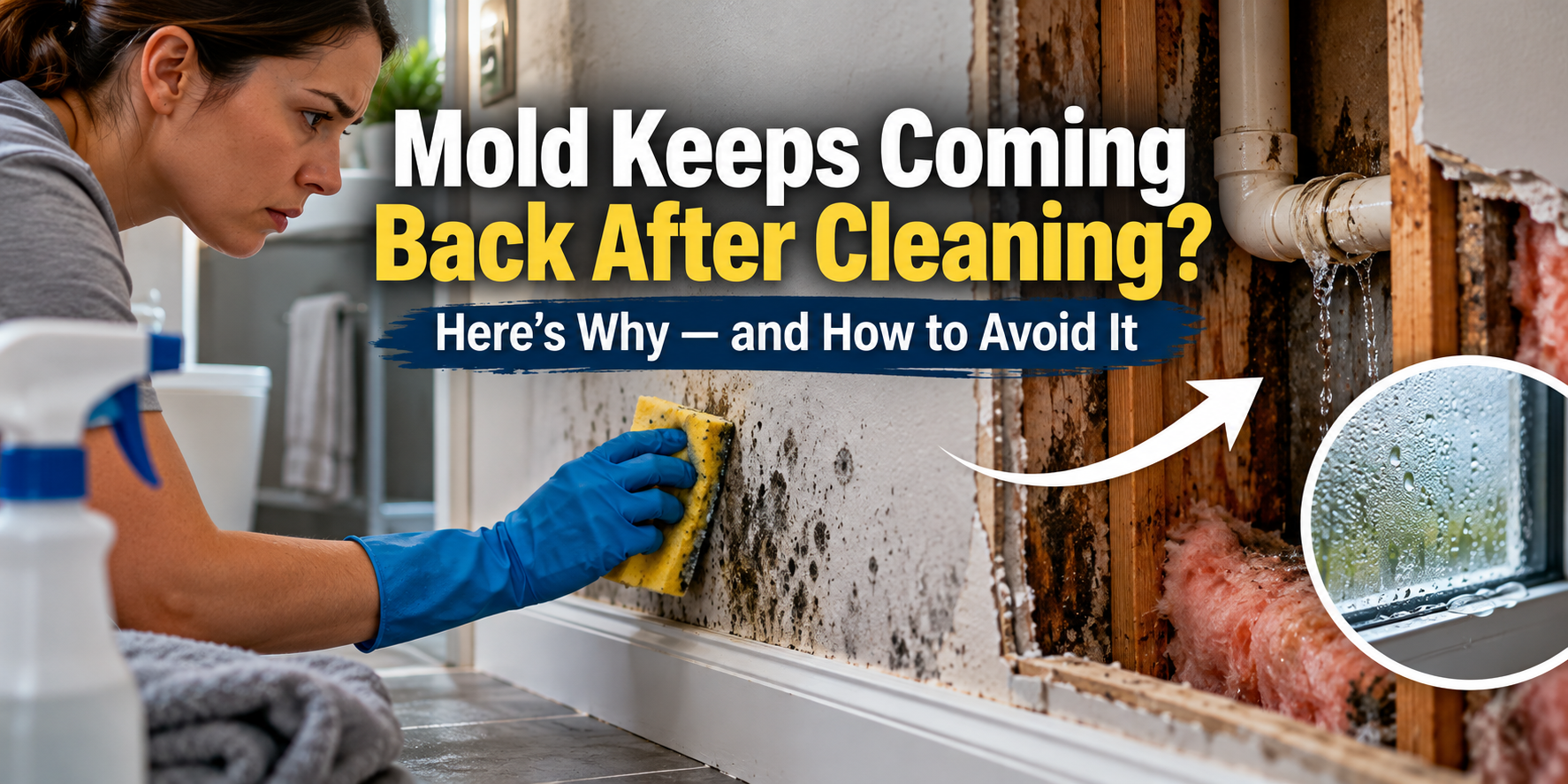
Mold needs moisture to grow. You can scrub a visible patch until the surface looks perfectly clean, but if water or excessive humidity is still present, mold may simply return.
Common moisture sources include:
- Leaking pipes
- Roof leaks
- Water-damaged drywall
- Basement moisture
- Condensation around windows
- Poor bathroom ventilation
- Air-conditioning condensation
- Plumbing leaks behind walls
- Previous flooding or water damage
Before spending money repeatedly on cleaning products, find out where the moisture is coming from.
A moisture meter or professional water damage inspection can sometimes reveal damp materials that aren’t obvious from the outside.
2. There May Be Mold Behind the Wall
The mold you see might only be a small part of the problem.
Drywall, insulation, wood, ceiling materials, carpet padding, and other porous materials can absorb moisture. When that happens, mold may grow inside or behind those materials.
You clean the visible surface.
It looks fine.
Then the hidden mold continues growing and eventually becomes visible again.
Warning signs of possible hidden mold include a persistent musty smell, recurring discoloration, peeling paint, bubbling drywall, warped flooring, or walls that feel damp.
For a large or persistent problem, a certified mold inspection or professional mold remediation company may be more appropriate than repeatedly treating the surface yourself.
3. Indoor Humidity Is Too High
You don’t always need a major water leak to develop a mold problem.
High humidity alone can provide enough moisture for mold growth, especially in bathrooms, basements, laundry rooms, kitchens, and poorly ventilated spaces.
According to general indoor-air guidance, keeping relative humidity low can help discourage mold growth. A dehumidifier can be especially useful in naturally damp areas.
Consider using:
- A dehumidifier
- Bathroom exhaust fans
- Kitchen ventilation
- Air conditioning
- Better airflow between rooms
- A digital humidity monitor
If condensation regularly forms on walls, windows, pipes, or ceilings, don’t ignore it. That moisture can create the perfect environment for recurring mold.
4. A Water Leak Hasn’t Been Properly Repaired
Sometimes the real problem isn’t mold at all.
It’s a leak.
A tiny plumbing leak behind a bathroom wall or underneath a kitchen sink can keep materials damp for months without creating an obvious puddle.
That makes professional leak detection and water damage restoration especially important when mold repeatedly appears in the same location.
Check areas near:
- Toilets
- Showers and bathtubs
- Water heaters
- Washing machines
- Dishwashers
- Refrigerators
- HVAC systems
- Roof penetrations
- Windows
- Basement foundations
Repair the water source first. Otherwise, mold removal may only be temporary.
5. The Mold Was Growing on Porous Material
Hard, nonporous surfaces can often be easier to clean than absorbent materials.
Materials such as drywall, insulation, ceiling tiles, carpet padding, and some wood products can allow contamination and moisture to penetrate deeper into the material.
When serious mold growth affects porous building materials, cleaning the surface may not be enough. Depending on the extent of the damage, contaminated materials may need professional evaluation and sometimes removal or replacement.
This is where mold remediation costs can vary significantly. A small surface problem is very different from mold caused by extensive water damage inside walls or flooring.
How to Keep Mold From Coming Back
The most effective strategy is to control moisture rather than repeatedly treating the visible mold.
Start by fixing leaks and water intrusion as quickly as possible. Dry damp materials thoroughly, improve ventilation, monitor indoor humidity, and investigate musty odors or recurring stains instead of covering them with paint.
For bathrooms and kitchens, use exhaust ventilation during and after activities that create steam. In damp basements, consider a dehumidifier and inspect for foundation moisture or previous flooding.
Most importantly, don’t paint or caulk directly over an unresolved mold problem. If moisture remains underneath, the problem can return.
When Should You Call a Mold Remediation Professional?
A small isolated area may sometimes be manageable with normal cleaning and moisture control.
However, consider contacting a professional mold remediation or water damage restoration company when the affected area is extensive, mold repeatedly returns after cleaning, contamination may be hidden inside walls, significant flooding occurred, sewage or contaminated water was involved, or you cannot identify the moisture source.
Professionals may use moisture detection equipment, containment procedures, air filtration systems, removal techniques, and drying equipment depending on the situation.
Getting the underlying moisture problem corrected is far more important than simply making the visible stain disappear.
Does Homeowners Insurance Cover Mold Remediation?
Insurance coverage depends heavily on why the mold developed and the terms of your policy.
For example, a policy may treat mold resulting from a sudden covered water-damage event differently from mold caused by long-term maintenance problems or gradual leaks.
If significant property damage is involved, document the affected areas, photograph visible damage, keep repair records, and contact your insurance provider to understand your coverage before making major restoration decisions.
Because policies vary, never assume that mold remediation, water damage restoration, or mold removal costs will automatically be covered.
Final Thoughts
If mold keeps returning after you clean it, don’t focus only on the stain.
Focus on the moisture source.
Recurring mold can indicate hidden water damage, plumbing leaks, excessive humidity, poor ventilation, or damp building materials. Fixing those conditions gives you a much better chance of preventing the problem from returning.
And when the damage is extensive or hidden, getting a professional mold inspection, water damage assessment, or mold remediation evaluation can help determine exactly what needs to be repaired.
The goal isn’t simply to clean the mold.
It’s to create an environment where it can’t easily grow back.
