

- 2 cups of warm water
- 1 teaspoon of liquid dish soap
- 1 soft drain-cleaning brush
- Rubber cleaning gloves
Instructions:
- Remove visible food particles from the sink strainer.
- Mix the dish soap into the warm water.
- Slowly pour the mixture down a freely draining sink.
- Carefully clean accessible drain surfaces with a suitable brush.
- Rinse thoroughly with more warm water.
- Repeat periodically as part of your kitchen cleaning routine.
Pro Tip: Avoid pouring boiling water into drains because it may damage certain plumbing materials. Warm water is a safer choice.
This method helps remove light greasy residue but will not repair a damaged sewer pipe or eliminate escaping sewer gas.
2. Your Garbage Disposal Is Hiding Rotting Food
One of the most overlooked causes of a smelly kitchen sink is the garbage disposal.
Food residue can collect beneath the rubber splash guard and inside the grinding chamber, creating a strong odor even when the sink appears spotless.
DIY Solution: Clean the Hidden Splash Guard
What you’ll need:
- Warm water
- Liquid dish soap
- A long-handled cleaning brush
- A microfiber cloth
Instructions:
- Turn off power to the garbage disposal at the breaker.
- Clean the visible splash guard and accessible surrounding surfaces using warm, soapy water.
- If the splash guard is removable, follow the manufacturer’s cleaning instructions.
- Use a suitable long-handled brush to clean accessible residue.
- Rinse thoroughly before restoring power.
Important: Never place your hands inside the disposal chamber.
3. Your P-Trap Is Dry, Leaking, or Damaged
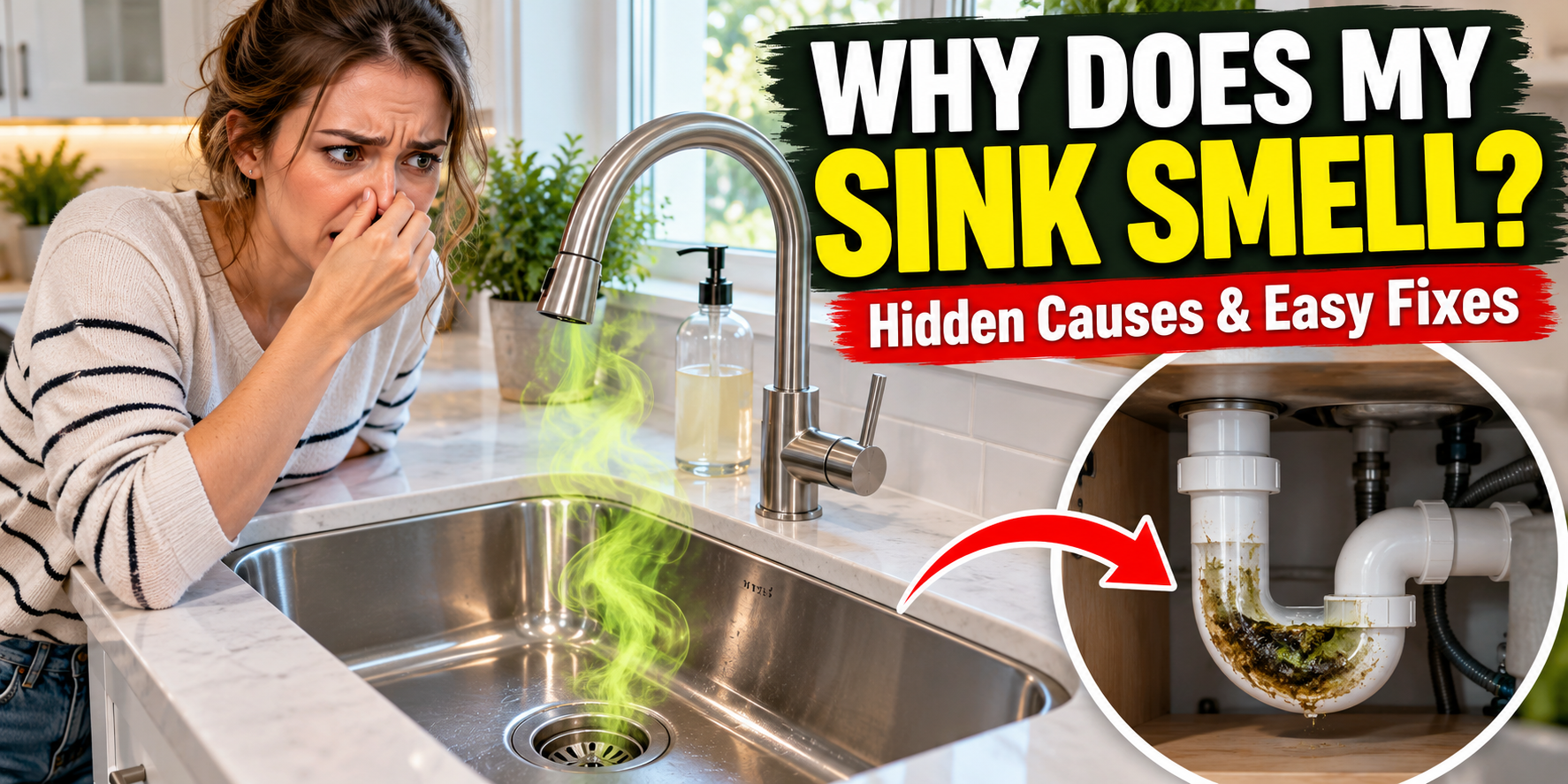
The P-trap is the curved pipe located underneath your kitchen sink.
Its job is extremely important: it holds water that creates a protective barrier between your kitchen and the sewer system.
When this water evaporates or leaks away, unpleasant sewer gases may enter your home.
Easy P-Trap Test
- Look beneath your kitchen sink and locate the curved drainpipe.
- Check for visible moisture, corrosion, loose connections, or water damage.
- Run the faucet for approximately 30–60 seconds to refill the trap.
- Allow the room to ventilate and see whether the odor improves.
If the sink is used every day, a dry P-trap is less likely unless there is a leak, siphoning, or another plumbing issue.
When to call a plumber: If the smell returns repeatedly, or you notice damaged pipes or leaks, schedule a professional plumbing inspection.
4. A Partial Drain Clog Is Trapping Smelly Waste
Your kitchen drain doesn’t need to be completely blocked to develop a serious odor problem.
A partial clog can trap food scraps, grease, and organic waste while still allowing some water to pass.
Warning Signs
- Water drains more slowly than usual.
- You hear gurgling noises.
- The sewage smell gets worse when water runs.
- Odors return shortly after cleaning.
DIY Solution
Remove and clean the sink strainer, then use an appropriate drain brush or hand-operated drain snake according to its instructions.
For deeper or persistent clogs, professional drain cleaning may be necessary.
Avoid: Repeatedly pouring harsh chemical drain cleaners into the plumbing, especially if you’ve already used another cleaning product. Never mix bleach, vinegar, ammonia, or drain-opening chemicals.
5. Your Dishwasher Drain Connection Is Causing the Smell
Sometimes, the sewage odor you notice near your kitchen sink is actually connected to your dishwasher.
A dirty dishwasher filter, blocked drain hose, or improperly installed drain connection can create unpleasant smells and drainage problems.
Simple Solution
- Remove and clean the dishwasher filter according to the manufacturer’s instructions.
- Check for standing water or trapped food residue.
- Run an approved dishwasher cleaning cycle.
- Inspect the visible dishwasher drain hose for kinks or damage.
- Have a plumber check whether the required high loop or air gap is installed correctly.
A properly designed drain connection helps prevent wastewater from flowing back toward the dishwasher.
6. A Blocked Plumbing Vent Is Allowing Odors Indoors
Your home’s plumbing ventilation system helps maintain proper air pressure inside the drainage pipes.
When a vent becomes blocked or improperly installed, it can contribute to gurgling drains, slow drainage, and sewer odors.
Signs of a Plumbing Vent Problem
- Multiple drains smell unpleasant.
- The sink makes bubbling or gurgling noises.
- The smell returns even after cleaning.
- Odors appear when another plumbing fixture drains.
Solution: Contact a licensed plumber for a plumbing vent inspection.
Never attempt to climb onto a roof to inspect a plumbing vent without proper equipment and professional training.
7. A Damaged Sewer Line or Plumbing Seal Is the Real Problem
If you’ve tried safe DIY cleaning methods but the sewage smell refuses to disappear, the problem may be deeper inside your plumbing system.
Possible causes include cracked drainpipes, failed seals, damaged sewer connections, or sewer line blockages.
Warning Signs You Should Never Ignore
- Strong sewage odors throughout the house
- Wastewater backing up into the sink
- Multiple fixtures draining slowly
- Recurring leaks underneath the sink
- Persistent gurgling from several drains
Professional Solution: A licensed plumbing service can inspect the drainage system and determine whether sewer line cleaning, camera inspection, or pipe repair is necessary.
If the odor is overwhelming or anyone develops dizziness, nausea, or a headache, leave the affected area and seek urgent assistance. If a natural-gas leak may be involved, contact the gas utility or emergency services from outside.
The Simple Kitchen Sink Cleaning Recipe to Try First
Before booking a drain cleaning appointment, try this inexpensive maintenance routine when the sink drains normally and no serious plumbing warning signs are present.
Ingredients and Supplies
| Item | Quantity |
|---|---|
| Warm water | 2 cups |
| Liquid dish soap | 1 teaspoon |
| Soft cleaning brush | 1 |
| Microfiber cloth | 1 |
| Rubber gloves | 1 pair |
Step-by-Step Method
Step 1: Remove food scraps from the sink strainer and drain opening.
Step 2: Wash the strainer and accessible drain surfaces with warm, soapy water.
Step 3: Use a soft brush to gently remove visible grime.
Step 4: Pour the remaining warm soapy water through the freely draining sink.
Step 5: Rinse well, wipe the basin dry, and check whether the odor improves.
Step 6: If the smell persists, check the P-trap and other possible plumbing causes rather than repeating the recipe indefinitely.
This cleaning routine can help with surface residue and mild drain odors. It cannot fix a blocked vent, leaking trap, or damaged sewer line.
How to Prevent Kitchen Sink Sewage Smells From Returning
A few simple habits can help keep your kitchen drain cleaner and reduce the risk of recurring odors.
- Never pour cooking grease down the drain. Allow grease to cool and dispose of it appropriately.
- Use a sink strainer. Catch food scraps before they enter your plumbing.
- Clean your garbage disposal regularly. Pay special attention to the splash guard.
- Maintain your dishwasher filter. Remove trapped food and residue.
- Run water in rarely used drains. This helps maintain the P-trap water seal.
- Inspect underneath the sink. Watch for moisture, leaking connections, and damaged pipes.
- Don’t ignore slow drainage. A small blockage can develop into a more expensive plumbing problem.
Frequently Asked Questions
Why does my kitchen sink smell like rotten eggs?
A rotten-egg smell may come from decomposing organic material in the drain or from hydrogen sulfide associated with sewer gas. If the odor comes directly from the tap water, the water supply or hot-water system may be involved instead.
Can baking soda and vinegar remove kitchen sink sewage smells?
Baking soda and vinegar may temporarily help with some odors and loose surface residue, but their reaction is not a reliable solution for stubborn grease buildup, blocked plumbing, or sewer gas leaks. Physical cleaning and fixing the actual cause are more effective.
Why does my kitchen sink smell worse at night?
Odors may become more noticeable when airflow changes or the kitchen is closed up. If the smell consistently returns, investigate drain buildup, trap seals, and plumbing ventilation rather than assuming the time of day is the cause.
How much does professional drain cleaning cost?
Professional drain cleaning costs vary based on your location, clog severity, plumbing accessibility, and whether specialized equipment is required.
A basic drain cleaning service may be less expensive than hydro jetting, sewer camera inspection, or major sewer line repair. Request a written estimate before approving work.
When should I call a professional plumber?
Call a licensed plumber when the odor persists after basic maintenance, when multiple drains are affected, when wastewater backs up, or when you notice leaks or damaged plumbing.
Final Thoughts: Don’t Ignore That Sewage Smell
A clean-looking kitchen sink doesn’t always mean your plumbing is clean or working correctly.
Sometimes, the solution is as simple as removing old food debris, cleaning the garbage disposal, or refilling a dry P-trap.
Other times, persistent sewage odors can indicate blocked vents, damaged drainpipes, or sewer line problems requiring professional attention.
The secret is finding the real source of the smell instead of simply covering it with air fresheners or scented cleaning products.
Start with the safe, inexpensive cleaning solutions above. If the odor keeps returning, a professional plumbing inspection could help prevent a minor drainage issue from becoming a costly repair.
Have you ever experienced a terrible sewage smell coming from a perfectly clean kitchen sink? Share what caused it in the comments!
