

- Warm water
- Mild dish soap
- Two microfiber cleaning cloths
- An old soft toothbrush
- A washing machine cleaner approved for your washer
- A small towel and shallow container for filter cleaning
- Protective cleaning gloves
Important: Never mix bleach with vinegar, ammonia, or other cleaning chemicals. Follow the washer manufacturer’s instructions before using any cleaning product.
Step 1: Clean the Hidden Dirt Inside the Rubber Door Seal
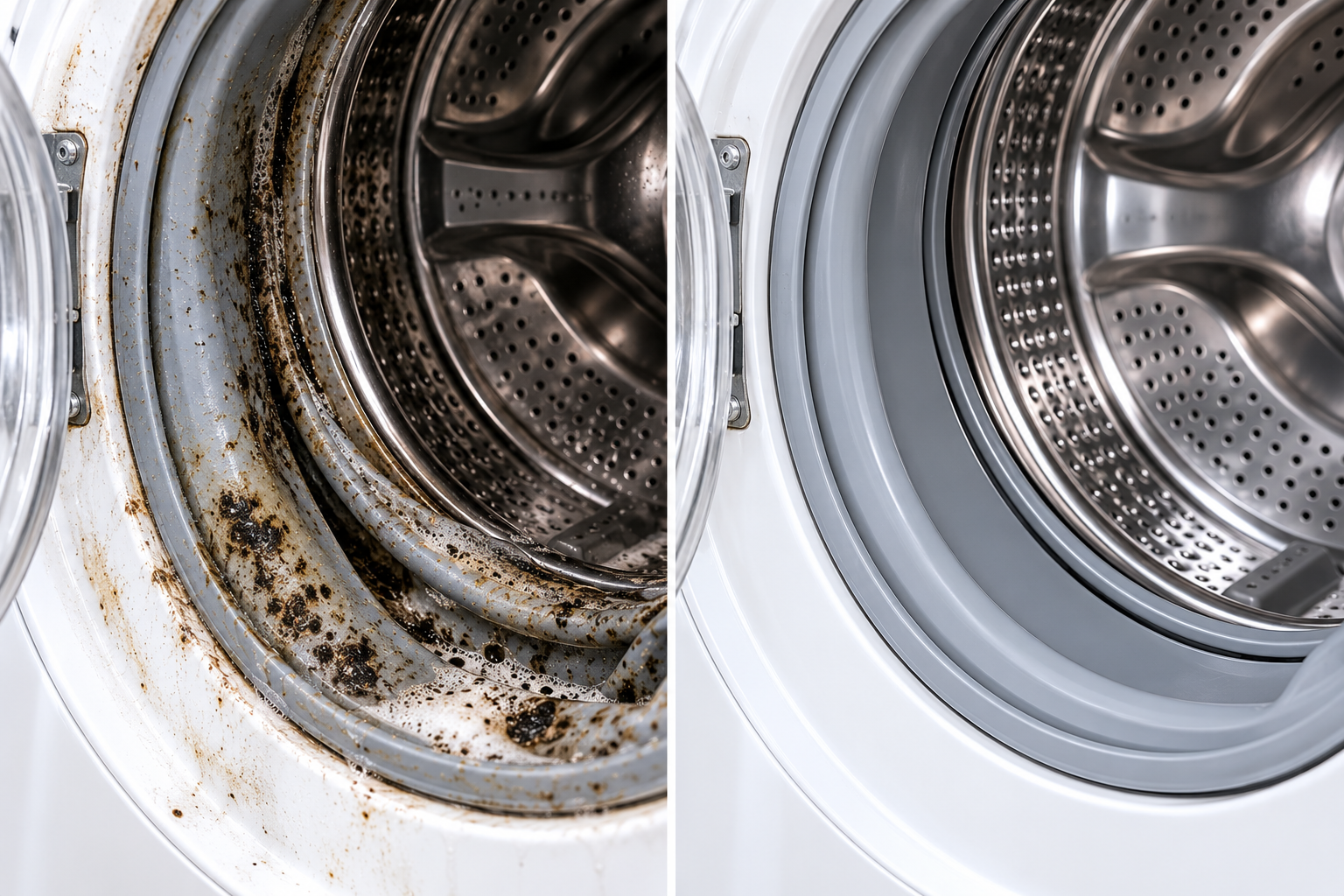
For front-loading washers, the rubber door gasket is one of the most common places where grime and moisture collect.
- Open the washing machine door.
- Carefully pull back the flexible folds of the rubber seal.
- Inspect for trapped lint, hair, residue, and dark spots.
- Mix a small amount of mild dish soap with warm water.
- Wipe inside the folds with a microfiber cloth.
- Use a soft toothbrush to gently loosen stubborn residue.
- Wipe again with clean water and dry thoroughly.
If dark staining remains, check the manufacturer’s recommended cleaning method. Persistent or extensive mold may require professional inspection or gasket replacement.
Step 2: Deep Clean the Detergent Drawer
The detergent dispenser is another often-forgotten area.
Remove the drawer if your washer’s instructions permit it, then soak it in warm, soapy water.
Use a soft toothbrush to clean the corners where fabric softener and detergent residue accumulate.
Rinse, dry, and reinstall the drawer.
Step 3: Run a Washing Machine Self-Clean Cycle
Now it’s time to clean the inner drum.
- Make sure the washing machine is completely empty.
- Add a washing machine cleaning tablet or another cleaner approved by the manufacturer.
- Choose the Tub Clean, Drum Clean, Self Clean, or Clean Washer setting.
- Run the complete cycle according to your appliance manual.
- When finished, wipe away remaining moisture and leave the door open to dry.
Some washers permit specific cleaning products such as liquid chlorine bleach, while others have different requirements. Never combine cleaning agents or assume that every washer can safely use the same product.
For regular maintenance, many manufacturers recommend cleaning the drum approximately once a month.
Step 4: Check and Clean the Drain Pump Filter
If your washing machine still smells bad, the drain pump filter could be responsible.
For machines with an owner-accessible filter:
- Turn off and unplug the washer.
- Locate the filter according to your owner’s manual.
- Place towels and a shallow container beneath the access area.
- Drain residual water using the manufacturer’s procedure.
- Remove any accessible lint, hair, or debris.
- Reinstall the filter securely.
Do not attempt to dismantle internal plumbing or electrical components.
A dirty filter can sometimes cause drainage problems, unpleasant odors, and incomplete wash cycles.
Step 5: Keep Your Washing Machine Dry
After completing the cleaning process, wipe the drum opening and rubber seal with a dry microfiber towel.
Leave the washing machine door and detergent drawer slightly open when it is safe to do so.
This simple habit improves airflow and helps prevent lingering moisture.
7 Simple Habits to Prevent Washing Machine Mold and Bad Odors
Keeping your washing machine clean is easier than dealing with stubborn buildup later.
- Remove wet laundry immediately after every cycle.
- Leave the washer door slightly open between uses when safe.
- Clean the rubber gasket regularly.
- Use the correct amount of HE detergent in high-efficiency washers.
- Avoid excessive fabric softener.
- Clean the detergent dispenser regularly.
- Run the manufacturer’s recommended washer-cleaning cycle about once a month.
These inexpensive maintenance habits may also help reduce avoidable service calls.
When Should You Hire a Professional Washing Machine Repair Service?
A DIY cleaning routine cannot solve every problem.
You should consider contacting a qualified appliance repair technician if:
- The washer continues smelling like sewage after cleaning.
- Water remains trapped inside the drum.
- The washer repeatedly fails to drain.
- There are leaks underneath the appliance.
- The rubber gasket is damaged or heavily contaminated.
- The machine produces unusual grinding or mechanical noises.
- An electrical or burning smell develops.
A professional can inspect the drain pump, hoses, seals, and other components to identify the underlying problem.
If the odor appears to come from your home’s plumbing rather than the appliance, a licensed plumber may be the more appropriate choice.
Washing Machine Repair Cost vs. Replacement: Which Is Better?
Before purchasing a new washer, consider the appliance’s age, overall condition, warranty, and estimated repair cost.
A minor filter obstruction may require only basic maintenance, while a damaged pump, electronic control board, or other major component can make repairs more expensive.
Request a written estimate from a reputable local appliance repair service and compare it with the cost of an equivalent replacement machine.
Regular cleaning cannot prevent every mechanical failure, but it can help keep your washer operating as intended.
Frequently Asked Questions
What is the best way to clean a washing machine that smells like mildew?
Start by cleaning the door gasket, detergent drawer, and accessible drain filter. Then run the washer’s designated cleaning cycle with a manufacturer-approved product.
How often should you deep clean your washing machine?
Approximately once a month is a common manufacturer recommendation, although the exact schedule depends on your washer and how frequently you use it.
Why does my washing machine smell like rotten eggs?
Possible causes include stagnant water, drainage issues, or sewer gas entering through a plumbing problem. If the smell persists after cleaning, have the drainage system inspected.
Can I use vinegar and baking soda to clean my washing machine?
Some appliance manufacturers allow vinegar for certain cleaning tasks, while others recommend dedicated cleaning products. Baking soda and vinegar are not a universal substitute for the manufacturer’s cleaning procedure. Always consult the owner’s manual.
Is professional washing machine cleaning worth it?
Professional cleaning or repair can be worthwhile when odors persist, parts are inaccessible, drainage problems remain unresolved, or visible contamination cannot be safely removed using routine maintenance.
Final Thoughts
A washing machine that smells bad doesn’t automatically mean you need an expensive appliance replacement or professional deep cleaning service.
In many cases, cleaning the rubber gasket, detergent dispenser, and accessible filter—combined with a monthly washer-cleaning cycle—can make a noticeable difference.
Try these simple washing machine maintenance tips before paying for a service call, and remember that persistent odors or mechanical problems deserve professional attention.
A fresh-smelling washing machine starts with regular cleaning and proper care.
