

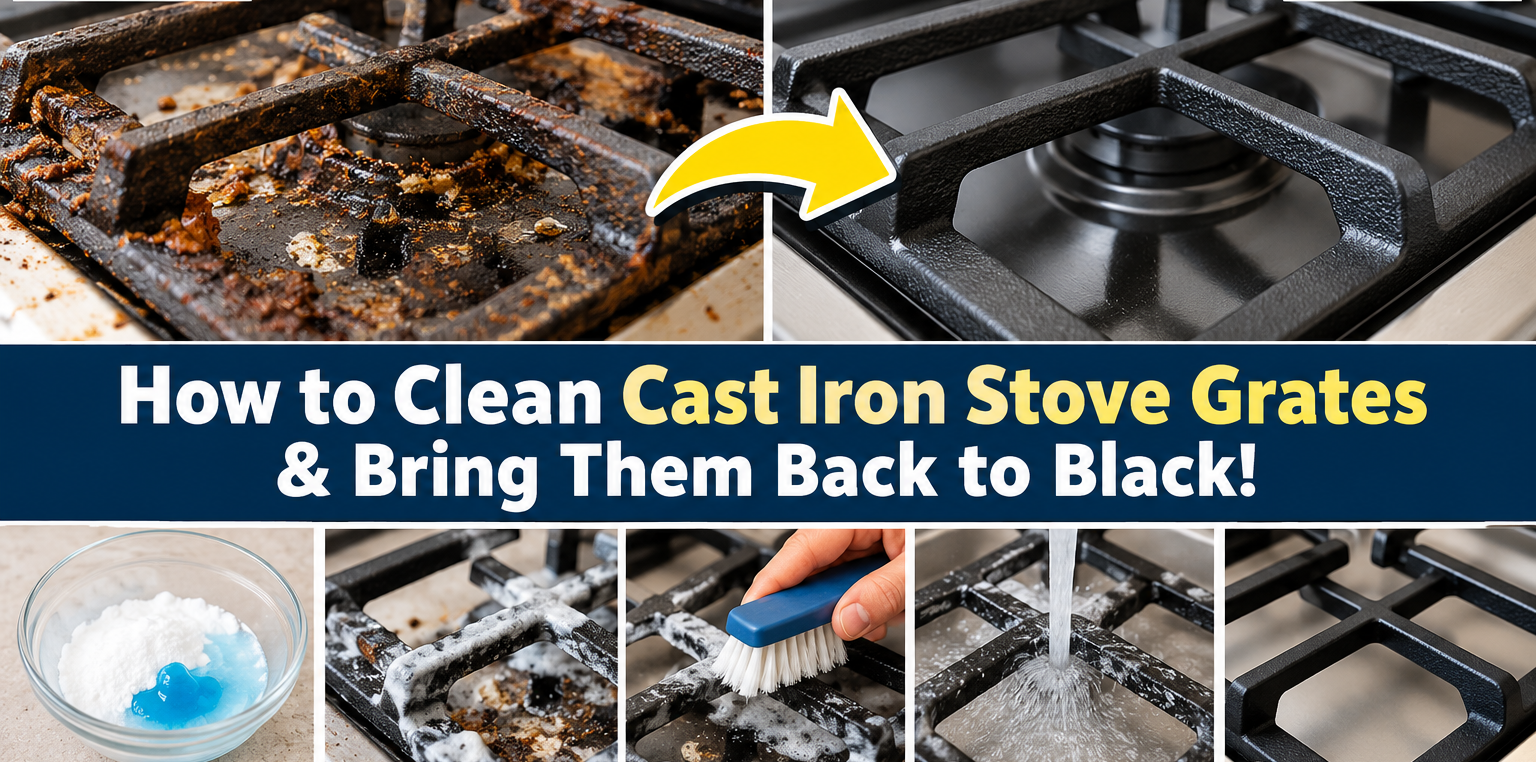
Step 1: Remove the Stove Grates
Turn off your gas stove and allow it to cool completely.
Carefully remove the cast iron grates and place them on a protected work surface or inside your kitchen sink.
Step 2: Prepare the Homemade Cleaning Paste
In a small bowl, mix:
- 2 tablespoons baking soda
- 1 tablespoon dish soap
- 1 tablespoon warm water
Stir until you have a thick, spreadable cleaning paste.
This mixture helps loosen greasy residue without relying on harsh cleaning chemicals.
Step 3: Apply the Cleaning Mixture
Spread the paste over the greasy and burnt areas of the grates.
Allow it to sit for approximately 15–20 minutes to help soften stubborn buildup.
Avoid prolonged soaking of bare, uncoated cast iron, which can encourage rust.
Step 4: Gently Scrub Away Grease
Using a soft nylon brush or non-scratch sponge, gently scrub the dirty surfaces.
Pay extra attention to corners, edges, and areas where cooking grease accumulates.
For extremely stubborn deposits, repeat the paste application rather than scraping aggressively.
Step 5: Rinse and Dry Completely
Remove all traces of the cleaning paste with warm water and a damp cloth or a brief rinse.
Immediately dry the grates thoroughly using a clean towel.
Important: Moisture left on exposed cast iron can cause rust, so never reinstall wet grates.
🖤 Step 6: How to Bring Cast Iron Stove Grates Back to Black
Once the grates are clean and completely dry, inspect their finish.
If your grates have exposed, uncoated cast iron, a very thin application of cooking oil to the unfinished areas may help prevent rust and improve their dark appearance, provided your stove manufacturer’s instructions allow it.
Wipe away any excess oil.
For porcelain-enamel-coated grates, do not apply oil over the coated cooking surfaces or attempt to season them unless the manufacturer specifically recommends it.
The result: Cleaner, darker-looking stove grates with less grease and residue. However, cleaning cannot repair chipped enamel or permanently reverse heat-related discoloration.
How to Remove Rust From Cast Iron Stove Grates
If you notice small rust spots on exposed cast iron:
- Gently remove loose rust with a non-metallic brush.
- Clean the affected area using mild soapy water.
- Rinse briefly and dry immediately.
- Follow your stove manufacturer’s instructions for protecting or re-seasoning the exposed cast iron.
If the enamel coating is peeling, badly chipped, or deteriorating, replacing the grate may be safer than attempting a homemade restoration.
Common Stove Grate Cleaning Mistakes to Avoid
- Never mix bleach with ammonia or other cleaning chemicals.
- Avoid aggressive metal scrubbing that can damage porcelain enamel.
- Do not place uncoated cast iron in the dishwasher unless the appliance manufacturer explicitly permits it.
- Avoid using oven self-cleaning mode for grates unless your model’s manual specifically allows it.
- Do not apply black paint, polish, or excessive oil to restore the finish.
- Never reinstall grates before they are completely dry.
Professional Gas Stove Cleaning vs. DIY Maintenance
Regular DIY gas stove maintenance can help reduce grease buildup, improve kitchen cleanliness, and extend the usable life of removable stove components.
However, professional appliance repair or gas stove maintenance services may be necessary if you notice persistent yellow flames, unusual soot, damaged burners, or problems with gas ignition.
A cleaning solution cannot fix damaged gas components or defective appliance parts.
Frequently Asked Questions
Can baking soda clean cast iron stove grates?
Yes. A mild baking soda paste can help remove greasy buildup from many stove grates. Always check your appliance’s care instructions, particularly for delicate enamel finishes.
How do I make old stove grates black again?
Cleaning removes grease and residue that make grates look dull. Proper maintenance of exposed cast iron can improve its dark appearance, but damaged enamel may require replacement.
How often should I deep clean gas stove grates?
Wipe away spills after cooking once the stove has cooled, and perform a deeper cleaning about once a week or as needed.
Can I use vinegar on cast iron stove grates?
Avoid prolonged exposure to acidic cleaners, especially on uncoated cast iron or damaged enamel. Mild soap and water are generally safer starting points.
Final Thoughts
You don’t always need expensive kitchen cleaning products or professional deep cleaning services to restore the appearance of dirty stove grates.
With baking soda, dish soap, gentle scrubbing, and proper drying, you can tackle everyday grease and burnt-on residue at home.
Save this homemade stove grate cleaning recipe and share it with someone who loves simple kitchen cleaning hacks!
