

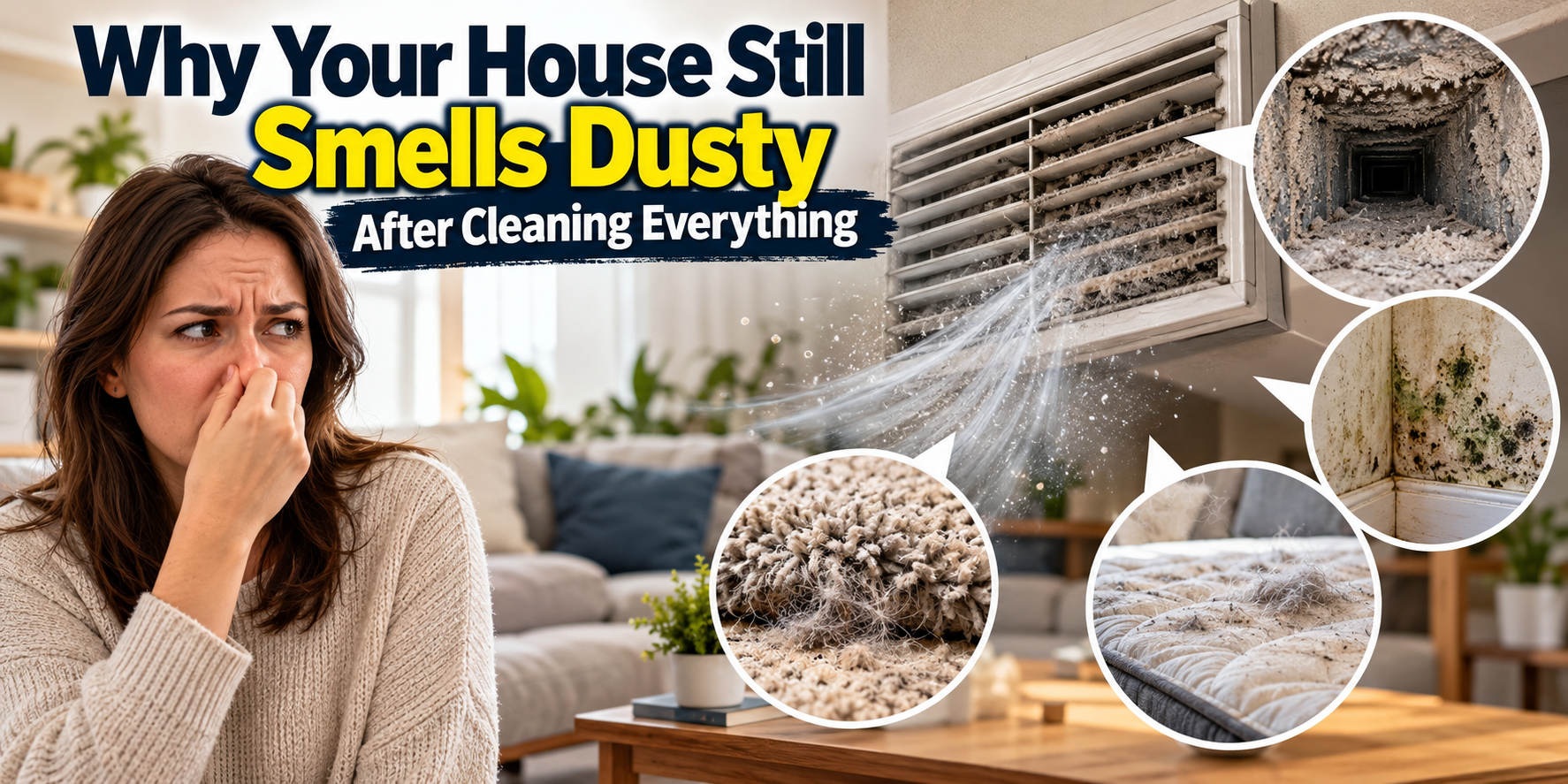
Your heating and cooling system continuously moves air throughout your house. As that air circulates, the filter is supposed to capture dust, pet hair, pollen, lint and other airborne particles.
When the filter becomes overloaded, airflow can decrease and dust may continue circulating throughout the house.
Every time your heating or air-conditioning system turns on, you may notice that familiar dusty smell returning.
Remove the filter and inspect it.
If it looks gray, covered in dust or clogged with debris, replacing it may significantly improve the smell and indoor air quality.
The correct replacement schedule depends on the type of filter, the HVAC system, pets, household activity and environmental conditions.
Homes with pets, smokers, renovation dust or allergy concerns may need more frequent filter changes.
Always use a filter that is compatible with your HVAC equipment rather than automatically choosing the densest filter available.
2. Dust May Be Hiding Inside Your Air Ducts
If you clean your home regularly but dust seems to return almost immediately, your ductwork deserves attention.
Air ducts are hidden behind walls, ceilings and floors, so homeowners rarely see what is happening inside them.
Over time, debris may accumulate around vents or within parts of the HVAC system.
Possible contaminants include:
- Household dust
- Pet hair and dander
- Construction debris
- Pollen
- Insect debris
- Fibers
- Dirt
- Moisture-related contamination
When the HVAC system runs, odors associated with accumulated debris can sometimes become more noticeable.
Start by removing your vent covers and looking inside with a flashlight.
A small amount of ordinary dust around a vent is common. Heavy buildup, visible debris, pest contamination or signs of moisture may justify having the HVAC system inspected.
Professional HVAC maintenance and air duct cleaning services may be appropriate when there is a confirmed problem rather than simply because a duct contains a little dust.
3. Your Return-Air Vents May Be Dirtier Than You Think
Homeowners often clean supply vents because they are easy to notice, but return vents can collect significant amounts of dust.
Return vents pull household air back toward the HVAC system.
That means they can attract:
- Dust
- Hair
- Pet fur
- Lint
- Fibers
- Cobwebs
Vacuum the exterior grille carefully using a brush attachment.
If the grille is removable, take it off and clean both sides.
A dirty return grille may not be the entire cause of a dusty-smelling house, but cleaning it can prevent debris from continuously collecting around the HVAC intake.
4. Your Vacuum Cleaner Could Be Putting Dust Back Into the Air
Vacuuming is supposed to remove dust.
Unfortunately, a poorly maintained vacuum cleaner can sometimes redistribute fine particles.
Check the vacuum’s filter, collection bin or bag.
If the filter is heavily clogged, damaged or installed incorrectly, the machine may not capture fine particles effectively.
You may notice that the room smells dustier immediately after vacuuming.
For households where dust is a major concern, a properly maintained vacuum with effective filtration can make a noticeable difference.
Don’t forget to clean:
- Vacuum filters
- Brush rolls
- Hoses
- Canisters
- Attachments
If your vacuum has a washable filter, follow the manufacturer’s instructions and allow it to dry completely before reinstalling it.
5. Old Carpets Can Hold Years of Dust and Odors
Carpet is one of the largest dust reservoirs inside many homes.
Vacuuming removes surface debris, but fine particles can settle deeper into the carpet fibers and padding.
Over time, carpets may collect:
- Dust
- Skin cells
- Pet dander
- Pollen
- Food particles
- Smoke residue
- Moisture-related odors
- Dirt brought in from outdoors
Walking across the carpet can disturb these particles and release some of them back into the room.
If your carpet smells stale even after thorough vacuuming, professional carpet cleaning may help.
However, carpeting that has been repeatedly exposed to water, pet accidents, smoke or severe contamination may eventually need to be replaced.
The padding underneath the carpet should also be considered because odors can remain there even when the carpet surface looks clean.
6. Hidden Mold Can Smell Like Dust
Not every mold problem produces the classic strong “moldy” smell people expect.
Some moisture-related contamination can smell earthy, stale or dusty.
Potential locations include:
- Behind drywall
- Under sinks
- Around windows
- Inside cabinets
- Beneath carpeting
- Around plumbing
- Behind appliances
- In basements
- Inside attics
- Near HVAC equipment
If a dusty smell is strongest in one particular room, inspect that area for signs of moisture.
Look for:
- Water stains
- Peeling paint
- Bubbling drywall
- Discoloration
- Condensation
- Warped wood
- Damp carpeting
- Plumbing leaks
If you discover significant moisture damage or suspect contamination inside walls, professional mold inspection and mold remediation services may be appropriate.
Cleaning the visible surface without correcting the source of moisture is unlikely to solve a recurring mold problem.
7. Your House May Have a Humidity Problem
Humidity has a major effect on how a home smells.
Excess moisture can encourage musty odors and microbial growth, while extremely dry conditions can make dust more noticeable in the air.
Basements, bathrooms, kitchens and poorly ventilated rooms are especially vulnerable to excess moisture.
A small humidity monitor can help you understand what is happening inside your home.
If humidity stays unusually high, investigate the source rather than simply masking the smell with fragrance.
Possible solutions may include:
- Improving ventilation
- Repairing plumbing leaks
- Using bathroom exhaust fans
- Servicing the HVAC system
- Using a properly sized dehumidifier
- Addressing basement moisture
- Fixing roof or foundation water intrusion
A persistent moisture problem can eventually become far more expensive than a dusty smell.
It may lead to damaged drywall, flooring problems, mold remediation costs or larger water damage restoration work.
8. Your Mattress and Upholstered Furniture May Be Holding Dust
Your sofa can look perfectly clean while holding a surprising amount of dust.
The same applies to:
- Mattresses
- Fabric chairs
- Curtains
- Decorative pillows
- Headboards
- Fabric ottomans
Dust settles into fabric over time.
Vacuum upholstered surfaces with an appropriate attachment and follow the manufacturer’s cleaning instructions.
Wash removable covers when possible.
Don’t forget the areas beneath sofa cushions. Crumbs, hair and dust frequently collect there without being visible from the outside.
Mattresses should also be vacuumed periodically, particularly around seams and edges.
9. Your Curtains May Be Acting Like Giant Dust Filters
Curtains are often forgotten during routine cleaning.
Because they hang vertically beside windows, they are constantly exposed to moving air, outdoor particles and household dust.
Run your hand across an older curtain and you may immediately see why the room still smells stale.
Check the care label before washing or dry-cleaning curtains.
Blinds, shutters and window frames should also be cleaned because dust frequently collects around them.
10. Dust Could Be Coming From Your Attic
Sometimes the odor isn’t coming from the rooms you are cleaning.
It may be entering from above.
Attics can contain insulation fibers, accumulated dust, pest debris, old building materials and moisture-related contamination.
Small gaps around ceiling fixtures, attic hatches, duct penetrations or recessed lighting can allow air to move between the attic and living space.
If the smell becomes stronger near the attic entrance or upstairs rooms, an attic inspection may be worthwhile.
Look for evidence of:
- Roof leaks
- Damp insulation
- Pest activity
- Damaged ductwork
- Poor ventilation
- Large air gaps
Do not disturb old or unidentified insulation without knowing what it contains.
11. Your Basement or Crawl Space May Be Sending Odors Upstairs
Basements and crawl spaces are another frequently overlooked source.
Air movement within a building can allow odors from lower areas to migrate into living spaces.
A crawl space with high humidity, standing water, soil moisture or damaged materials may make the entire house smell stale.
Check for:
- Plumbing leaks
- Foundation moisture
- Standing water
- Damp wood
- Wet insulation
- Pest activity
- Mold-like growth
Persistent water intrusion may require professional evaluation.
Depending on the cause, solutions might involve drainage improvements, waterproofing, plumbing repairs, foundation work, dehumidification or professional remediation.
12. Your Air Conditioner Evaporator Coil Could Be Dirty
Your HVAC system contains components that most homeowners never see.
One of them is the evaporator coil.
Because condensation forms around the cooling system, dirt combined with moisture can sometimes contribute to unpleasant HVAC odors.
A dirty condensate drain pan or drain line may also create problems.
If the dusty or musty smell appears primarily when your air conditioner starts running, HVAC equipment should be considered.
An HVAC technician can inspect components that are difficult or unsafe for homeowners to access.
Regular HVAC maintenance may also help improve system efficiency and identify moisture problems before they become serious.
13. The Dust May Actually Be Coming From Outside
Sometimes your home isn’t producing the dust.
It is importing it.
Outdoor particles can enter through:
- Open windows
- Doors
- Gaps around frames
- Poorly sealed ducts
- Cracks
- Damaged weatherstripping
Homes near construction projects, dry soil, busy roads or dusty environments may experience faster dust accumulation.
Inspect door seals and window weatherstripping.
If you can see daylight around a closed exterior door, that gap may be allowing both outdoor air and dust into your home.
