

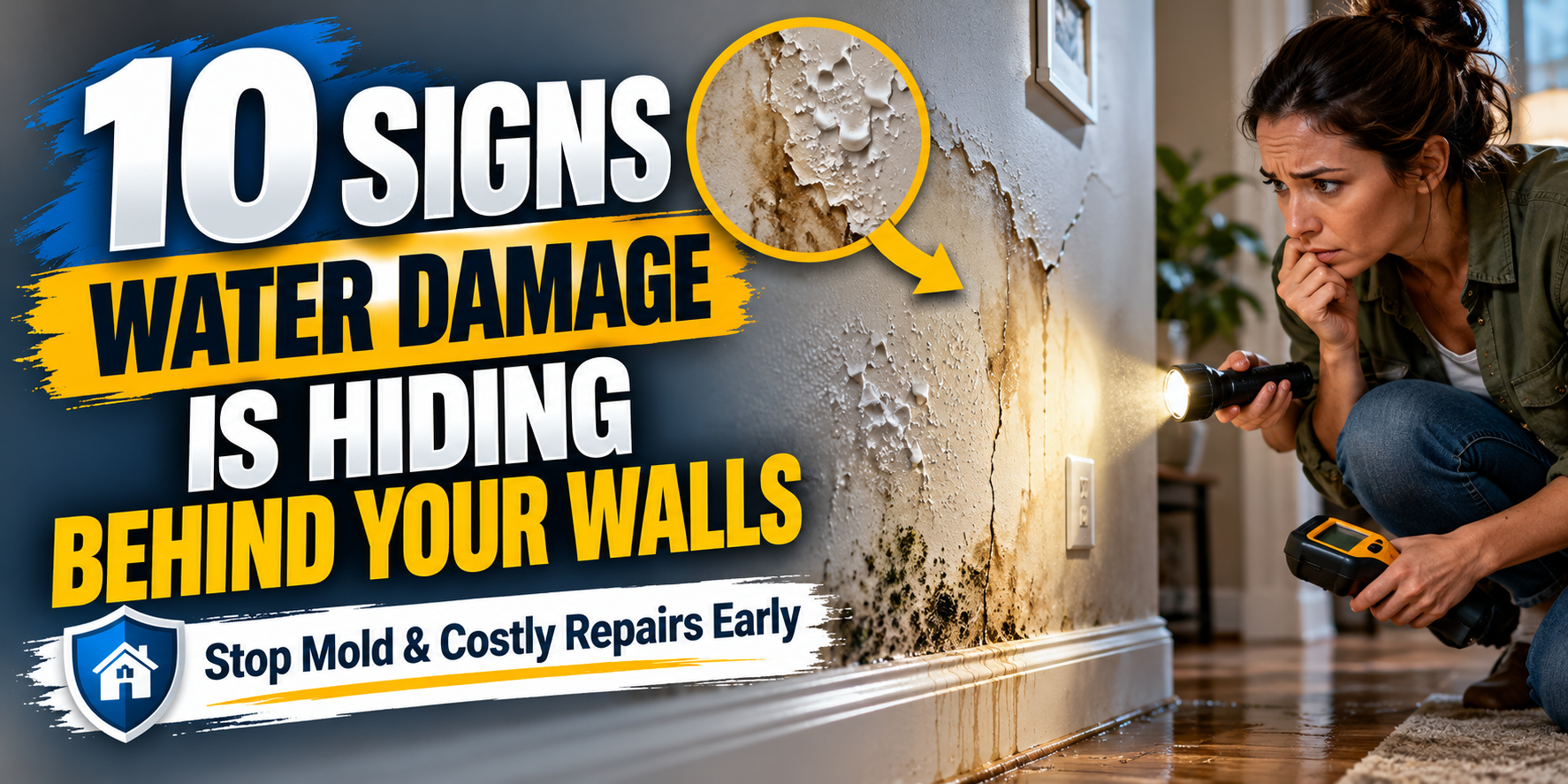
Have you noticed a yellowish, brown, or rusty-looking stain appearing on an otherwise clean wall?
Don’t automatically assume it’s dirt.
Discolored patches can be one of the earliest visible indicators of moisture entering drywall.
These stains often develop when water travels through building materials and leaves behind minerals, dirt, or residue.
Common causes include:
- Leaking pipes inside the wall
- Roof leaks that allow rainwater to enter
- Water escaping from an upstairs bathroom
- Faulty window seals
- Condensation inside poorly insulated walls
What Should You Do?
Take a photograph of the stain and monitor whether it grows.
If the discoloration becomes larger, darker, or returns after repainting, arrange a professional moisture inspection.
Painting over a wet area might temporarily hide the problem, but it will not repair the source of moisture.
2. Bubbling, Peeling, or Cracking Paint
One of the clearest visual warning signs of hidden water damage is paint that begins bubbling or separating from the wall.
Moisture can weaken the bond between paint and the drywall surface.
You might notice small blisters, flaking paint, peeling wallpaper, or uneven patches.
Sometimes the damage looks minor, even when the affected material behind the surface is significantly damp.
What Should You Do?
Avoid immediately scraping and repainting the area.
First, determine whether the wall is wet and identify the source.
A qualified leak detection or restoration professional can use moisture meters to help locate affected sections without unnecessarily removing large areas of drywall.
Once the leak is repaired and the materials are dry, damaged surfaces can be repaired and repainted.
3. A Musty Smell That Never Goes Away
You clean your house regularly.
You vacuum the carpets, mop the floors, open the windows, and use air fresheners.
Yet one room still has a strange, musty smell.
That persistent odor could indicate moisture or hidden mold.
Mold sometimes develops behind drywall, beneath flooring, around leaking pipes, or inside damp insulation.
Because these locations are concealed, you may smell the problem before you see visible growth.
What Should You Do?
Start by identifying where the smell is strongest.
Check around bathrooms, kitchens, laundry rooms, basements, and exterior walls.
Look for condensation, stains, or previous leaks.
If the odor persists despite cleaning and ventilation, consider arranging a professional moisture and mold assessment.
Important: Air fresheners and scented cleaners cannot fix mold caused by ongoing water intrusion.
4. Walls That Feel Damp, Soft, or Spongy
Drywall is supposed to feel firm.
If part of a wall feels unusually soft, damp, swollen, or spongy, moisture may have compromised the material.
Water weakens drywall, and prolonged exposure can reduce its strength.
In more serious cases, the wall may begin to crumble or deform.
What Should You Do?
Avoid pressing hard on damaged drywall or opening the wall yourself when electrical wiring or plumbing might be present.
Identify and stop the water source safely.
If the drywall has lost its structural integrity, professional removal and replacement may be necessary.
Restoration professionals can determine whether the affected wallboard needs replacing or whether controlled drying is appropriate.
5. Your Water Bill Suddenly Increases
A hidden plumbing leak does not always leave an obvious stain.
Sometimes the first warning appears on your monthly water bill.
If your household’s water usage has not changed but your bill keeps increasing, there may be an undetected leak.
Water could be escaping from a pipe behind a wall, beneath a floor, or inside another concealed plumbing area.
What Should You Do?
Turn off all faucets and water-using appliances, then check whether your water meter indicates ongoing usage.
Make sure no toilets, irrigation systems, or other fixtures are running.
If the meter suggests unexplained water use, contact a licensed plumber or water leak detection specialist.
A professional may use acoustic detection equipment, pressure testing, or other diagnostic methods to locate hidden plumbing leaks.
Finding the leak early can help prevent water damage restoration costs from becoming much larger.
6. Warped Baseboards or Swollen Flooring
Sometimes water enters a wall and travels downward.
As moisture accumulates near the bottom of the wall, nearby baseboards and flooring may begin to change shape.
Warning signs include:
- Baseboards pulling away from the wall
- Swollen wood trim
- Buckling laminate flooring
- Warped hardwood planks
- Loose or damaged flooring edges
- Persistent dampness along the wall and floor
These changes may indicate prolonged exposure to moisture.
What Should You Do?
Inspect the wall directly above the damaged flooring and check nearby plumbing fixtures.
Avoid simply replacing the floor without identifying the moisture source.
A water damage restoration contractor may need to assess the subfloor, wall cavity, and insulation.
If moisture remains underneath new flooring, the problem can return.
7. Mold Spots Around Corners and Baseboards
Small black, green, white, or gray spots near a wall corner may indicate fungal growth.
Mold commonly grows where moisture remains trapped, particularly around poorly ventilated or water-damaged materials.
You might notice it behind furniture, around windows, along baseboards, or near bathroom walls.
However, color alone cannot determine the type of mold or how dangerous it may be.
What Should You Do?
Determine whether the problem is caused by condensation, plumbing leaks, roof damage, or another moisture source.
Do not paint over visible mold.
For extensive contamination, recurring growth, suspected hidden mold, or mold associated with contaminated water, contact a qualified mold remediation professional.
Professional remediation may involve containment, removal of damaged porous materials, cleaning, and verification that the moisture problem has been corrected.
Remember: Mold removal without moisture control is not a lasting solution.
8. Wallpaper That Begins Peeling Away
Wallpaper that suddenly separates from a wall can indicate elevated moisture.
Excess humidity and water intrusion can weaken wallpaper adhesive.
You may notice curling edges, loose seams, bubbling sections, or discoloration underneath.
This frequently occurs in bathrooms, kitchens, basements, or rooms with exterior walls.
What Should You Do?
Check indoor humidity levels and look for plumbing leaks or condensation.
If moisture is trapped behind the wallpaper, removing it without addressing the source may expose a larger damaged area.
Have persistent or unexplained moisture investigated before installing new wallpaper.
