

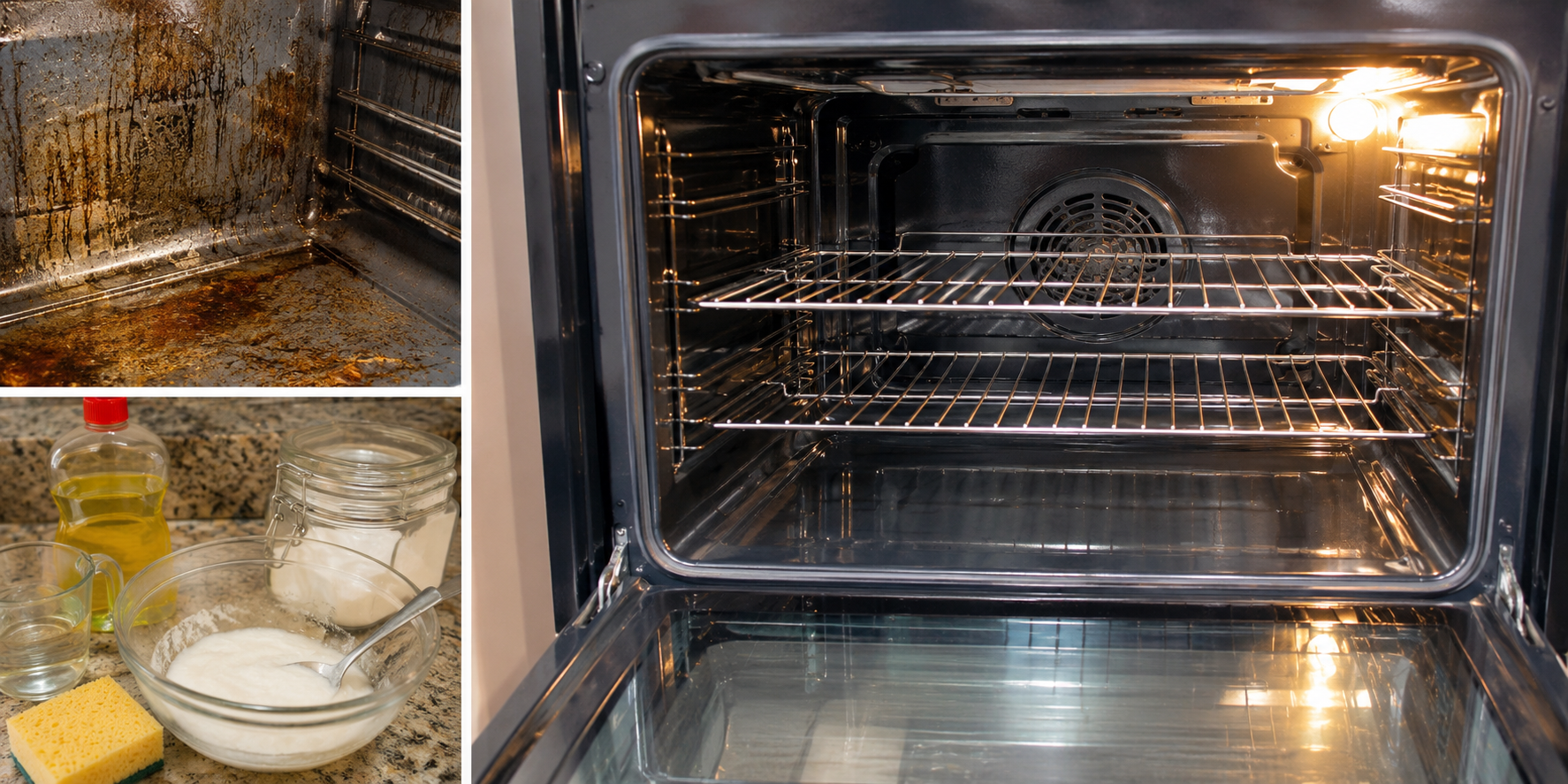
Step-by-Step DIY Oven Deep Cleaning Recipe
Step 1: Prepare Your Oven
Turn off your oven and make sure it has completely cooled down.
Remove the oven racks, baking trays, and loose food particles. Check your manufacturer’s cleaning instructions to ensure the ingredients are suitable for your oven’s interior.
Step 2: Prepare the Homemade Cleaning Solution
In a small bowl, combine the baking soda, warm water, and liquid dish soap.
Mix everything until you create a thick, spreadable cleaning paste. Add a little extra water if necessary.
Step 3: Apply the Cleaning Paste
Spread the homemade mixture over compatible oven surfaces, paying special attention to:
- Burnt-on grease
- Stubborn food stains
- Dirty oven walls
- Greasy oven surfaces
- Baked-on food deposits
Avoid heating elements, electrical components, ventilation openings, fans, and rubber door seals.
Step 4: Let the Mixture Work Overnight
Allow the cleaning paste to sit for several hours or overnight, provided your manufacturer’s instructions permit it.
This gives the mixture time to soften stubborn grease and food residue, making it easier to remove without aggressive scrubbing.
Step 5: Remove Stubborn Grease
Use a damp, non-scratch sponge to gently scrub away the softened dirt and grease.
For particularly stubborn areas, repeat the application instead of using metal scrapers or abrasive cleaning tools that could damage your appliance.
Step 6: Remove Remaining Residue
Wipe away the baking soda mixture with a damp microfiber cloth.
If permitted by your oven manufacturer, use a small amount of diluted white vinegar separately to help remove remaining baking soda residue.
Step 7: Enjoy Your Clean Oven
Wipe all surfaces thoroughly with clean water to remove any remaining cleaning solution.
Allow your oven to dry completely before reinstalling the racks and using it again.
Your oven should now look cleaner and fresher without the strong fumes associated with some heavy-duty commercial cleaning sprays.
Why This Homemade Oven Cleaning Solution Works
Baking soda: Provides gentle abrasive action that helps loosen stubborn food deposits and grease.
Liquid dish soap: Helps break down oily residue and everyday kitchen grease.
White vinegar: Helps remove certain mineral deposits and alkaline cleaning residue on compatible surfaces.
Warm water: Helps soften dirt and makes the cleaning mixture easier to apply.
How to Clean Greasy Oven Racks
Instead of purchasing expensive oven rack cleaning products, try this simple method:
- Fill a suitable basin with warm water.
- Add a few drops of liquid dish soap.
- Allow compatible oven racks to soak for one to two hours.
- Scrub gently with a non-scratch sponge.
- Rinse thoroughly and dry before reinstalling.
Check the manufacturer’s instructions first, particularly for coated or sliding oven racks.
DIY Oven Cleaning vs. Professional Oven Cleaning Services
Homemade oven cleaning solutions are an affordable option for regular kitchen maintenance. However, professional oven cleaning companies may be better equipped to handle severe grease buildup, difficult-to-reach areas, and neglected appliances.
Professional kitchen deep cleaning services may be worth considering when your oven requires extensive cleaning or when ordinary household cleaning methods are no longer effective.
Regular maintenance can help reduce the need for intensive professional cleaning, although it cannot prevent every mechanical or electrical appliance problem.
When Should You Contact a Professional Appliance Repair Service?
Contact a qualified oven repair technician if you notice:
- Persistent smoke coming from your oven.
- Electrical burning smells.
- Damaged heating elements.
- Inconsistent oven temperatures.
- Unusual noises during operation.
- Damaged oven door seals.
These problems may require professional appliance diagnostics and repair rather than additional cleaning.
If you suspect a gas leak, leave the area immediately and contact your gas utility or emergency services from a safe location.
How to Keep Your Oven Clean for Longer
- Wipe away food spills after the oven has cooled.
- Use suitable baking trays to catch food drippings.
- Clean oven racks regularly.
- Remove grease before it becomes heavily baked on.
- Follow your manufacturer’s recommended maintenance schedule.
- Avoid abrasive cleaning products that could damage protective surfaces.
Important Safety Tips
Never mix vinegar with bleach or commercial oven cleaning chemicals.
Do not apply homemade cleaning pastes to catalytic liners, continuous-clean coatings, or other specialized surfaces unless your oven manufacturer explicitly permits it.
Always remove cleaning residue completely before operating your oven.
Frequently Asked Questions
Can baking soda remove burnt-on oven grease?
Baking soda can help loosen grease and burnt-on food deposits, especially when combined with mild dish soap and given sufficient time to work.
Can I clean my oven without harsh chemical sprays?
Yes. Many conventional oven surfaces can be cleaned using mild dish soap, water, and baking soda, depending on the manufacturer’s recommendations.
Is professional oven cleaning worth the money?
Professional oven cleaning services may be worthwhile for heavily soiled ovens, inaccessible grease deposits, or homeowners who prefer professional assistance.
How often should I deep clean my oven?
For regularly used ovens, consider deep cleaning every three to six months, or sooner if noticeable grease and food deposits accumulate.
Final Thoughts
You don’t always need expensive commercial cleaning products or professional kitchen deep cleaning services to maintain a clean oven.
This affordable DIY oven cleaning recipe offers a simple alternative for tackling stubborn grease, burnt-on food, and everyday kitchen messes without strong chemical fumes.
Try this homemade cleaning method and enjoy a fresher, cleaner kitchen while reducing your household cleaning expenses!
