

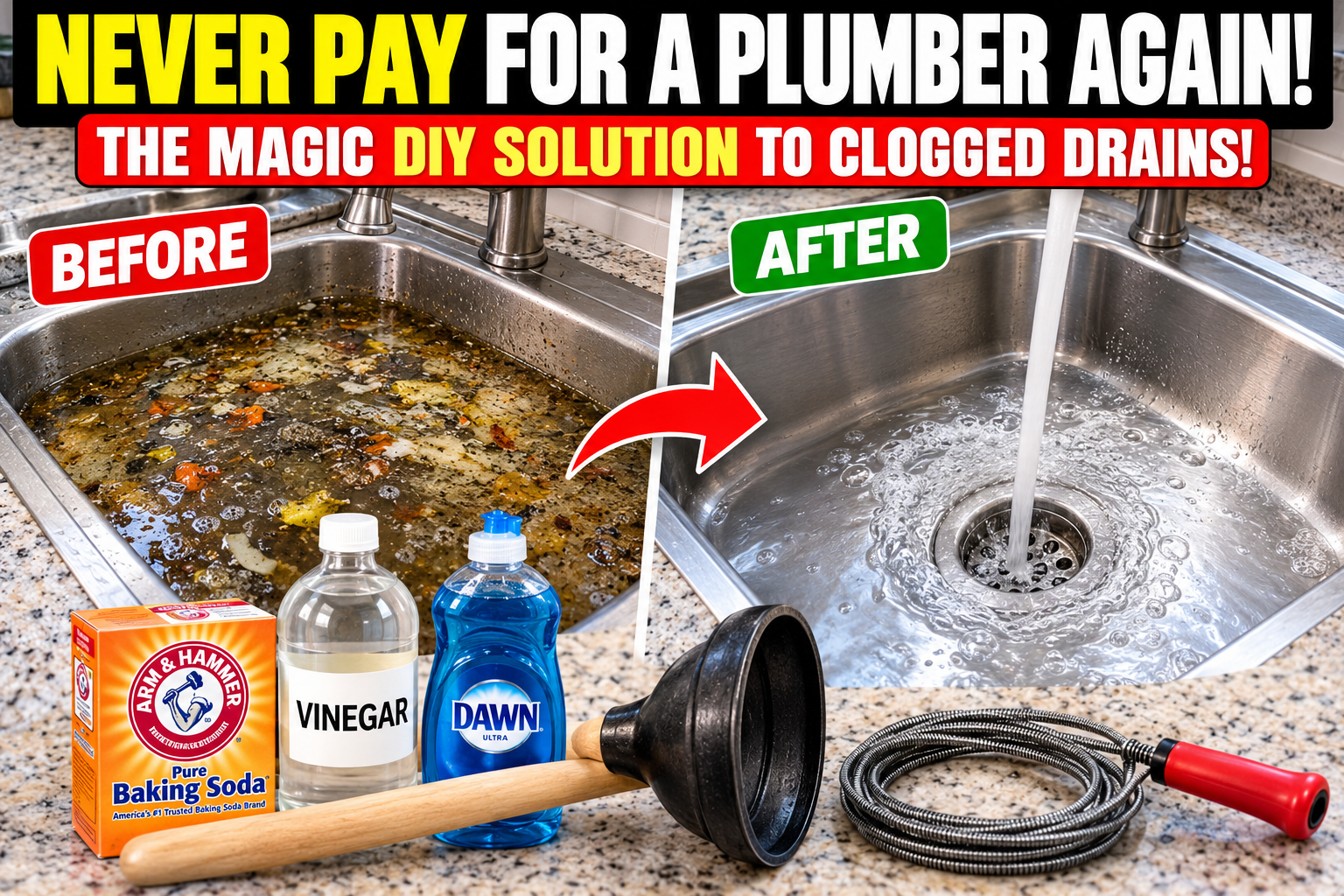
- Dish soap (especially useful for greasy kitchen drains)
- Hot tap water (not boiling)
- A sink plunger
- A plastic drain hair-removal tool or drain snake
- Rubber gloves
Step-by-Step Drain Cleaning Method
Step 1: Remove visible debris
Take out the drain stopper or strainer and carefully remove any visible hair, food particles, or soap buildup. This is often enough to improve drainage in bathroom sinks.
Step 2: Try dish soap and hot water
For a kitchen sink with greasy residue, add a small amount of dish soap and flush with hot tap water. This can help loosen light grease buildup, although it won’t clear a solid obstruction.
Step 3: Use a drain plunger
Place a sink plunger over the drain with enough water to cover the plunger cup. Seal the overflow opening where applicable, then plunge firmly several times to help dislodge the blockage.
Step 4: Remove stubborn clogs
If water still drains slowly, use a plastic hair-removal tool or a suitable manual drain snake to pull out debris. Follow the manufacturer’s instructions and avoid forcing the tool.
Step 5: Test the drainage
Run water for a short period and check whether the drain flows normally. If the clog remains, further plumbing inspection may be necessary.
When Should You Call a Professional Plumber?
DIY drain cleaning is useful for minor blockages, but some problems require licensed plumbing contractors or professional drain repair services.
Contact a plumber if multiple drains are blocked, sewage backs up, water leaks around the pipes, or the blockage keeps returning. These symptoms may indicate a deeper sewer-line or plumbing-system problem.
Important safety tip: Never mix bleach with vinegar, ammonia, or chemical drain cleaners. Avoid plunging or snaking a drain containing chemical cleaner because it may splash hazardous liquid.
Final Thoughts
Before paying for expensive plumbing repairs, try these straightforward home drain maintenance techniques. A simple plunger or drain-cleaning tool may solve an everyday clog in minutes.
However, no homemade mixture can fix every blockage. Knowing when to use DIY methods and when to hire a professional can help protect your plumbing system and prevent more expensive water damage.
Have you tried cleaning a clogged drain yourself? Share your favorite household cleaning tip in the comments!Never Pay for a Plumber Again? Try This DIY Drain Cleaning Solution Before Calling a Professional
