

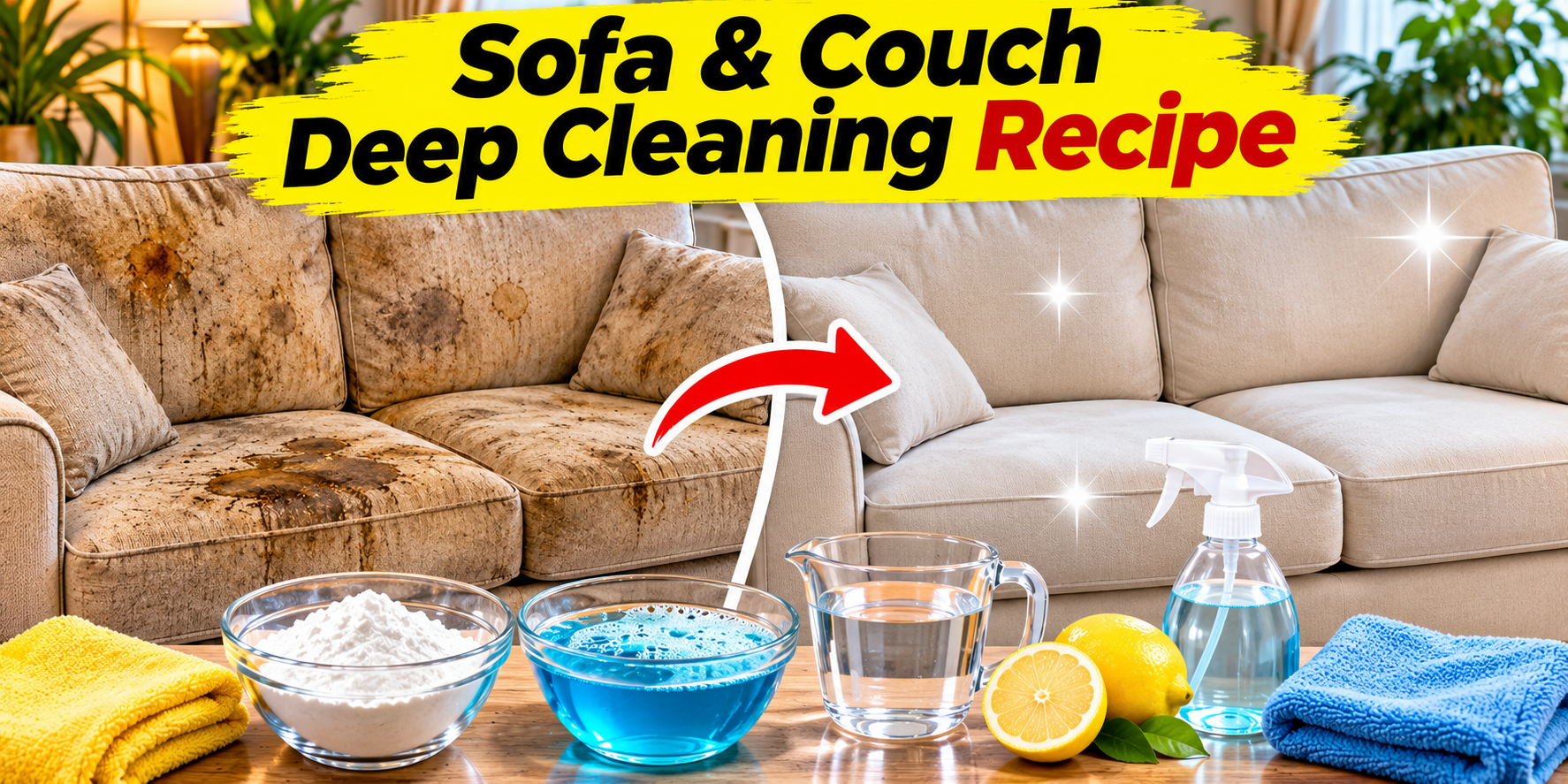
This simple DIY cleaning recipe uses basic household ingredients and can be suitable for certain water-cleanable fabric couches.
Preparation Time: 5 minutes
Active Cleaning Time: 20–30 minutes
Drying Time: Several hours, depending on fabric and ventilation
Difficulty: Easy
Estimated Supply Cost: Under $5 when using supplies already available at home
Best For: Routine surface cleaning and light stains on compatible fabric sofas
Ingredients
- 1 cup lukewarm water
- 2–3 drops of mild, clear liquid dish soap, if approved for your upholstery
- 1 clean microfiber cloth
- 1 additional damp microfiber cloth for rinsing
- 1 soft sponge
- 1 small mixing bowl
- 1 vacuum cleaner with upholstery attachment
- 1 dry absorbent towel
Important: Check Your Couch Cleaning Code First
Before using any homemade upholstery cleaner, locate the manufacturer’s cleaning label, usually found underneath the sofa or its cushions.
| Cleaning Code | Recommended Method |
|---|---|
| W | Water-based upholstery cleaning products |
| S | Approved solvent-based cleaners only |
| W/S or S/W | Water-based or solvent-based methods, as specified |
| X | Vacuuming or light brushing only |
Use this homemade water-based cleaning method only when the manufacturer’s instructions permit it. If the cleaning code is missing or unclear, consult the manufacturer or a professional upholstery cleaner before wet cleaning.
Step-by-Step Couch Deep Cleaning Instructions
Step 1: Remove Cushions and Vacuum Thoroughly
Start by removing loose cushions and decorative pillows.
Use your vacuum cleaner’s upholstery attachment to remove loose dust, pet hair, crumbs, and debris.
Pay special attention to:
- The spaces between cushions
- Sofa armrests
- Back cushions
- Seat corners
- Fabric seams
- Hard-to-reach crevices
This first step can make a noticeable difference, especially if your couch hasn’t been vacuumed recently.
Step 2: Prepare the Homemade Cleaning Solution
In a small mixing bowl, combine:
- 1 cup lukewarm water
- 2–3 drops mild liquid dish soap
Stir gently until the solution is evenly mixed.
This creates a diluted cleaning mixture that may help loosen everyday grease and surface dirt on compatible fabrics.
Avoid adding bleach, strong detergents, essential oils, or excessive soap.
Step 3: Test the Cleaner on a Hidden Area
Before cleaning visible upholstery, apply a tiny amount of your solution to an inconspicuous section of the couch.
Allow it to dry completely.
Check for discoloration, water rings, shrinking, changes in texture, or dye transfer.
If any problems appear, stop and use a manufacturer-approved alternative.
Step 4: Gently Clean the Sofa Fabric
Lightly dampen your microfiber cloth with the cleaning solution.
Gently blot stained or dirty areas without soaking the fabric.
Work carefully across small sections, paying extra attention to armrests and frequently used seating areas.
Avoid aggressive scrubbing, as excessive friction can damage upholstery fibers or spread a stain.
For more stubborn spots, repeat gentle blotting rather than applying large quantities of cleaner.
Step 5: Remove the Cleaning Residue
Use a second microfiber cloth lightly dampened with clean water to remove soap residue, only where permitted by the manufacturer’s care instructions.
Do not saturate the cushions or allow liquid to soak into the foam.
Excess moisture can create water rings, extended drying times, and unwanted odors.
Step 6: Let Your Couch Dry Completely
Place your couch in a well-ventilated room.
Open windows when practical or use a fan to improve airflow.
Allow the upholstery to dry fully before sitting on it or replacing the cushions.
Never use direct high heat or a hair dryer on delicate furniture fabrics.
The Secret to a Cleaner-Looking Couch
One of the biggest mistakes people make when cleaning sofas is focusing only on the most obvious stain.
Sometimes, uneven cleaning leaves a visible ring around the treated area.
For upholstery and cleaning methods approved for larger-area treatment, cleaning an entire cushion panel evenly may help reduce this problem.
Professional upholstery cleaning equipment can also extract loosened soil and moisture from compatible fabrics.
However, not every sofa can safely withstand machine extraction, so always follow its care label.
Professional Upholstery Cleaning Cost vs. DIY Sofa Cleaning
One of the biggest questions homeowners ask is:
“How much does professional couch cleaning cost?”
According to published 2026 pricing estimates, professional upholstery cleaning in the United States averages approximately $174, although actual prices vary by furniture size, fabric, location, cleaning method, and condition.
A standard sofa may cost around $100–$300 to clean professionally, depending on the service provider and scope of work.
DIY vs. Professional Upholstery Cleaning
| Cleaning Option | Typical Cost | Best For |
|---|---|---|
| Homemade surface-cleaning solution | Under $5 in existing supplies | Routine light cleaning |
| Commercial upholstery cleaning products | Varies by brand | Compatible stains and general upkeep |
| Portable upholstery extractor | Purchase or rental cost varies | Approved deep-cleanable fabrics |
| Professional sofa cleaning | Often $100–$300 for a sofa | Heavy soil, difficult stains, and specialist cleaning |
DIY cleaning can be more affordable for routine maintenance.
However, professional cleaning may be the safer choice for delicate fabrics, serious contamination, persistent odors, or stains that have penetrated deep into cushion padding.
5 Common Sofa Cleaning Mistakes That Can Cost You Money
1. Using Too Much Water
Overwetting upholstered furniture can cause watermarks, lingering odors, and extended drying times.
Use only the amount of moisture permitted by your fabric care instructions.
2. Mixing Too Many Cleaning Chemicals
Combining vinegar, bleach, ammonia, and other household cleaners can damage furniture or create dangerous chemical reactions.
Stick to compatible, manufacturer-approved cleaning solutions.
3. Using a Steam Cleaner on Every Fabric
Steam cleaning is not suitable for all upholstery materials.
Heat and moisture can damage some fabrics, finishes, adhesives, and cushion components.
4. Scrubbing Stains Aggressively
Scrubbing too hard can damage fabric texture and spread discoloration.
Gentle blotting is often the better first approach.
5. Ignoring Persistent Odors
If a sofa smells musty even after drying or has been affected by significant pet accidents or water damage, the contamination may extend into its padding.
A professional furniture cleaning company may need to assess whether cleaning is practical or replacement is necessary.
