

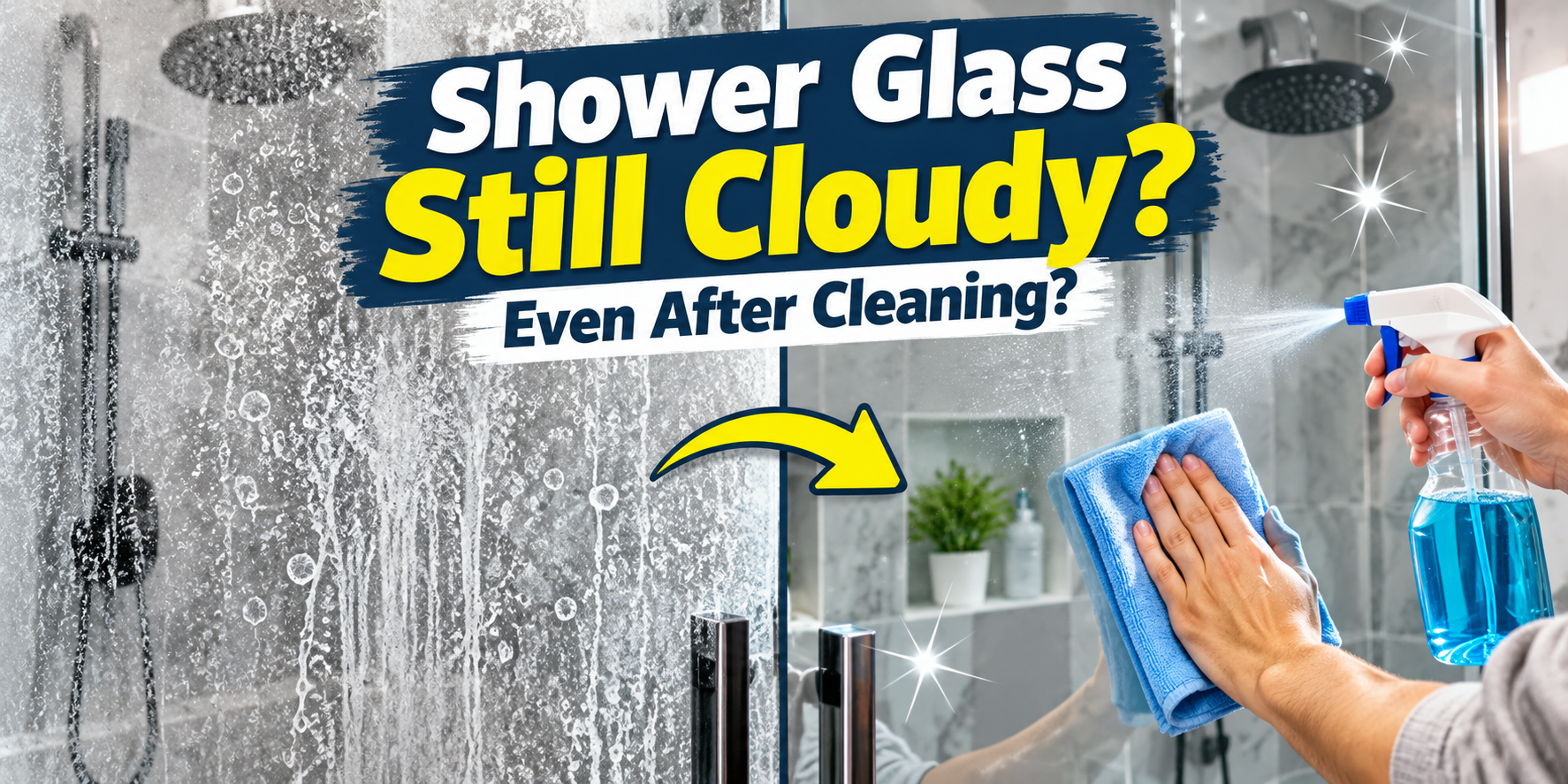
Hard water contains dissolved minerals, primarily calcium and magnesium.
When water droplets evaporate from your shower doors, they can leave mineral residue on the glass.
Over time, those deposits accumulate and form stubborn white spots or cloudy patches.
Common signs include:
- White or chalky marks on shower glass
- Cloudiness that becomes more visible after drying
- Rough-feeling buildup on the glass surface
- Spots that return after repeated showers
- Similar mineral deposits around faucets and showerheads
If hard water is the main cause, an appropriate mineral deposit remover may help.
2. Soap Scum Buildup
Soap scum develops when soap residue mixes with minerals and oils from bathing products.
This creates a sticky film that can make glass look cloudy, greasy, or dull.
Unlike mineral deposits, soap scum may respond better to a degreasing dish soap solution before applying a mineral-removing treatment.
3. Glass Etching
Sometimes the problem isn’t dirt at all.
Long-term exposure to mineral deposits and unsuitable cleaning chemicals can contribute to damage to the glass surface.
When glass becomes etched, the cloudy appearance may remain even after all removable buildup has been eliminated.
At this stage, professional glass restoration or shower door replacement may be worth considering.
4. Leftover Cleaning Product Residue
Using too much cleaner or failing to rinse properly can leave streaks and residue.
This film sometimes looks almost identical to hard water stains.
That’s why proper rinsing and drying are just as important as the cleaning product itself.
The Easy Shower Glass Cleaning Recipe
<escape>Recipe Name:</escape> Homemade Hard Water Stain Remover for Shower Glass
Preparation Time: 5 minutes
Cleaning Time: 15–25 minutes
Difficulty: Easy
Estimated Cost: Low, using common household supplies
Best For: Uncoated shower glass with removable mineral buildup
Ingredients
- 1 cup white distilled vinegar
- 1 cup water
- A few drops of mild dish soap, used separately
- A small bowl of warm water
- 2 clean microfiber cloths
- 1 non-scratch sponge
- 1 spray bottle
- 1 rubber squeegee
Important safety note: Check the shower glass manufacturer’s cleaning instructions first. Do not use vinegar on acid-sensitive surfaces such as marble, limestone, or travertine, or on glass with a coating that prohibits acidic cleaners. Keep vinegar away from sensitive metal finishes and surrounding materials. Never mix vinegar with bleach or other cleaning chemicals.
Step-by-Step Instructions for Clearer Shower Glass
Step 1: Remove the Soap Scum First
Begin by mixing a few drops of mild dish soap into a small bowl of warm water.
Dip a soft sponge or microfiber cloth into the solution and gently clean the shower glass.
Focus on areas where shampoo, soap, and body wash residue tend to accumulate.
Rinse the glass thoroughly with clean water.
This first step removes oily deposits that can interfere with mineral stain removal.
Cleaning tip: Avoid abrasive scrubbers, steel wool, and rough cleaning pads. These may scratch or damage the glass or its protective coating.
Step 2: Prepare the Hard Water Cleaning Solution
Pour the following into a clean spray bottle:
- 1 cup white vinegar
- 1 cup water
Close the bottle and gently shake to combine.
This diluted vinegar solution can help loosen some calcium-based mineral deposits on compatible, uncoated glass.
Do not combine it with bleach, ammonia-based cleaners, or other chemical cleaning products.
Step 3: Apply the Solution to Cloudy Areas
Test the solution on a small, inconspicuous part of the glass first.
If the surface is compatible, spray the cloudy areas lightly while protecting nearby stone, grout, hardware, and other acid-sensitive surfaces.
Allow the solution to sit for approximately 5–10 minutes, but don’t let it dry.
The vinegar needs brief contact time to help loosen mineral deposits.
For stubborn white spots, gently wipe the area with a soft microfiber cloth.
Avoid aggressive scrubbing.
Step 4: Rinse Thoroughly
Once the buildup begins to loosen, rinse the glass thoroughly with clean water.
Make sure no vinegar remains around seals, metal edges, or surrounding surfaces.
If some marks remain, repeat the process only if the glass manufacturer’s care instructions allow it.
For severe deposits, a commercially formulated hard water stain remover labeled safe for your specific shower glass may work better than repeating homemade treatments.
Step 5: Dry and Polish the Glass
This step is essential.
Use a rubber squeegee to remove water from the glass, working from top to bottom.
Then polish with a clean, dry microfiber cloth.
Pay special attention to corners and edges, where water droplets often collect.
Once the glass is completely dry, inspect it from different angles.
If the white film disappears, the problem was likely removable residue or mineral buildup.
If the glass remains uniformly cloudy, it may have surface damage that ordinary cleaning cannot fix.
What If the Cloudy Stains Still Won’t Come Off?
If your shower glass remains cloudy after careful cleaning, consider these possible explanations.
Heavy Hard Water Buildup
Years of mineral deposits can be difficult to remove with mild household cleaners.
A specialty hard water stain remover designed for shower glass may help.
Choose a product appropriate for your glass, follow the label, and test it in a hidden area.
Permanent Glass Damage
If the cloudy appearance remains unchanged despite removal of surface residue, the glass may be etched.
Unfortunately, vinegar and dish soap cannot reverse true glass etching.
A professional shower glass restoration specialist can evaluate whether the surface can be improved.
Protective Coating Damage
Some modern shower enclosures have special coatings that help resist water spots.
Using incompatible cleaners can damage these coatings.
If your glass has a protective treatment, consult the manufacturer’s maintenance guidelines before applying any additional cleaning products.
Professional Shower Glass Restoration vs. Replacement: Which Is Worth It?
When standard cleaning methods fail, homeowners may begin comparing professional glass restoration costs, shower door replacement prices, and bathroom remodeling services.
