

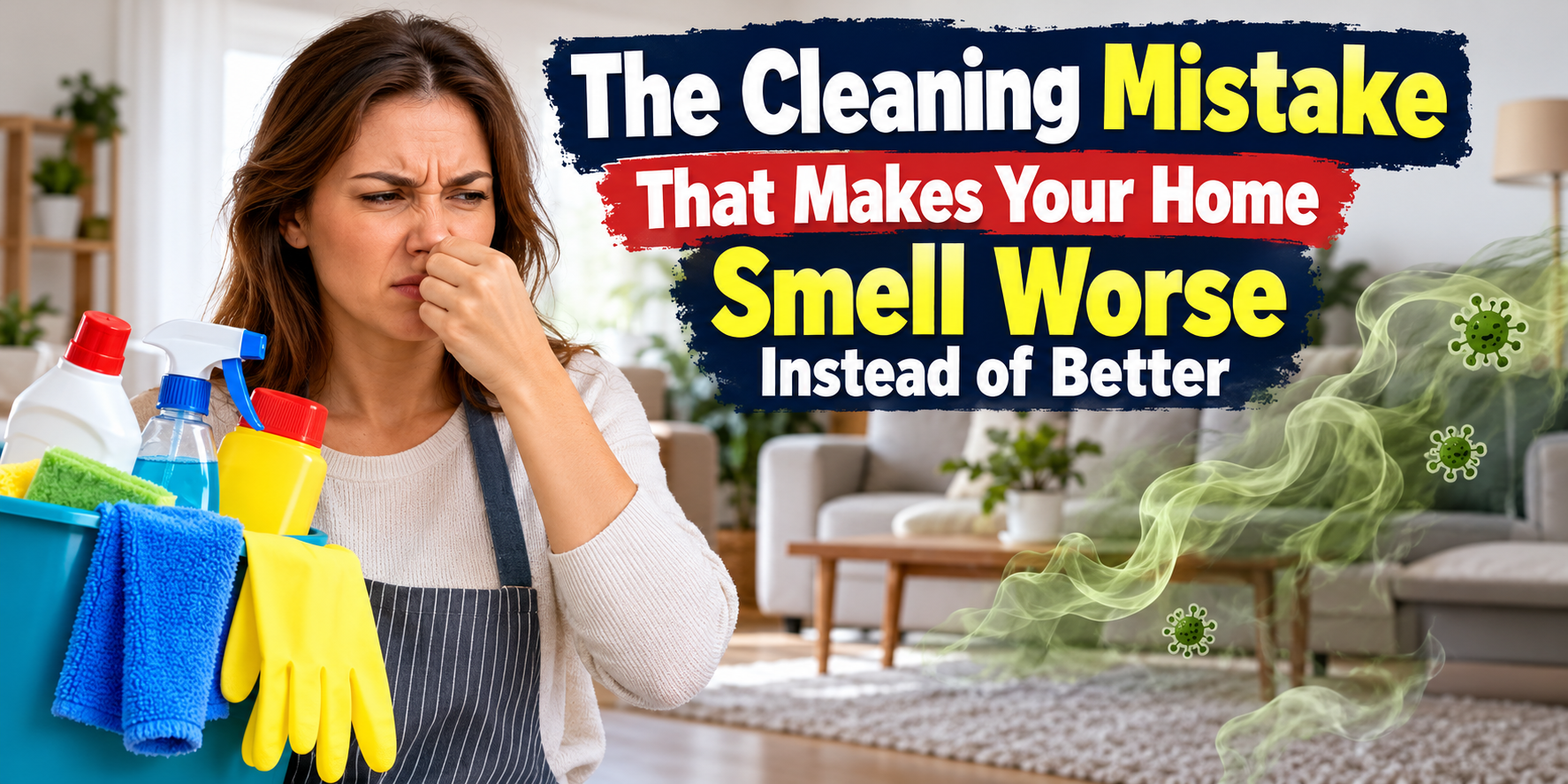
One of the most common mistakes is using heavily scented cleaning products, air fresheners, and excessive amounts of cleaning solution to hide unpleasant odors.
At first, your home smells like fresh lemons or lavender. But when the fragrance disappears, the original odor returns.
Why?
Because a pleasant fragrance doesn’t necessarily mean the source of the bad smell has been removed.
The real problem may be:
- Damp carpets or rugs trapping moisture.
- Dirty mop heads spreading odors between rooms.
- Old sponges containing trapped food residue.
- Hidden mold growing in humid areas.
- Dirty drains or garbage disposal systems.
- Moisture accumulating behind furniture.
- Washing machines holding stagnant water.
Some fragranced cleaning products can also release compounds that contribute to indoor air pollution.
That means adding more fragrance isn’t always the best solution.
1. You’re Cleaning With a Dirty Mop
Think about the last time you cleaned your floors.
Did you use a freshly washed mop, or did you grab the same mop that had been sitting in the laundry room for several days?
A dirty, damp mop can carry unpleasant odors from one room to another.
How to fix it
- Wash reusable mop heads according to the manufacturer’s instructions.
- Allow them to dry completely after each cleaning session.
- Replace dirty mop water frequently.
- Use the correct amount of floor cleaner recommended on the label.
- Avoid leaving excessive water on wood, laminate, or other moisture-sensitive flooring.
Pro tip: If your floors smell sour after mopping, check your mop head and bucket before purchasing another expensive cleaning product.
2. You’re Using Too Much Cleaning Product
More cleaning solution doesn’t always mean cleaner surfaces.
Excess detergent can leave a sticky residue, particularly when the manufacturer requires rinsing.
That residue may attract dirt and make floors feel unpleasant even after cleaning.
The better method
- Read the cleaning product’s dilution instructions.
- Use a clean microfiber cloth.
- Rinse surfaces when the product label requires it.
- Wipe away excess moisture.
- Allow the surface to dry thoroughly.
Avoid mixing different household cleaners. In particular, never combine bleach with vinegar, ammonia, or other cleaning products.
3. Your Carpets Are Holding Hidden Odors
Carpets can absorb spills, pet accidents, cooking smells, and moisture.
Even when the surface looks clean, unpleasant smells can remain in the carpet fibers or padding.
This is especially common in homes with pets, humid environments, or previous water damage.
What you should do
Step 1: Vacuum carpets thoroughly, especially around furniture.
Step 2: Identify specific areas affected by spills or pet accidents.
Step 3: Use a carpet-safe cleaning product according to its instructions.
Step 4: Avoid soaking the carpet.
Step 5: Ensure the carpet and underlying materials dry completely.
If odors persist, professional carpet cleaning services may help with removable contamination. However, a carpet that has sustained extensive water damage or mold growth may require professional assessment or replacement.
4. You’re Ignoring Hidden Mold and Moisture
A persistent musty smell is one of the warning signs that moisture could be trapped somewhere in your home.
Common problem areas include:
- Behind bathroom walls.
- Under kitchen sinks.
- Around leaking washing machines.
- Beneath carpets.
- Inside damp basements.
- Near poorly ventilated windows.
- Around water-damaged drywall.
Mold grows in damp conditions, so eliminating excess moisture is essential.
How to improve the situation
Check for plumbing leaks, condensation, and standing water. Use bathroom exhaust fans, increase ventilation where appropriate, and consider a dehumidifier for consistently humid rooms.
Clean small amounts of mold on appropriate hard surfaces using detergent and water, with suitable protection, then dry completely.
For extensive mold contamination, sewage damage, or recurring moisture behind walls, consult qualified mold remediation or water damage restoration professionals.
Important: Simply spraying fragrance over a moldy smell will not solve the underlying moisture problem.
5. You’re Forgetting About Your HVAC System
Your heating, ventilation, and air conditioning system can influence the way your home smells.
Dirty filters, condensation problems, or moisture around HVAC equipment may contribute to unpleasant odors.
Simple HVAC maintenance checklist
- Check air filters and replace them when necessary.
- Inspect visible areas around the indoor HVAC unit for moisture.
- Keep supply and return vents unobstructed.
- Investigate unusual smells when the system starts running.
- Schedule qualified HVAC maintenance when there are signs of malfunction.
Professional air duct cleaning is not automatically necessary for every home. It may be worth investigating when there is substantial visible mold contamination in ducts, pest infestation, or excessive debris being released from the system.
6. Your Kitchen Sink May Be the Real Problem
Sometimes the smell isn’t coming from your cleaning products or floors at all.
The kitchen sink could be responsible.
Food particles, grease, and organic buildup can collect around drains, garbage disposals, and sink strainers.
Easy sink-cleaning routine
- Remove food scraps from the sink strainer.
- Clean the strainer with dish soap and warm water.
- Scrub accessible sink and drain-opening surfaces with a suitable brush.
- Clean the garbage disposal according to the manufacturer’s instructions, with the power disconnected before any hands-on maintenance.
- Rinse thoroughly.
If you notice a persistent sewage smell, contact a qualified plumber because the problem could involve a drain trap, venting, or sewer connection.
7. You’re Leaving Cleaning Cloths and Sponges Wet
This tiny habit can make a big difference.
After cleaning the kitchen or bathroom, many people leave damp sponges inside the sink or wet cloths in a pile.
Over time, they can develop unpleasant odors.
Better habits
- Rinse sponges thoroughly after use.
- Squeeze out excess water.
- Store them somewhere they can dry.
- Launder reusable cloths regularly.
- Replace sponges that remain smelly or heavily worn.
Fresh cleaning tools help prevent unpleasant odors from spreading around the home.
The Better Cleaning Routine for a Fresh-Smelling Home
Instead of covering bad smells with fragrance, use a simple routine that targets the cause.
| Area | What to do | Frequency |
|---|---|---|
| Kitchen sink | Remove debris and clean accessible surfaces | Daily |
| Mop heads | Wash and dry completely | After use |
| Carpets | Vacuum and inspect for spills | Weekly or as needed |
| Bathroom | Remove moisture and ventilate | Daily |
| Cleaning cloths | Launder and dry thoroughly | After use |
| HVAC filters | Inspect and change as recommended | Per system guidance |
| Hidden leaks | Inspect vulnerable areas | Regularly |
When Should You Call a Professional Cleaning or Restoration Service?
Some household odors can be solved with basic cleaning. Others may signal a larger problem.
Consider professional help when:
- A persistent musty odor returns despite proper cleaning and drying.
- You discover extensive mold or water damage.
- Carpet padding remains wet or has developed a persistent odor.
- Your HVAC system produces unexplained unpleasant smells.
- Sewage odors persist after ordinary drain maintenance.
Depending on the cause, the right specialist may be a plumber, HVAC technician, carpet cleaner, mold remediation contractor, or water damage restoration professional.
Professional indoor air quality assessments can also be useful in certain persistent or unexplained situations, but not every odor requires expensive testing.
Frequently Asked Questions
Why does my house smell bad after cleaning?
Common causes include dirty cleaning tools, damp carpets, excess moisture, drains with organic buildup, and odors temporarily masked by scented products.
Why does my floor smell worse after mopping?
A dirty mop, contaminated mop water, excess cleaning solution, or flooring that stays damp for too long could be contributing.
Can cleaning products make indoor air quality worse?
Yes. Some cleaning products and air fresheners release airborne chemicals or contribute to indoor pollutants. Follow product labels and ventilate appropriately during cleaning.
Can mold cause a musty smell even if I can’t see it?
Yes. A persistent musty odor can indicate hidden moisture or mold and should be investigated.
Will air duct cleaning remove household odors?
Only if the odor source is associated with contamination in the ducts and that source is properly addressed. Air duct cleaning is not a universal solution for household odors.
Final Thoughts: A Clean Home Should Smell Fresh Without Heavy Perfume
The biggest cleaning mistake isn’t necessarily forgetting to clean something.
It’s trying to cover an unpleasant smell instead of finding and removing its source.
Dirty cleaning tools, damp carpets, hidden leaks, and poor ventilation can make odors return again and again.
By changing a few cleaning habits and addressing moisture problems early, you can help your home stay cleaner and more comfortable without relying on heavy fragrances or unnecessary expensive products.
Remember: The secret to a truly fresh-smelling home isn’t adding more
