

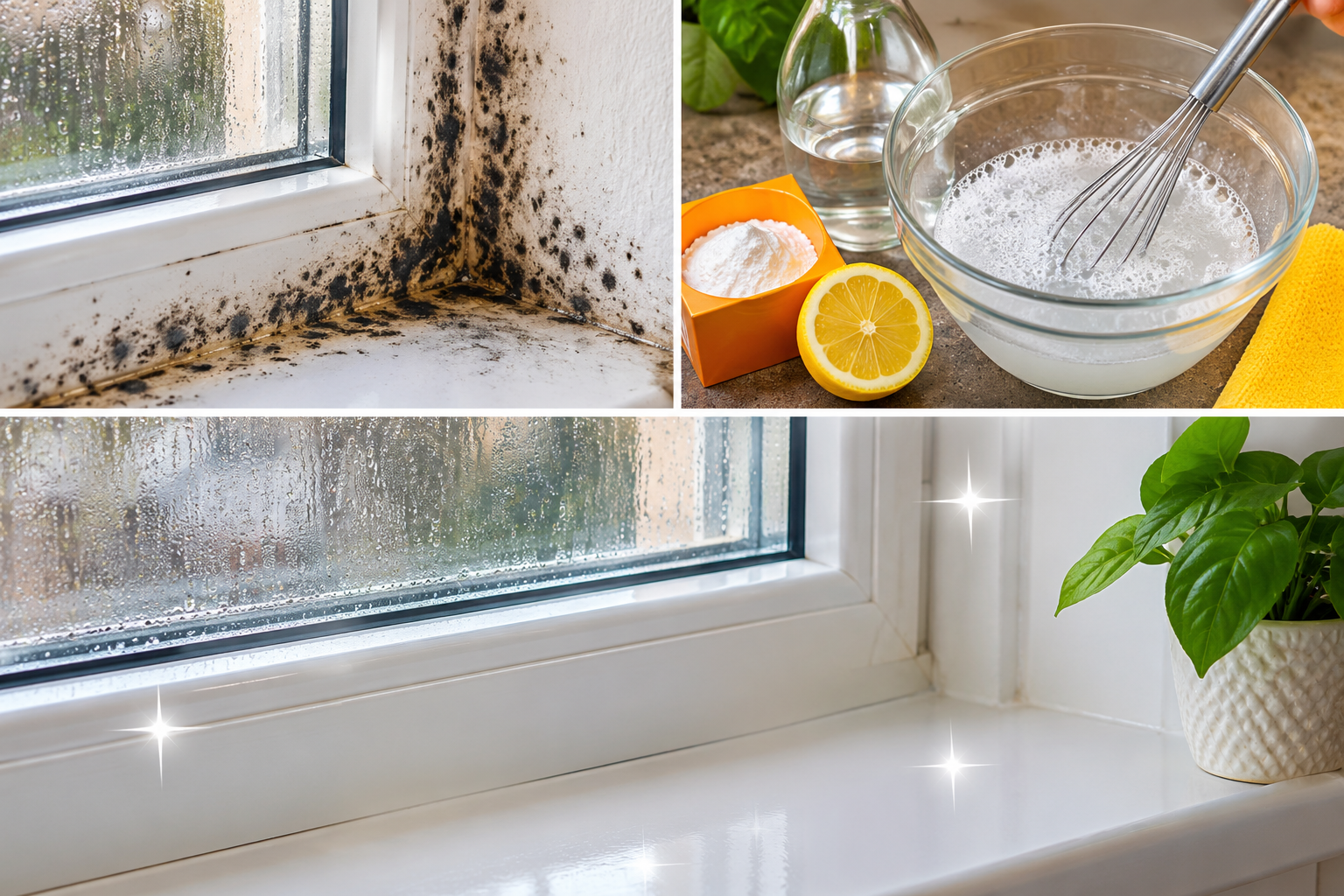
- 2 cups of warm water
- 1 teaspoon of liquid dishwashing detergent
- 1 soft cleaning brush
- 2 microfiber cloths
- 1 small bowl
- Rubber gloves
- N95 respirator
- Protective goggles
Step-by-Step Cleaning Instructions
Step 1: Prepare the Homemade Cleaning Solution
Pour two cups of warm water into a bowl. Add one teaspoon of liquid dishwashing detergent and mix gently.
This simple cleaning solution helps loosen surface mold, dirt, and stubborn residue without expensive specialty cleaning products.
Step 2: Prepare the Affected Area
Wear protective gloves, goggles, and an N95 respirator before starting. Improve ventilation when possible.
Avoid scraping or brushing dry mold, which can release spores into the surrounding air.
People with asthma, chronic lung conditions, or weakened immune systems should avoid performing mold cleanup themselves. CDC+1
Step 3: Clean the Moldy Window Frames
Dip a microfiber cloth into your homemade cleaning solution and gently scrub the affected hard surfaces.
Use a soft brush to clean window corners, tracks, and difficult-to-reach areas.
Avoid soaking drywall, unfinished wood, or other porous materials.
Step 4: Remove the Remaining Residue
Wipe the cleaned surfaces with a fresh, damp microfiber cloth to remove remaining soap and dirt.
Repeat if necessary.
Step 5: Dry the Area Completely
Use a clean, dry towel to remove excess moisture from the windows, frames, and surrounding surfaces.
The Environmental Protection Agency recommends using detergent and water to clean mold from hard surfaces, followed by complete drying. US EPA+1
5 Powerful Ways to Prevent Mold From Returning
1. Invest in a Home Dehumidifier
Maintaining indoor humidity between 30% and 50% can help reduce conditions that encourage mold growth.
A high-quality whole-house dehumidifier may be worth considering for properties with persistent humidity problems. US EPA+1
2. Repair Damaged Window Seals
Damaged seals and water leaks can contribute to moisture accumulation.
Professional window repair services or energy-efficient window replacement may be necessary if your windows are no longer protecting your home against water intrusion.
3. Improve Indoor Air Quality
Regular HVAC maintenance, proper ventilation, and effective moisture control can help maintain a healthier indoor environment.
If moisture problems persist, consider consulting an indoor air quality specialist.
4. Schedule a Professional Moisture Inspection
Hidden water leaks can damage drywall, flooring, insulation, and structural materials.
A professional moisture inspection can help identify problems before they require extensive property damage restoration.
5. Remove Window Condensation Daily
During colder months, wipe condensation from windows every morning and keep the surrounding surfaces dry.
This simple maintenance habit may help reduce future mold growth.
How Much Does Professional Mold Remediation Cost?
Professional mold removal costs vary depending on the affected area, the severity of contamination, accessibility, and the amount of structural damage.
Factors that influence mold remediation estimates include:
- Professional mold inspection.
- Moisture detection and leak repair.
- Mold-contaminated material removal.
- Structural drying and dehumidification.
- Drywall and insulation replacement.
- Residential water damage restoration.
- Post-remediation verification.
If you discover extensive mold contamination, compare written estimates from qualified local mold remediation contractors before hiring a company.
Does Homeowners Insurance Cover Mold and Water Damage?
Many American homeowners wonder whether their property insurance policy will cover mold removal and water damage restoration.
Homeowners insurance may provide limited mold coverage when the damage results from a covered sudden and accidental incident, such as a burst plumbing pipe or appliance malfunction.
However, mold caused by long-term condensation, gradual leaks, or neglected property maintenance is commonly excluded. tdi.texas.gov+1
Before submitting a homeowners insurance claim, review your policy limits, exclusions, deductible, and any additional mold damage coverage.
Document the affected areas with photographs and contact your insurance provider promptly when you discover significant water damage.
DIY Mold Removal vs. Professional Mold Remediation
| DIY Mold Cleaning | Professional Mold Remediation |
|---|---|
| Small surface mold patches | Extensive mold contamination |
| Hard, nonporous surfaces | Damaged building materials |
| Minor condensation problems | Hidden water damage |
| Basic household supplies | Specialized restoration equipment |
| Routine home maintenance | Structural damage assessment |
The EPA advises that areas larger than approximately 10 square feet or properties with significant water damage may require professional assistance. US EPA+1
When Should You Contact a Water Damage Restoration Company?
Consider professional assistance if you notice persistent musty odors, soft or damaged drywall, peeling paint, recurring mold, leaking windows, or water stains spreading across your walls and ceilings.
An experienced residential water damage restoration company can help identify moisture sources, assess structural damage, and recommend appropriate repairs.
Addressing water damage early may reduce the need for more expensive restoration work later.
Frequently Asked Questions
Is black mold around windows dangerous?
Mold exposure can contribute to respiratory irritation and allergic reactions. However, black coloration alone does not identify the mold species or determine its health risk.
Can I permanently remove mold from my windows?
Cleaning visible mold and correcting the underlying moisture problem can significantly reduce the likelihood of mold returning.
Should I use bleach to clean window mold?
The EPA does not recommend bleach as a routine mold cleanup method. Detergent and water are generally appropriate for small affected hard surfaces. Never mix bleach with other cleaning products. US EPA+1
Can window replacement prevent mold growth?
Energy-efficient replacement windows may help reduce condensation in certain situations. However, indoor humidity, ventilation, insulation, and water leaks must also be addressed.
Is professional mold inspection worth it?
A professional inspection may be useful when mold repeatedly returns, moisture damage is hidden, or the source of the problem cannot be identified.
Final Thoughts
Black mold around windows is more than an unpleasant cleaning problem. It can indicate underlying moisture issues that may eventually require professional mold remediation, emergency water damage restoration, or expensive residential property repairs.
By using this simple homemade cleaning recipe, controlling indoor humidity, maintaining your windows, and addressing moisture problems early, you can help protect your home and reduce unnecessary repair expenses.
Save this cleaning recipe and share it with friends and family who struggle with window condensation and mold during winter!
