

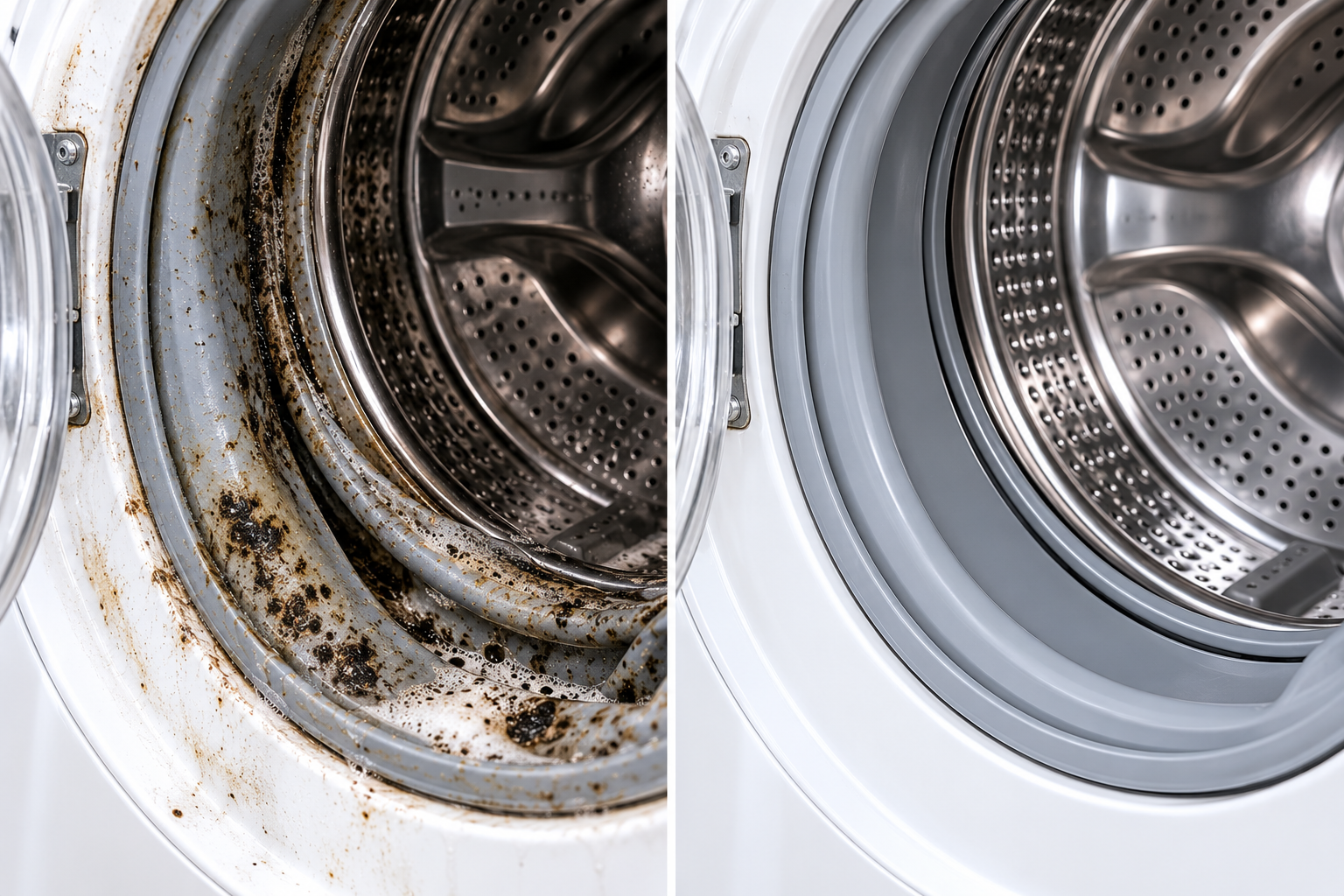
Does your washing machine smell like rotten eggs, mildew, or sewage—even after running a full wash cycle? That unpleasant odor could be a warning sign of hidden detergent buildup, trapped moisture, mold, or drainage problems.
Before spending money on a professional washing machine cleaning service or expensive appliance repair, you may be able to solve the problem with a simple DIY deep-cleaning routine.
Whether you own a Whirlpool, Samsung, LG, GE, or another washing machine brand, this guide explains how to clean a smelly washer, remove odor-causing residue, and recognize problems that require professional attention.
Why Does Your Washing Machine Smell So Bad?
Even an expensive, high-efficiency washing machine can develop unpleasant odors.
The most common causes include:
- Mold and mildew: Moisture gets trapped around rubber door seals and other damp surfaces.
- Detergent buildup: Too much laundry detergent leaves residue inside the washer.
- Dirty drain pump filters: Hair, lint, coins, and debris can accumulate in accessible filters.
- Fabric softener residue: Sticky buildup can trap dirt and contribute to odors.
- Poor ventilation: Closing the washing machine immediately after use traps moisture.
- Drainage issues: Blocked or improperly installed drain hoses can create sewage-like smells.
The good news? Many of these problems can be corrected without replacing your washing machine.
The Easy DIY Washing Machine Deep Cleaning Method
What You’ll Need
For Instructions And Complete Step By Step Process Please Head On Over To Next Page Or Open button (>)
