

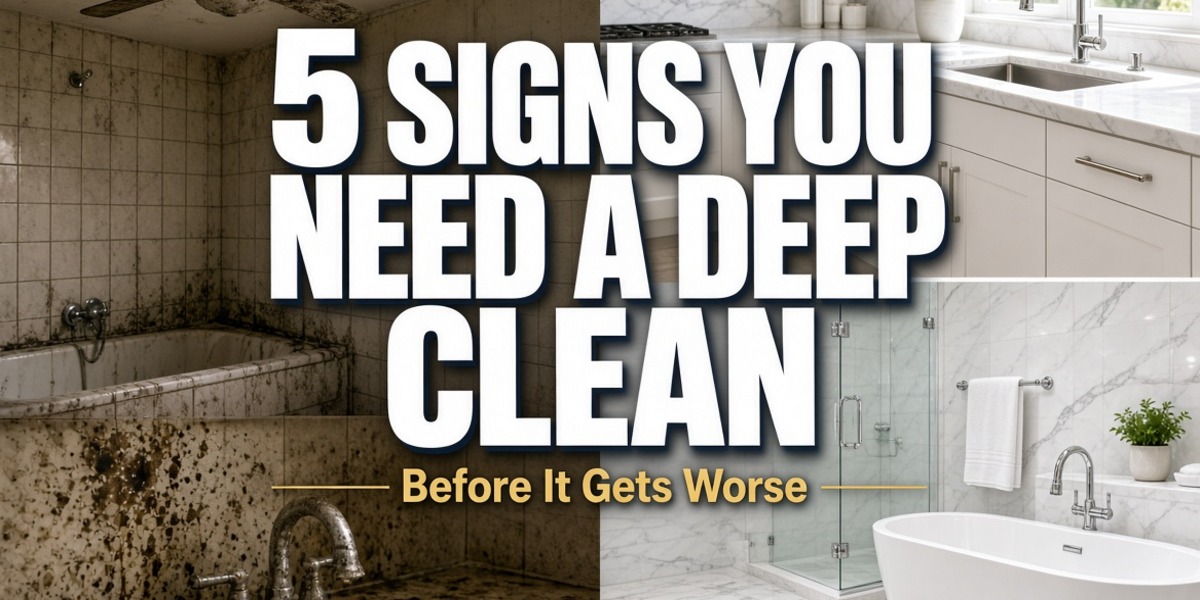
- A musty smell when you first walk in, especially after the AC or heat kicks on
- Kitchen odor that returns a few hours after cooking
- Bathroom dampness even when the room looks tidy
- Pet smell in carpet, sofas, or curtains after you already vacuumed
- A “closed-up” smell in spare rooms, closets, or after travel
Odors live in grout, caulk, under appliances, inside the oven, in fridge drip trays, in carpet padding, on ceiling fans, and in air vents. Those surfaces collect grease, biofilm, dander, and moisture. A standard clean handles counters, floors, and bathrooms. A deep clean goes after the odor source: appliance interiors, baseboards, vents, window tracks, under furniture, and high-touch buildup.
Book sooner if: you have pets, smokers have visited, someone was sick in the home, or the property sat empty. Empty homes and short-term rentals collect stale air fast. That is why Airbnb cleaning and move-in cleaning almost always start with a deep clean, not a light tidy.
Sign 2: Allergies, dust, or “mystery film” keep coming back
If someone in the house wakes up congested, sneezes more at home than outdoors, or you see a gray film on furniture two days after dusting, the home has a dust reservoir.
Common reservoirs:
- Ceiling fans and light fixtures
- HVAC vents and return grilles
- Tops of cabinets, door frames, and window tracks
- Baseboards and the strip of floor under sofas
- Blinds, curtains, and lampshades
- Mattress surfaces and upholstered chairs
- Behind the fridge and stove
Allergy households, kids, and pets make this worse. Hair and dander sink into carpet fiber and furniture seams. A robot vacuum helps daily floors. It does not replace a professional pass on vents, upholstery edges, high surfaces, and the hidden floor under furniture.
This is also why air duct cleaning, HVAC vent wiping, and carpet cleaning show up next to deep-clean searches. You may not need all three on day one. You do need a deep clean if dust returns immediately after you clean. If vents blow gray dust onto freshly wiped furniture, add vent cleaning or a filter change to the same booking conversation.
Quick test: Run a white cloth along a blade of the ceiling fan, the top of a bathroom door, and the first HVAC vent. If it comes back gray or greasy, you are past maintenance cleaning.
Sign 3: Kitchens and bathrooms look used even when they are “done”
Kitchens and bathrooms decide whether a home feels clean. If you still see any of the following, a standard visit is leaving soil behind:
Kitchen
- Grease film on cabinets, range hood, and the wall behind the stove
- Sticky floor at the stove edge or trash can
- Dull, spotted stainless steel
- Crumbs and residue inside the microwave, toaster tray, or oven door glass
- A fridge that smells fine until you open the drawers
Bathroom
- Pink or orange residue in the shower, a biofilm problem
- Dark grout that does not improve with everyday spray
- Hard-water crust on faucets, shower doors, and the showerhead
- A toilet base or hinge area that never looks new
- Limescale in the bowl ring after every regular clean
These are classic deep-clean tasks: degreasing, grout agitation, limescale removal, appliance interiors, and detailed bathroom sanitation. They take time and the right products. That is why a deep house cleaning costs more than a regular house cleaning—the work is slower and more physical.
If you are prepping a rental, listing a home, or handing back keys, this sign is urgent. Landlords and property managers fail end-of-tenancy and move-out cleaning inspections on ovens, grout, windowsills, and extractor fans—not on the coffee table.
