

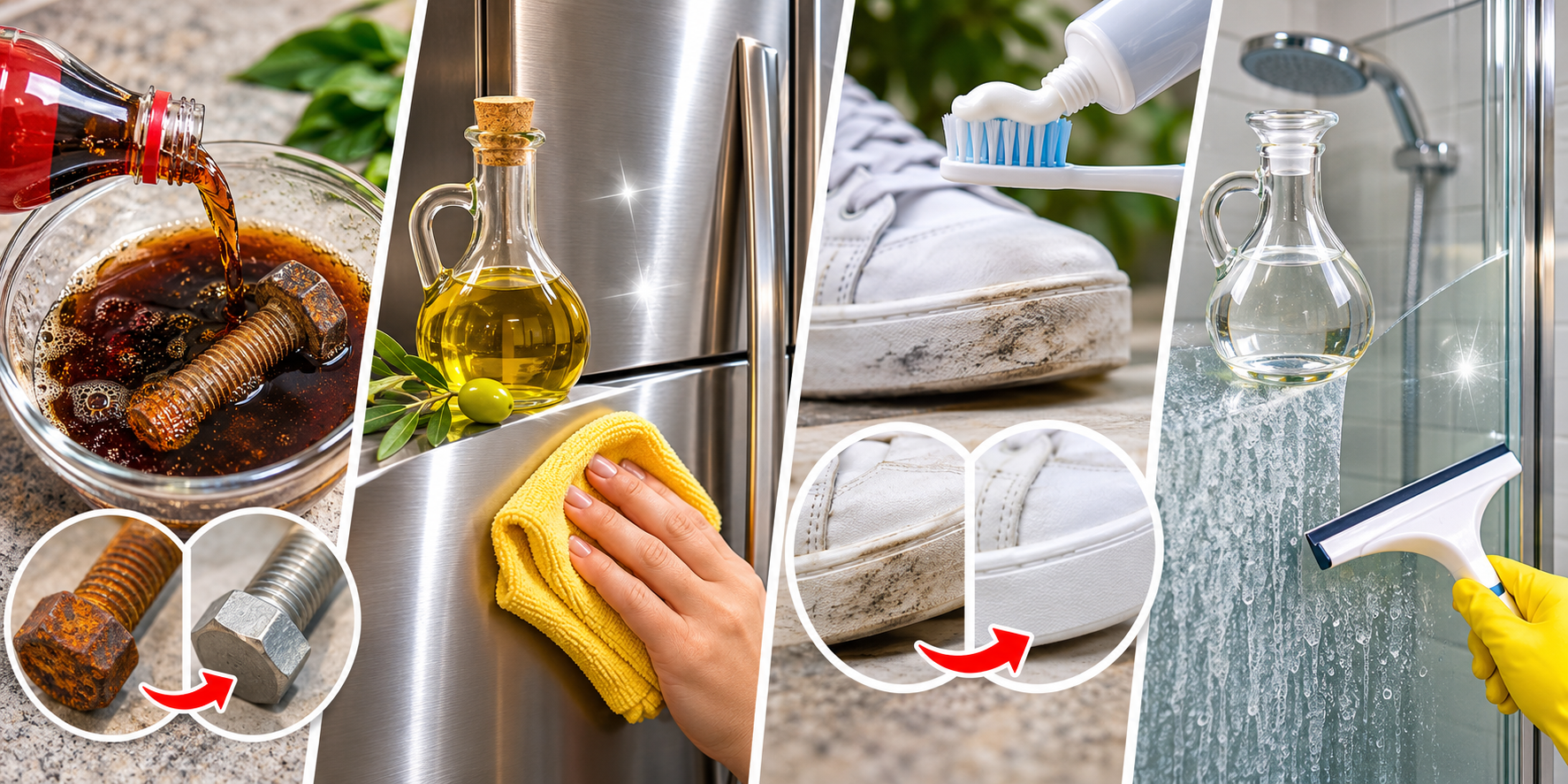
1. Coca-Cola for Light Rust on Metal 🔧
Did you know that Coca-Cola contains phosphoric acid, an ingredient also used in some commercial rust-removal products?
Although soda is much weaker than a dedicated rust remover, its acidity may help loosen light surface rust from certain small metal objects.
What You’ll Need
- A small amount of Coca-Cola
- A container
- An old toothbrush or soft cleaning brush
- Clean water
- A dry cloth
Step-by-Step Method
- Place a small, removable, uncoated steel item with light surface rust into a container.
- Pour in enough Coke to cover the rusty area.
- Let it sit for approximately 15–30 minutes.
- Gently scrub the affected area with a brush.
- Rinse thoroughly to remove the sugary residue.
- Dry immediately to help prevent new rust.
Expected result: Some light rust may loosen, making it easier to brush away. Heavy rust usually requires a proper rust-removal product.
When to Avoid This Hack
Don’t use cola on valuable tools, painted surfaces, electrical components, delicate metal finishes, or items that cannot be thoroughly rinsed and dried.
For severe corrosion on plumbing components, fixtures, or appliances, professional repair or replacement may be more appropriate.
2. Olive Oil for Shiny Stainless Steel Appliances ✨
Fingerprints, water spots, and dull-looking stainless steel can make an otherwise clean kitchen look messy.
Fortunately, a tiny amount of olive oil can help polish compatible stainless steel surfaces after they’ve been cleaned.
What You’ll Need
- A few drops of olive oil
- Two microfiber cloths
- Mild dish soap and warm water
Step-by-Step Method
- Wipe the appliance with a microfiber cloth dampened with mild soapy water.
- Remove the soap residue and dry the surface.
- Put one or two drops of olive oil onto a clean microfiber cloth.
- Gently polish the stainless steel in the direction of its grain.
- Buff with a separate dry cloth to remove excess oil.
Expected result: A smoother-looking, shinier finish with fewer visible smudges.
Important Cleaning Tip
Check your appliance manufacturer’s care instructions before applying oil. Avoid control panels, heat-producing surfaces, and specialty fingerprint-resistant coatings unless the manufacturer permits it.
Too much oil can also attract dust and leave a greasy film.
Money-saving idea: Routine appliance maintenance can help keep your kitchen looking good and may help you identify problems before they require expensive appliance repairs.
3. Toothpaste for Scuff Marks on White Sneaker Soles 👟
Those dark scuff marks around white rubber sneaker soles can be frustrating.
If gentle soap and water haven’t removed them, a small amount of basic white, non-gel toothpaste may help lift superficial marks from some rubber surfaces.
What You’ll Need
- White non-gel toothpaste
- A soft toothbrush
- A damp microfiber cloth
- Clean water
Step-by-Step Method
- Remove loose dirt using a damp cloth.
- Test a tiny amount of toothpaste on a hidden section of the rubber sole.
- If the finish is unaffected, apply a small amount to the scuff mark.
- Gently rub with a soft toothbrush using light circular movements.
- Wipe away the toothpaste thoroughly.
- Allow the shoes to air-dry.
Expected result: Some surface scuffs and dirt may become less noticeable.
Important Warning
Toothpaste contains mild abrasives. Never use this trick on polished furniture, phone screens, automotive paint, delicate leather, or coated materials. Use a shoe-specific cleaner for valuable or sensitive sneakers.
4. White Vinegar for Hard-Water Stains on Shower Glass 🚿
If your shower doors look cloudy even after regular cleaning, hard-water deposits could be the reason.
Minerals in tap water, especially calcium and magnesium, can leave stubborn marks on bathroom glass.
White vinegar contains acetic acid, which can help dissolve certain mineral deposits.
What You’ll Need
- White distilled vinegar
- Water
- A spray bottle
- A soft microfiber cloth
- A squeegee
Step-by-Step Method
- Mix equal parts white vinegar and water in a clean spray bottle.
- Test the solution on an inconspicuous area of plain, uncoated shower glass.
- Spray the affected glass, avoiding surrounding stone and sensitive metal finishes.
- Allow the solution to sit for approximately 5–10 minutes.
- Wipe gently with a microfiber cloth.
- Rinse thoroughly with water.
- Dry with a squeegee to reduce new mineral deposits.
Expected result: Many fresh or moderate hard-water stains can become noticeably lighter.
When a Professional Solution Makes More Sense
If your shower glass remains cloudy after cleaning, the problem may involve mineral etching rather than removable buildup.
Homes with persistent hard-water problems may benefit from a professional water-quality assessment or a properly selected water-softener system.
Safety warning: Never mix vinegar with bleach or other household cleaners. Avoid using vinegar on marble, limestone, travertine, and other acid-sensitive materials.
