

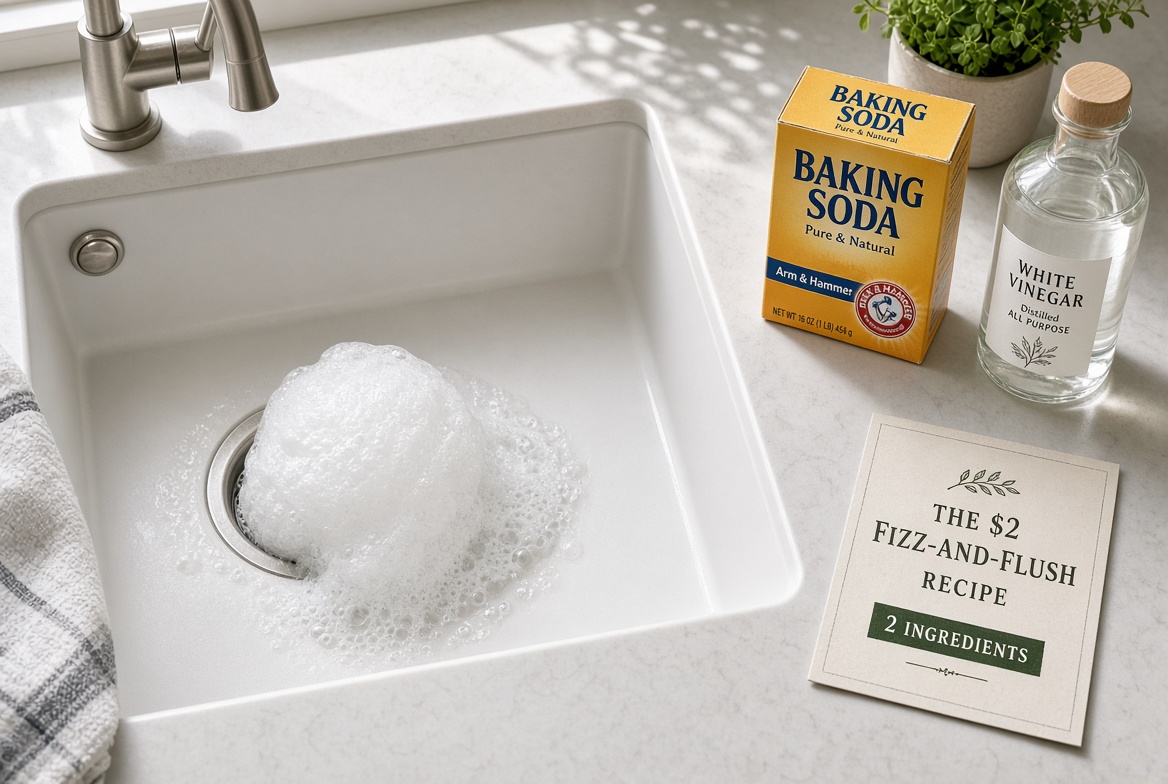
Ingredients (the only 2 you need)
- ½ to 1 cup baking soda (sodium bicarbonate — not baking powder)
- ½ to 1 cup distilled white vinegar (5% acetic acid; apple cider vinegar works but can smell)
Supporting “liquid” (not counted as a third ingredient):
Very hot tap water or boiling water — 4 to 8 cups, used as the flush. Use boiling water only on metal pipes. Use hot tap water on PVC, ABS, or unknown plastic pipes so you do not soften joints.
Optional boosters (still two core ingredients):
- 1–2 tablespoons table salt or kosher salt mixed with the baking soda for extra grit on grease
- A squirt of grease-cutting dish soap before the first hot-water pour (kitchen sinks only)
Equipment
- Measuring cup
- Kettle or pot
- Sink stopper, drain plug, or a damp cloth
- Funnel (helpful on small bathroom drains)
- Rubber gloves
- Cup or small bowl to bail standing water
- Towels
Method (recipe-style steps)
1. Mise en place — empty the “bowl.”
Bail standing water out of the sink so the mixture reaches the clog instead of diluting in a pool. Remove the stopper or pop-up. Wipe visible gunk from the drain opening and strainer. If you have a double kitchen sink, plug the unused side so pressure does not escape.
2. Prime with heat.
Pour 2–4 cups of very hot water down the drain. This softens grease and soap film so the fizz can work deeper. Wait 1 minute.
3. Dry base — add the baking soda.
Pour ½ cup baking soda (use a full cup for a greasy kitchen sink) straight into the drain. Use a funnel if the opening is small. Let it sit 1–2 minutes so powder contacts residue on the pipe walls.
4. Acid — add the vinegar.
Immediately pour ½–1 cup white vinegar on top of the baking soda. You will hear and see vigorous fizzing. That is carbon dioxide gas plus water forming as acid meets base. The bubbles agitate biofilm and loose debris.
5. Cover and rest (the most skipped step).
Cap the drain with a stopper or damp cloth. This forces the reaction down into the P-trap instead of letting foam escape upward. Wait 15–30 minutes. For a slow, greasy kitchen drain, 45–60 minutes is better. Do not run water during this time.
6. Flush — the “bake” finish.
Remove the cover. Slowly pour 4–8 cups of hot (or boiling, if pipes allow) water down the drain to push loosened material through the trap and into the waste line. Run hot tap water for 30–60 seconds afterward.
7. Test.
Fill the sink a few inches and pull the stopper. If it drains at normal speed, you are done. If it is only slightly better, repeat the full recipe once more the same day. Two rounds beat one weak round.
Why this two-ingredient recipe works (and when it does not)
Baking soda is mildly alkaline and abrasive. Vinegar is a weak acid. Together they neutralize, produce CO₂ bubbles, and mechanically loosen soft organic buildup. They also neutralize odor. They do not dissolve a packed hair rope, a child’s toy, a wad of paper towels, or a collapsed pipe. Those need a zip-it hair tool, a sink plunger, a small drain snake, P-trap removal, or a professional drain cleaning service.
Plumbers generally prefer this method over chemical drain cleaners because lye- and acid-based products can damage older pipes, etch finishes, and create a hazardous soup if a tech later opens the line. If you already poured a commercial opener, do not add vinegar or baking soda on top of it.
Kitchen sink vs bathroom sink variations
Kitchen (grease + food): Use the full 1 cup + 1 cup ratio. Add a little dish soap with the first hot-water prime. Repeat if pasta, rice, or coffee grounds are involved. Never put grease, oil, or coffee grounds down the drain going forward.
Bathroom (hair + soap + toothpaste): ½ cup + ½ cup is usually enough. Pull hair from the stopper first — that single step often does half the work. If the drain is still slow after two rounds, use a plastic drain hair snake before calling a clogged drain plumber.
Tub / shower: Same recipe. Cover the overflow if foam tries to come out there.
Prevention “recipe” (monthly maintenance)
Once a month, or after a heavy cooking weekend:
- ½ cup baking soda
- ½ cup vinegar
- 10-minute covered rest
- Hot-water flush
This keeps biofilm from turning into a full clog and reduces the chance you will later need drain cleaning near me, main line snaking, or sewer line repair.
Also:
- Use a sink strainer.
- Wipe greasy pans with a paper towel before washing.
- Never flush grease, coffee grounds, eggshells, or “flushable” wipes.
- Run hot water for 15 seconds after washing dishes.
When to stop DIY and search “emergency plumber” for real
Call a licensed plumber, drain cleaning company, or 24-hour service if:
- Water backs up in more than one fixture (sink + tub, or sink + toilet) — possible main line or sewer issue
- You smell sewage
- The drain is completely sealed and nothing goes down
- You have a garbage disposal that hums but will not spin (reset first, then stop)
- You suspect a foreign object
- Two full recipe rounds plus a plunger or hair snake still fail
Those situations are why “emergency plumber near me,” “sewer camera inspection,” “hydro jetting near me,” and “clogged drain repair” cost what they cost. A $2 pantry recipe is the right first move. A $400 after-hours call is the right second move when the first one fails.
Quick FAQ
Exact ratio?
1:1 by volume. ½ cup / ½ cup for small bathroom drains; 1 cup / 1 cup for kitchen grease.
How long to leave it?
Minimum 15 minutes covered. 30 minutes is the sweet spot. Overnight is fine for a slow drain if you flush thoroughly in the morning.
Can I use apple cider vinegar?
Yes. White vinegar is cheaper and odorless after the flush.
Safe for septic?
Yes, in these amounts. Avoid chemical drain openers on septic systems.
Safe for garbage disposal?
Yes, but turn the disposal off, and do not run it while the mixture is sitting. Flush well after.
Will this damage pipes?
Unlikely at these strengths. Skip boiling water on plastic pipes. Never mix with commercial chemical cleaners.
Keep baking soda and a gallon of white vinegar under the sink the same way you keep salt and oil in the kitchen. Most “I need a plumber right now” sink clogs are just grease and soap that never met a measured fizz-and-flush. Use the recipe first. Save the high-ticket search — emergency plumber, drain cleaning service, sewer line replacement — for the clogs this two-ingredient method cannot touch.
