

A greasy, baked-on oven is one of the most dreaded cleaning jobs in the house. Food splatters carbonize, grease turns sticky, and the smell of old spills can linger every time you turn the heat on. Most people either avoid it for months or attack it with harsh chemical sprays that leave strong fumes and still require heavy scrubbing.
This method is different. It relies on time, a simple baking-soda paste, and smart sequencing so the cleaner does most of the work for you. You’ll get a thoroughly clean oven (including the door glass and racks) with far less effort and without filling your kitchen with toxic clouds.
Why This Approach Works Better
Baking soda is mildly abrasive and alkaline, so it softens and lifts baked-on grease without scratching enamel. Letting it sit for several hours (ideally overnight) is the real secret—most of the grime loosens on its own. Vinegar then reacts with the baking soda to help lift the remaining residue. The result is cleaner surfaces with less force and safer ingredients for most households.
What You’ll Need
- Box of baking soda
- White vinegar
- Dish soap
- Spray bottle
- Soft sponge, non-scratch scrubber, or microfiber cloths
- Old toothbrush or small detail brush
- Rubber gloves
- Plastic scraper or silicone spatula (optional but useful)
- Large sink, bathtub, or plastic tub for soaking racks
- Optional: hydrogen peroxide, lemon, or a commercial oven cleaner only for extreme cases
Step 1: Empty and Prep (5–10 minutes)
Remove oven racks, pizza stone, thermometer, and any loose debris. Wipe out large crumbs with a paper towel or damp cloth. If your oven has a bottom storage drawer, empty that too. Turn the oven off and make sure it’s completely cool. Open a window or run the range hood for ventilation.
Step 2: Make and Apply the Baking-Soda Paste
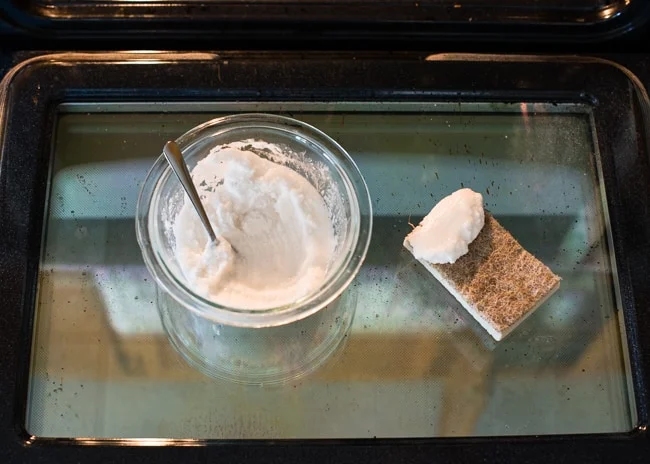
In a bowl, mix about ½–¾ cup baking soda with enough water to form a thick, spreadable paste (similar to toothpaste). Add a few drops of dish soap for extra grease-cutting power if you like.
Using gloves, spread a generous layer over the entire interior: floor, walls, ceiling, and around the door frame. Avoid coating the heating elements, fan (on convection models), or any electrical components directly. For heavily soiled spots, pile the paste thicker.
Coat the inside of the oven door (including the glass) as well, but be careful not to let paste drip into the door vents or hinges.
Close the oven and let the paste sit for at least 4–6 hours. Overnight is ideal—this is where most of the cleaning power happens.
Step 3: Clean the Racks Separately
While the paste works, place the racks in a bathtub, large sink, or plastic bin. Sprinkle generously with baking soda, then pour or spray vinegar over them so it foams. Add hot water and a squirt of dish soap. Let them soak for a few hours (or overnight).
After soaking, scrub with a non-scratch pad or brush. Stubborn spots usually come off easily once softened. Rinse well and set aside to dry.
Step 4: Wipe Out the Softened Grime
After the dwell time, take a damp microfiber cloth or soft sponge and wipe away the baking-soda paste. Most of the grease and residue should come off with light pressure. Use a plastic scraper for any remaining thick patches.
For leftover film or stubborn spots, spray white vinegar directly onto the surface. It will fizz and help lift the last of the residue. Wipe again until the surfaces feel smooth and clean. Repeat the vinegar spray + wipe as needed. A damp cloth with a little dish soap works well for final polishing.
Pay special attention to corners, the area around the door seal, and the edges of the floor.
Step 5: Clean the Oven Door Glass
The glass often looks the worst. After wiping off the paste, spray vinegar or a 50/50 vinegar-water mix and wipe with a microfiber cloth. For cloudy or etched-looking glass, a paste of baking soda and a little water applied directly, left for 15–20 minutes, then wiped clean usually restores clarity. Avoid abrasive pads that can scratch.
Wipe the exterior of the door and control panel with a damp cloth and mild soap. Never spray liquids directly into buttons or digital displays.
Step 6: Final Rinse and Dry
Wipe all interior surfaces one last time with a clean, damp cloth to remove any remaining baking-soda residue (leftover powder can smoke the first time you heat the oven). Dry thoroughly with a clean microfiber cloth or paper towels. Replace the clean, dry racks.
Turn the oven on to a low temperature (around 250°F / 120°C) for 15–20 minutes with the door slightly open to burn off any last traces of moisture or cleaner. This also helps eliminate residual odors.
Special Notes for Different Oven Types
Self-cleaning ovens: You can still use the baking-soda method for lighter cleans or between self-clean cycles. If you run the high-heat self-clean function, remove racks first (they can discolor), wipe out large debris beforehand, and expect strong odors and heat. After the cycle cools completely, wipe out the ash. Many people prefer the gentler baking-soda method more often because self-clean cycles are hard on the oven’s components over time.
Continuous-clean or catalytic ovens: These have special coatings. Stick to mild methods and avoid harsh abrasives or strong chemicals that can damage the surface.
Gas vs electric: The process is the same. Just be extra careful around gas burners, igniters, and electrical elements—keep paste and liquids away from them.
Prevention Habits That Keep Deep Cleans Rare
- Wipe up spills as soon as the oven cools whenever possible.
- Use a sheet pan or oven liner on the rack below particularly messy dishes (never cover the entire oven floor or block vents).
- A quick monthly wipe with a damp cloth and a light baking-soda sprinkle on problem spots prevents heavy buildup.
- Avoid using the self-clean cycle too frequently if your oven is older.
Common Mistakes to Avoid
- Scrubbing hard before the paste has time to work
- Using steel wool or harsh abrasives on enamel surfaces
- Spraying commercial oven cleaners without excellent ventilation and proper protection
- Leaving baking-soda residue that can smoke later
- Getting liquid into door vents, hinges, or electrical parts
Optional Boosters for Really Tough Jobs
If the oven is extremely neglected, after the baking-soda treatment you can use a commercial oven cleaner on remaining spots only—following the product instructions carefully and ventilating well. Hydrogen peroxide mixed into the baking-soda paste can also add extra lifting power for carbonized spots.
Final Result
When you’re done, the interior should look matte and clean, the glass clear, and the racks free of baked-on grease. The first time you heat the oven afterward, any tiny residual smell should disappear quickly.
This method typically takes 20–30 minutes of active work plus the waiting time. Once you do it, future cleans become much easier because you’re not fighting years of buildup. A clean oven heats more evenly, smells better, and makes cooking more enjoyable.
Do the deep clean once the smart way, keep up the simple wipe-as-you-go habit, and you’ll spend far less total time dealing with a dirty oven.
