

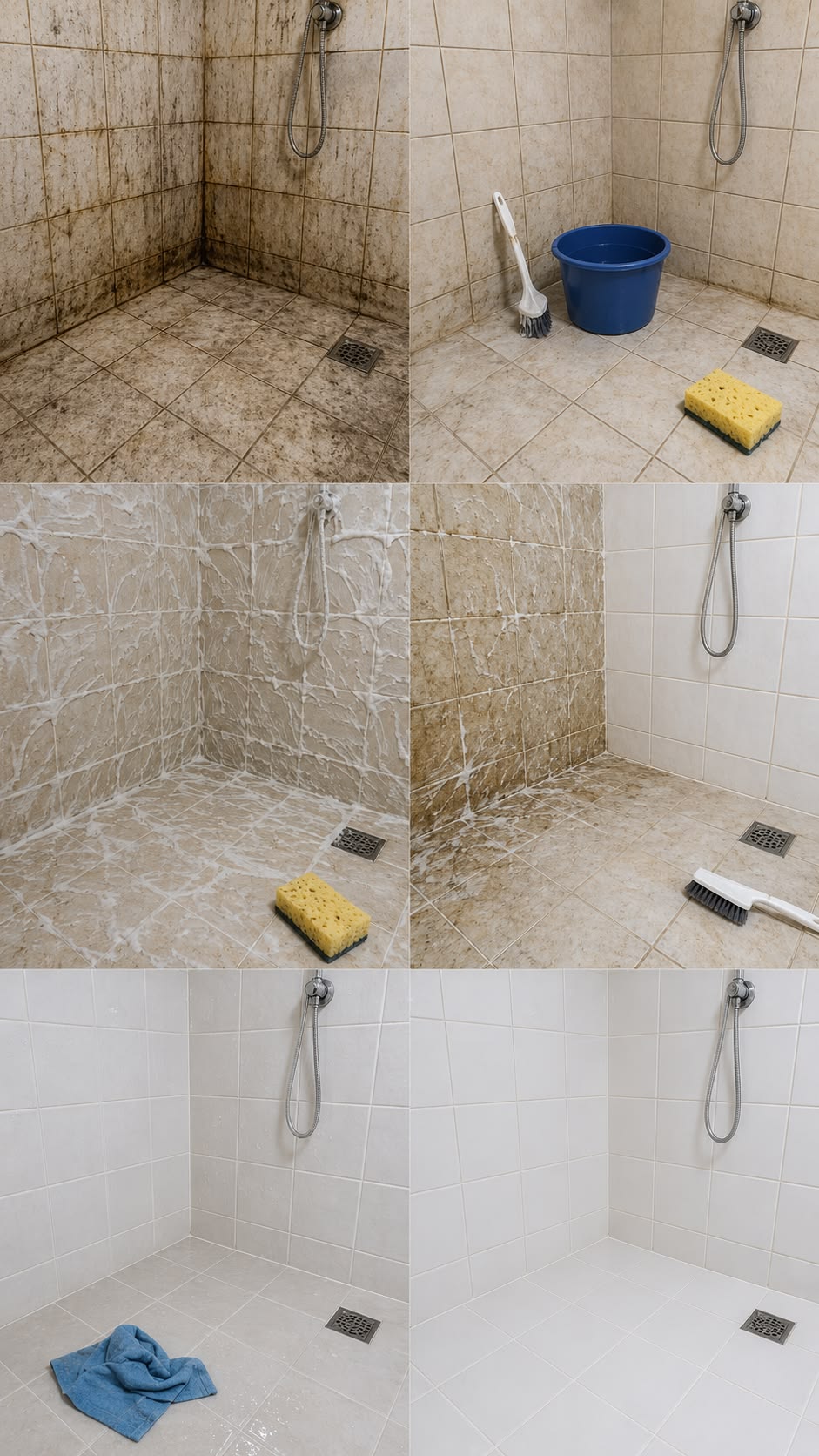
A grimy bathtub and shower can make even a tidy bathroom feel neglected. Soap scum builds up fast, hard-water spots dull the surfaces, and mildew loves the damp corners. Most people either avoid the job or spend way too long scrubbing with the wrong products.
This method flips that. You’ll get a thorough deep clean that looks (and feels) brand-new, using smarter sequencing, better dwell time, and a few simple chemistry tricks—usually in under an hour once you’ve done it a couple of times.
Why This Approach Works Better
Traditional “spray and scrub immediately” methods fight against the grime. Soap scum and mineral deposits need time to loosen. By letting cleaners sit, working top-to-bottom, and rinsing strategically, you reduce elbow grease dramatically while getting better results. Natural options handle most everyday buildup; stronger products are reserved only for stubborn spots.
Gather These Supplies First
Have everything ready so you don’t stop mid-clean:
- White vinegar (distilled)
- Baking soda
- Dish soap (preferably one that cuts grease)
- Spray bottles (at least two)
- Soft scrub brush or non-scratch sponge
- Microfiber cloths or old towels
- Optional: hydrogen peroxide, citric acid, or a commercial bathroom cleaner for heavy mineral deposits
- Rubber gloves
- Old toothbrush for crevices
- Squeegee (highly recommended)
Optional power-ups: a handheld steam cleaner or a magic eraser-style pad for tough spots.
Step 1: Clear and Dry the Stage (5 minutes)
Remove all bottles, soap dishes, razors, and mats. Wipe loose hair and surface water with a towel. A mostly dry surface helps cleaners cling instead of running off. Open a window or run the exhaust fan—good airflow speeds drying later and reduces mildew risk.
Step 2: Pre-Treat the Walls and Door (the real time-saver)
Mix a simple all-purpose spray: equal parts white vinegar and water plus a few drops of dish soap in a spray bottle. For extra power against soap scum, warm the vinegar slightly first (never microwave a sealed bottle).
Spray the shower walls, glass, and tile thoroughly from top to bottom. Don’t scrub yet. Let it dwell 10–15 minutes. The acidity breaks down the alkaline soap scum and softens mineral deposits. While it sits, move to the tub or do another quick bathroom task.
For glass doors with heavy water spots, follow with a light baking-soda paste or a citric-acid solution after the vinegar step.
Step 3: Tackle the Tub Basin and Floor
Sprinkle baking soda generously across the tub floor and any stained areas. Spray the vinegar mixture over it—it will fizz. That reaction helps lift residue without harsh abrasion. Let it sit another 5–10 minutes.
For stubborn ring stains or yellowing, make a thicker paste of baking soda + a little hydrogen peroxide or dish soap and apply it directly. Avoid mixing vinegar and hydrogen peroxide in the same bottle long-term; use them sequentially if needed.
Step 4: Scrub Smart, Not Hard
Start at the top of the walls and work downward so dirty water doesn’t run over clean areas. Use a soft brush or sponge in circular motions on tile and a gentler touch on acrylic or fiberglass (harsh scrubbing can dull the finish).
Pay special attention to:
- Grout lines
- Corners and seams
- The track of sliding doors
- Around the faucet and shower head
An old toothbrush makes short work of the tiny crevices around fixtures. For glass, a non-scratch pad or microfiber usually suffices after proper dwell time.
Step 5: Fixtures, Drain, and Details
Unscrew the shower head if possible and soak it in a bag of vinegar for 15–20 minutes to clear mineral buildup (this can be done while other areas dwell). Wipe faucets and handles with the vinegar spray, then polish with a dry microfiber cloth for a streak-free shine.
Clear the drain of hair and debris. A baking-soda + vinegar pour followed by hot water helps keep it flowing and reduces odors.
Step 6: Rinse Thoroughly and Dry Completely
Rinse from the top down with warm water. A handheld shower head makes this easy. Any leftover cleaner residue will attract new dirt, so be thorough.
This is the most important finishing step most people skip: dry everything. Use a squeegee on glass and walls, then wipe remaining moisture with a microfiber cloth. Moisture left behind is what feeds mildew and water spots. A completely dry surface stays cleaner longer.
Step 7: Optional Polish and Protection
For glass that still looks slightly cloudy, a final wipe with a 50/50 vinegar-water mix or a dedicated glass cleaner gives clarity. Some people apply a thin layer of car wax or a commercial water-repellent coating to glass doors—this makes future cleaning much easier by causing water to bead and run off.
Maintenance Habits That Cut Deep-Clean Frequency in Half
- Squeegee the walls and glass after every shower (30 seconds).
- Keep a spray bottle of diluted vinegar in the bathroom for a quick weekly wipe.
- Avoid bar soap when possible; liquid body wash produces less scum.
- Run the exhaust fan during and 15–20 minutes after showers.
- Once a month, do a lighter version of the above method so the deep clean stays truly deep and infrequent.
Common Mistakes That Waste Time
- Scrubbing before the cleaner has time to work
- Using abrasive powders or steel wool on acrylic or fiberglass
- Mixing incompatible cleaners (especially bleach with anything acidic)
- Leaving the surface wet
- Ignoring the shower head and door tracks
Natural Cleaner “Recipes” Worth Keeping
Everyday soap-scum spray: 1 cup vinegar + 1 cup water + 1 tsp dish soap
Heavy mineral-deposit paste: baking soda + enough hydrogen peroxide or lemon juice to form a spreadable paste
Fresh-scent boost: add a few drops of tea-tree or eucalyptus oil to the vinegar spray (antifungal bonus)
These handle the vast majority of household buildup. Reach for commercial descalers only when hard-water deposits are extreme.
Final Result
When you finish, the surfaces should feel smooth, look bright, and smell clean—not chemically harsh. The smarter sequence (pre-treat → dwell → light scrub → thorough rinse + dry) consistently beats aggressive scrubbing. After two or three times using this method, most people find the whole job takes 40–50 minutes and the bathroom stays presentable far longer.
A clean tub and shower doesn’t just look better—it makes the whole bathroom feel more inviting and reduces the mental load of “I should clean that.” Do it once the smart way, then keep the simple habits, and you’ll spend less total time cleaning while enjoying better results.
